Skeletal System
Muscular System
Nervous System
Homeostasis
Fun Facts
100
What type of skeleton does a human have?
Bonus Double: Name another living animal with the same type of skeleton.
Endoskeleton
100
What are the 3 types of muscular tissue?
Skeletal, Smooth, Cardia
100
What is the main function of the nervous system?
Controls your body by sending, receiving, and processing information (stimuli)
100
What other system(s) does the nervous system interact with?
ALL OF THEM!!!!
100
How many bones are in the human body as a baby?
306
200
What parts make up the appendicular system of the skeleton?
Arms, Legs, Hands, Feed (appendages)
200
Sort the 3 types of muscle tissue as voluntary or involuntary.
Smooth and Cardiac muscle tissue are both involuntary. Skeletal muscle tissue is voluntary.
200
What type of neuron sends information from your sense organs to your brain?
Motor Neuron, Sensory Neuron, or Interneuron
Bonus Double: Name the 5 sense organs.
Sensory Neuron
Bonus Double: Eyes, ears, nose, tounge, skin
200
What type of muscle tissue is the heart made out of?
Cardiac tissue
200
What part of the nervous system controls reflexes?
the spinal cord
300
List all 5 functions of the skeletal system.
Movement, Support, Protection, Production, Mineral Storage
300
List the four functions of the muscular system.
Movement, pump blood, protect organs, provide heat
300
Lable each figure based on the part of the nervous system it displays.
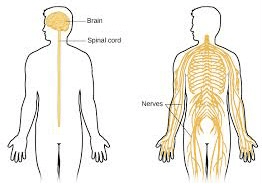
Fig. 1 (Left) - Central Nervous System
Fig. 2 (Right) - Peripheral Nervous System
300
What is one function that both the skeletal and muscular systems have?
Movement and/or Protection
300
What is the largest muscle in the body?
Gluteus Maximus (the bottom)
400
Where is cartilage found in the skeleton?
It lines your movable joints. It is also found in your nose and ears.
400
Where can you find smooth muscle tissue?
the digestive system and other organs
400
Lable parts 1, 2, and 3 with the word bank provided.
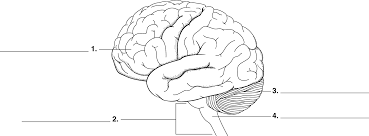
1. Cerebrum
2. Brain Stem (Medulla)
3. Cerebellum
400
How do the skeletal system and the cardiovascular system work together to maintain homeostasis?
The skeletal system produces red blood cells for the cardiovascular system.
400
Where is the smallest bone in the body located and what is it called?
The stapes is in your ear.
500
What is the difference between red and yellow bone marrow?
Red marrow produces blood cells. Yellow marrow stores fat for energy.
500
What are 2 ways you can damage your muscles?
dehydration, muscle strain (overstretched), lifting something too heavy
500
Pick 1 section of the brain and describe what it is responsible for.
Cerebrum: senses, thoughts, memory, learning, voluntary movement.
Cerebellum: receives sensory input, balance, movement, coordination
Medulla: involuntary movements, breathing, swallowing, heartbeat, digestion
500
How does the muscular system help the digestive system function?
Smooth muscles in the digestive system help to digest your food and move it through our bodies.
500
The cerebrum is split into two halves. Which half controls the right side of your body?
The left half of your cerebrum controls the right side of your body.