Alcohol
Tobacco
Cannabis
Cocaine
Lecture Questions
100
Alcohol is considered a _______
A. Stimulant
b. Schedule 5 drug
c. Over the counter drug
d. Depressant
D. Depressant
Alcohol is not considered a controlled substance
100
As of 2009, which country which country is the largest consumer and producer of tobacco?
a. United states
b. India
c. Russia
d. China
D. China
100
The Controlled Substances Act (CSA) categorizes substances under five “schedules”. How does the CSA categorize Marijuana (cannabis?)
a. Schedule I
b. Schedule II
c. Schedule III
d. Schedule IV
e. Schedule V
A. Schedule I
Drugs, substances, or chemicals that are defined as drugs with no currently accepted medical use and a high potential for abuse.
Discussion: What are your thoughts on this classification? Does it make sense to you? What would you presume the rationale behind this classification is?
100
What phrase was popularized in response to the significant expansion of federal policies during the Reagan administration in the 1980s, largely in response to the emerging and so called "crack cocaine epidemic."
a. The Harrison act
b. The Nixon escalation
c. Reganomics
d. The War on Drugs
D. The War on Drugs
100
Acetaminophen would be classified as ______ drug.
a. Prescription
b. Recreational
c. (OTC) Over The Counter
d. Socially accepted
C. Over the Counter drug
Are any of these types of drugs, such as OTC inherently safer than other drugs?
Can they be abused?
200
Saloons that had previously served drinkers were officially closed as a result of the Volstead Act, many went underground and became _______
a. Inns
b. Taverns
c. Speakeasies
d. Taphouses
C. Speakeasies
200
As of 2019, various states within the U.S. have the minimum purchase age of tobacco at 21 years of age. What was the previous minimum age of purchase for these states?
(The said states include: Arkansas, California, Delaware, Hawaii, Illinois, Maine, Massachusetts, New Jersey, Oregon, Utah, Virginia)
a. 16
b. 18
c. 20
d. 21
B. 18
Do you agree with this? Does setting minimum age restriction help with anything?
Discussion: Many of these states only regulate purchase, not possession or use. Those under 21 can still purchase online or have people purchase for them.
200
In what year did Cannabis become legal for recreational use in Colorado?
a. 2008
b. 2012
c. 2014
d. 2018
B. November 2012
200
The Controlled Substances Act (CSA) categorizes substances under five “schedules”. How does the CSA categorize cocaine?
a. Schedule I
b. Schedule II
c. Schedule III
d. Schedule IV
e. Schedule V
B. Schedule II
200
Which legal substance is related to the most deaths in the USA per year?
a. Alcohol
b. Caffeine
c. Prescription opioids
d. Tobacco
D. Tobacco
300
According to our textbook, what years did national level prohibition take place within the U.S?
a. 1912-1924
b. 1917-1931
c. 1920-1933
d. 1928-1940
C. January 17, 1920 – December 5, 1933
What are your thoughts on prohibition, temperance, and or regulation alcohol?
300
What is the scientific name for the tobacco plant?
a. Smokem Ifugottem
b. Nicotiana vulgaris
c. Nicotiana addictus
d. Nicotiana Tabacum
D. Nicotiana tabacum
https://www.funtrivia.com/trivia-quiz/History/A-Brief-History-of-Tobacco-309523.html
300
What year did the first retail sales of recreational Marijuana take place in Colorado?
a. 2012
b. 2013
c. 2014
d. 2015
C. January 2014
Discussion: What are your thoughts on the retail sale of recreational marijuana? Do you agree/disagree? Do you feel there on inherent pros or cons to its sale?
300
In what year did Coca-Cola remove Cocaine from its formula due to a combination of Jim Crow fears and The Food and Drug Act of 1906?
a. 1872
b. 1898
c. 1903
d. 1906
C. 1903 (Coca-Cola removed the cocaine but kept coca leaf extract, dropping explicit cure claims)
Discussion: Following up from our discussion in lecture, have you heard of any other accounts of demonization of a drug in order to be used as a explanation of criminality? If so which ones? How have politicians, and media sources talked about this issue?
300
Which of the following substances is related to around 6 million deaths globally and 480,000 deaths in the USA annually?
a. Cocaine
b. Marijuana
c. Tobacco
d. Alcohol
C. Tobacco
400
The act which enforced the 18th amendments ban on alcoholic beverages was known as ________
a. The Anti-Drug Abuse Act
b. The Jones-Miller Act
c. The Controlled Substance Act
d. The Volstead Act
C. The Volstead Act
400
After a variety of studies and public health campaigns that highlighted the dangers of smoking, this act restricted cigarette ads on radio and television
a. The National Tobacco Censorship Act
b. The Federal Cigarette Labeling and Advertising Act
c. The Public Health Cigarette Smoking Act
d. The Federal Trade Commission Act
C. The Public Health Cigarette Smoking Act
If students ask, the Federal Cigarette Labeling and Advertising Act simply required there to be warning information in ads
Discussion: Do you think the media has an affect on 1. the usage of drugs and/or 2. the social perception of drugs? (stigma/ acceptance)
400
According to Chapter 1 our textbook, The Louis J. Gasnier film (in collaboration with Federal Bureau of Narcotics) titled "Tell your Children" was produced in what year?
A. 1935
B. 1942
C. 1960
D. 1972
A. 1935 (otherwise known as reefer madness)
400
As of 2026, what is the sentencing disparity for possessing Crack vs. Cocaine?
a. 5-1
b. 16-1
c. 18-1
d. 48-1
C. 18-1
The sentence for crack cocaine vs powder cocaine is a 18-to-1 sentencing disparity is despite there being no significant pharmacological differences between the drugs.
At its peak, the sentencing disparity was close to a 100-1 ratio.
Why do you think this disparity exist? What were some of the reasons discussed in our textbook and from lecture last week?
400
According to lecture, What substance was one of the first widely popularized "drug epidemic" scares?
A. Darvocet
B. Fentanyl
C. Glue
D. Robitussin
C. Glue
500
Approximately how many annual deaths are attributed to alcohol in the US?
a. 88,000
b. 112,000
c. 120,00
d. 200,000
A. 88,000
500
Approximately how many annual deaths are attributed to tobacco in the US?
a. 420,000
b. 480,000
c. 640,000
d. 720,000
A. 480,000
500
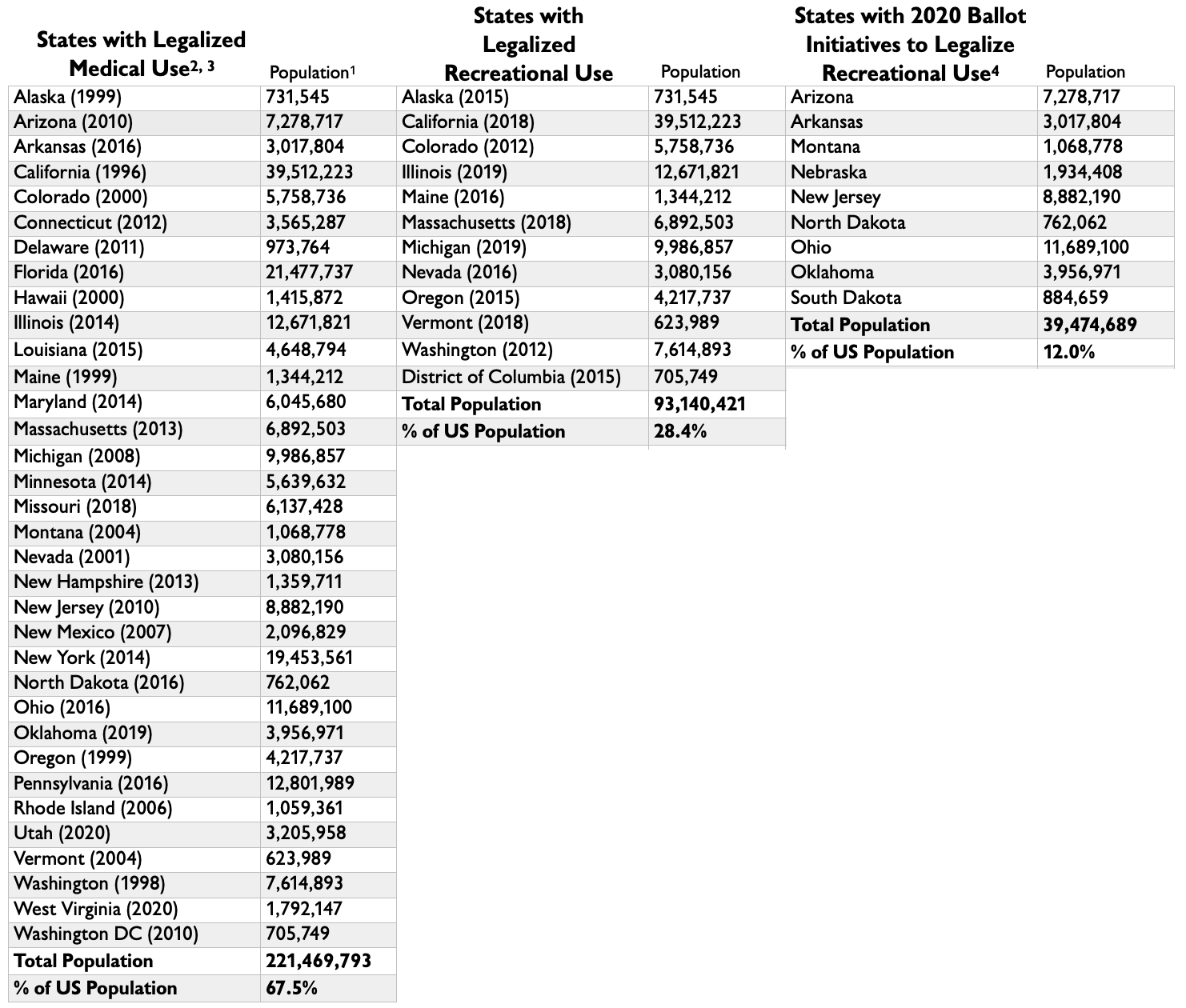
In how many states in the USA is cannabis/marijuana legal for recreational use?
a. 10
b. 24
c. 40
d. 16
B. 24
500
What act Created massive disparities in sentencing for crack vs. powder cocaine, fueling the "War on Drugs" and making possession highly criminalized, especially for crack.
a. The Harrison Narcotics tax act
b. The controlled substance act
c. The Food and drug act
d. Anti-Drug Abuse Act
D. The Anti-Drug Abuse Act of 1986
a. Harrison Narcotics Tax Act of 1914: Regulated production and distribution through taxes, not outright prohibition, but effectively banned non-medical use by making licenses hard to get.
b. The Controlled Substances Act of 1970 Placed cocaine in Schedule II, allowing for medical use but restricting it heavily.
c. Food and Drug Act of 1906: Required cocaine content to be listed on product labels, bringing early federal attention.
500
Approximately how many annual deaths are attributed to prescription opioids in the US?
a. 12,000
b. 17,000
c. 48,000
d. 64,000
B. 17,000