What the space doin?
What comes around goes around (the Sun).
This one is hot.
Stars, Gas, and Rocks
Are you smarter than a 6th Grader?
Earth is old.
100
This is the study of the universe
What is astronomy
100
This is between the inner and outer planets
What is the Asteroid Belt
100
_______was one of the first people to use a telescope to look at space
Who is Galileo
100
The color of the hottest star
What is a blue star
100
A solar eclipse occurs when this is between earth and the sun
What is the moon
100
What is the scientific study of the human past through the recovery, documentation, and analysis of material remains?
Archaeology.
200
How long it takes for the moon to orbit the earth.
What is month
200
The moon phase that is necessary to potentially view a lunar eclipse
What is a full moon
200
The hottest planet in our solar system
What is Venus
200
The outer planets are also known as _______ _______.
What are Gas Giants
200
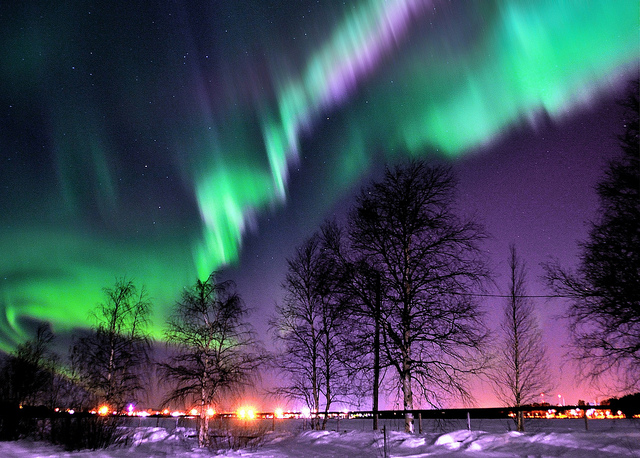
What are the Northern Lights(Aurora Borealis)
200
How to archeologists determine the age of most fossils?
Carbon dating.
300
The time it takes for the earth to orbit around the sun.
What is a year
300
The smallest planet in our solar system
What is Mercury
300
A low mass star eventually becomes this
What is a white dwarf
300
The north star is also known by this name (Bonus points if you can explain why it is always in the north.)
What is polaris?
It is always in the north due to the direction that earth's axis points.
300
This is responsible for the earth's seasons
What is the earth's tilt and revolution around the sun
300
What is this organism called?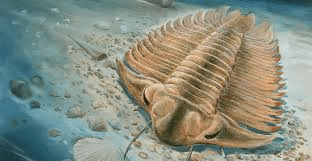
A trilobite.
400
Is the amount of time required for the earth to rotate once on its axis.
What is a day
400
List the planets in order from the sun
What is Mercury, Venus, Earth, Mars, Jupiter, Saturn, Uranus, and Neptune
400
A star and the objects that orbit it is called this
What is a solar system
400
______ are sections of the sky which contain recognizable star patterns.
What is a constellation
400
The amount the Earth's axis is tilted
What is 23.5 degrees
400
What do we call the era in which dinosaurs lived on Earth?
Mesozoic Era (Triassic, Jurassic, and Cretaceous).

500
The Space Race was between these two countries
Who were the United States and the Soviet Union
500
A dirty space snowball
What is a comet
500
The force that keeps planets orbiting the sun
What is gravity
500
The first man to walk on the moon
Who is Neil Armstrong?
500
The place where stars are born
What is a nebula
500
Order the following events from oldest to most recent:
1. Humans develop, 2. Dinosaurs develop, 3. Invertebrates develop, 4. Birds Develop, 5. Mammals develop, and 6. Earth forms.
1. Earth Forms
2. Invertebrates
3. Dinosaurs
4. Birds
5. Mammals
6. Humans