Tides
Star Life Cycle
HR Diagram
Galaxies
Random
100
What type of tide is the diagram illustrating?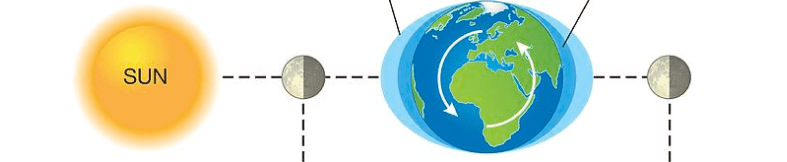
Spring Tide
100
A gathering of dust and gas to form new stars
Nubula
100
Type of Star that has a luminosity more than our sun and low temperatures. (Can be more than one Answer)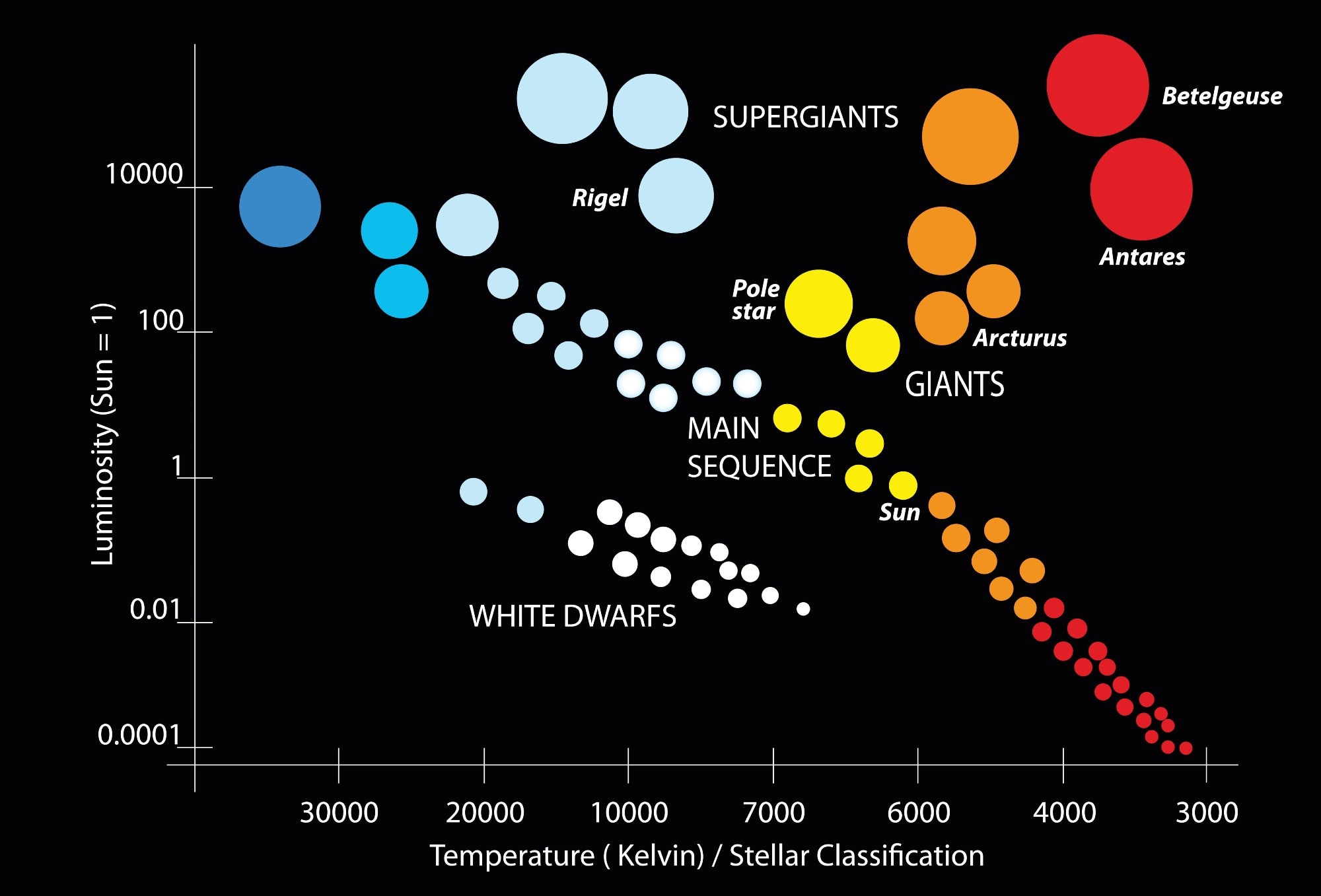
Supergiants or giants
100
A galaxy with NO symmetric or distinct shape.
What is an Irregular galaxy?
100
What keeps Earth orbiting the Sun?
The Sun's Gravity
200
What type of tide is shown in the image?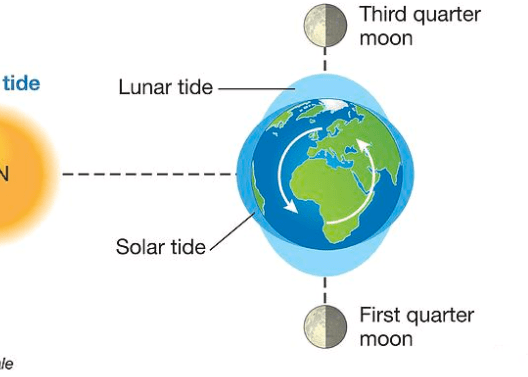
Neap Tide
200
Collapse of a massive star's core causing an explosion after a Red Supergiant
What is a Supernova?
200
Our sun has a Luminosity of ________nosity of _____
1
200
Oval shaped galaxy that does NOT contain new stars.
What is an Elliptical Galaxy?
200
What keeps the moon from flying out into space away from Earth?
Earth's Gravity
300
Which moon would you see in a NEAP TIDE?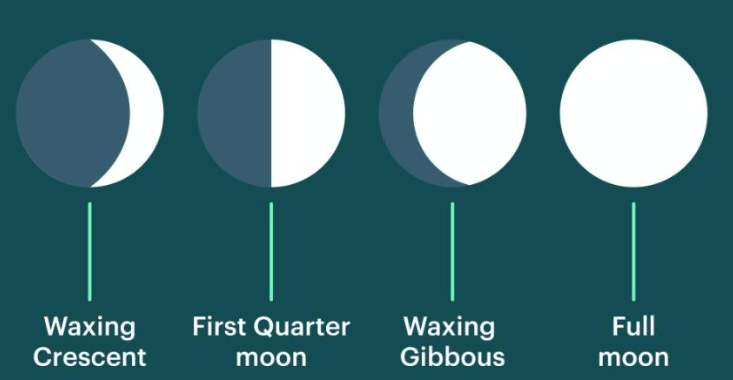
First Quarter Moon
300
What size stars turn into a supergiant followed by exploding into a supernova?
High mass or massive star
300
Our sun is located in this group of stars.
What is Main Sequence Stars?
300
What type of galaxy is a flat, disc shaped galaxy? It is also the youngest type of Galaxy.
Spiral Galaxy
300
What keeps the moon orbiting Earth?
Earth's Gravitational Pull
400
What type of moon would be visible during a spring tide?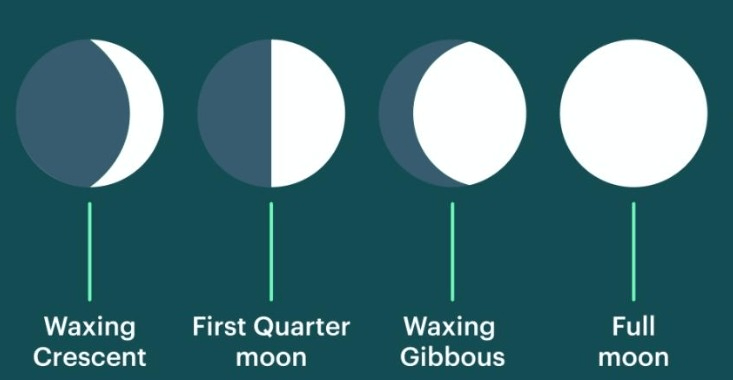
Full moon
400
Our sun turn into this type of star next.
What is a Red Giant
400
Describe the temperatures found in the Main Sequence Stars.
All Temperatures
400
Describe the Milky Way Galaxy
Spiral Galaxy with multiple arms
400
Scientist developed a theory that the universe started with an explosion and since then has gotten larger. They also have a theory that after it grows it will then shrink then explode again. What have they observed that is used of evidence to the theory?
Stars moving away from each other
500
The rotation of earth results in this many tidal changes per day.
What is 4 changes? 2 high tides and two low tides
500
After a supernova, high mass stars will turn into either a ____________ or ___________.
Black hole or Neutron Star
500
What stage of a high mass star has the highest luminosity?
Supergiant
500
What is the location of our solar system in the galaxy?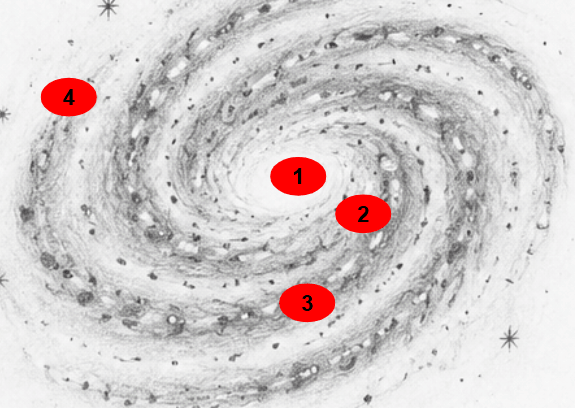
3
500
Which of these 2 celestial bodies contain more mass than our solar system?
Galaxy - Star - Planet - Comet - Nebula - Moon
Galaxy and Nebula