Back to the Basics
Speaking Across Difference
Pushing Persuasion
Researching
Mixed Bag
100
speech in, by, and for the public
what is public speaking?
100
List one common mistake people make when speaking across difference that is listed in the textbook.
Generalizing our experience, bias, stereotyping, ethnocentrism, speaking for others, defensive speaking and listening, and disengagement
100
List one challenge to persuasion identified by psychologists, political scientists, and communication scholars that can aggravate the policy speaking process.
Confirmation bias, partisanship, policy as identity, intolerance and security, and the "backfire effect,"
100
Crediting the original ideas and expression of a speaker or author to that person.
What is citing sources?
100
The process of the human body taking in the verbal communication of others and recognizing that communication as speech
What is hearing?
200
The presence of something before or in the hands of the community, what we might think of as the people
What is public?
200
The projection of a bias onto a category or group of people so that we assume all people in a group act, think, or believe in the same way
What is stereotyping?
200
List two useful theories or strategies for persuasion as listed in the textbook.
Relevance and engagement, repetition, empathy and perspective-taking, moral reraming, and anticipating counterarguments and disadvantages
200
List the four types of plagiarism.
Global, incremental, patchwork, and self
200
List three considerations for speaking in a digital environment given in the textbook.
Synchronous/asynchronous, audio, video quality, framing, length, permanence, circulation, audience, format and advances in technology, and speaking in digital style
300
A holistic attempt to account for the major attributes that are at work in most communication interactions.
What is the Standard Model of Communication?
300
The interpretation of the world in a way that only reflects our own limited experiences.
What is bias?
300
People's tendency to take evidence that confirms their existing views at face value while being highly critical and suspicious of information that challenges their existing view of an issue.
What is confirmation bias?
300
Ideas, reporting, and opinions from writers, critics, leaders, and community members that express their viewpoint or experience
What are nonacademic sources?
300
For a policy speech, you are expected to take on this: the expectation to show that continuing to do or not do what we are already doing will be problematic
What is the burden of proof?
400
Draw the Standard Model of Communication on the board
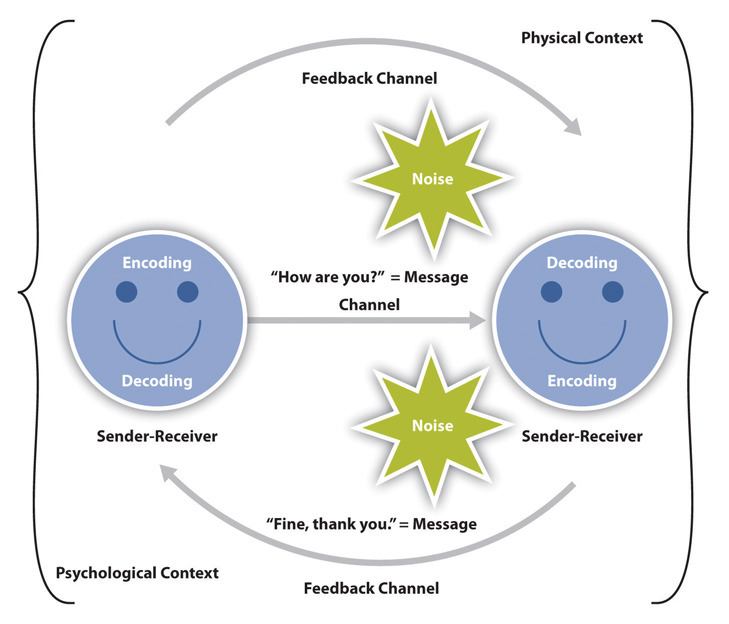
400
Mindful, thoughtful people in the world that can act, think, and speak on their own
What is subjects?
400
The pre-emptive admission and refutation of limitations to our policy/
Anticipating counter-arguments and disadvantages.
400
Online research conducted through libraries and databases that are not accessible to the general public for free.
What is restricted online research?
400
DAILY DOUBLE:
Define topoi and give an example from the textbook.Common lines of argument that are applicable for almost any topic or subject matter.
Key topoi that might apply when speaking impromptu:
Possible/impossible, cause and effect, and past fact/future fact
500
List the six basic forms of communication
Intrapersonal, interpersonal, group, organizational, mass, and public
500
Things that exist in the world and belong to other people
What are objects?
500
This theory shows that people process information about the world so that it confirms their own ideas about who they are.
What is identity-protective cognition?
500
List three ways to start the brainstorming process for a speech topic as listed in the textbook.
Randomization, free association, mindlessness, be in nature, check the news and current events, what's trending, and talk with another person.
500
List all the 5 reasons you choose to listen to the speaker as listed in the textbook.
Listening to support, listening to understand, listening to empathize, listening to engage, and listening to critique