Eye muscles
Middle/inner ear structures
Receptor cells and sensory tissues
Miscellaneous vision questions
Miscellaneous hearing & equilibrium questions
100
The Abducens nerve innervates this muscle.
Lateral rectus
100
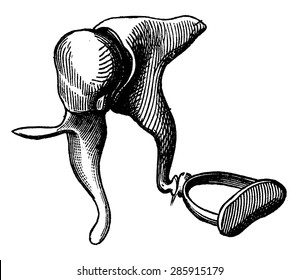
The name of this group of bones.
Ossicles.
100
The membrane of the organ of corti that moves as a response to fluid waves.
Basilar membrane
100
The two main muscles of the fibrous tunic.
Sclera and cornea
100
The function of the round window.
Vibrates opposite of vibrations entering the ear through the oval window
200
The Trochlear nerve innervates this muscle.
Superior oblique
200
The two inner ear membranes.
Round window and oval window membranes
200
The membrane of the organ of corti that is involved in the bending of the hair cells.
Tectorial membrane
200
The gland that produces tears.
Lacrimal gland
200

These ring-like structures on the left side of the image are partly responsible for our sense of equilibrium.
Semicircular canals.
300
The superior rectus, medial rectus, inferior rectus, and internal oblique are innervated by this cranial nerve.
Oculomotor
300
The three main structures of the inner ear.
The semicircular canal, vestibule, and the cochlea
300
The fluid found in sensory membranous labyrinth.
Endolymph
300
The technical term for our "blind spot".
Optic disc.
300
The function of the auricle
Collect sound and direct it
400
This muscle contracts in response to bright light.
Radial muscle(s) of the iris.
400
Another name for eardrum.
Tympanic membrane
400
The photoreceptors that are found in the retina.
Rods and cones
400
The hole that's size is controlled by the iris.
Pupil
400
The fluid found posterior to the lens
Vitreous humor
500
The trochlea allows the tendon of this muscle to pass through.
Superior oblique muscle
500
The name of the ossicles found in the middle ear.
Hammer, anvil, and stirrup
500
The name of the "hairs" that bend to facilitate hearing and equilibrium.
Stereocilia.
500
The function of the cornea.
Refract light
500
The structure of the inner ear involved with hearing.
The cochlea