In Miles
Measuring
Shining Stars
What We See
Identify
100
How fast light travels
186,000 Miles/second
100
The apparent change in an object's position that occurs when you look at the object from two different points
Parallax
100
Hydrogen atoms combine to make Helium atoms during this process
Nuclear Fusion
100
These instruments collect more light than people can detect with their eyes
Telescopes
100
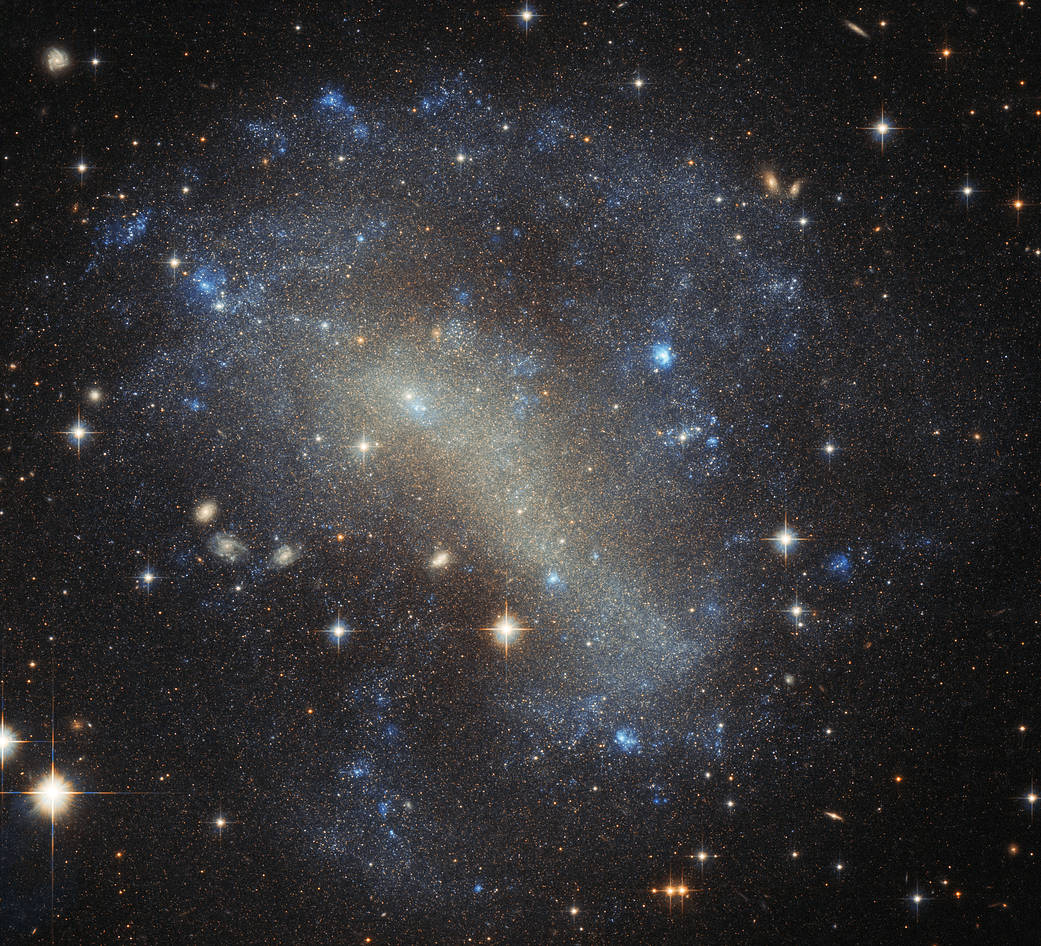
Irregular Galaxy
200
Distance between the Earth and Sun or 1 AU
93 Million Miles
200
Astronomers use this measurement within the solar system to measure between objects, which is the average distance between the Earth and the sun.
Astronomical Unit
200
This force turns gas and dust into stars and galaxies together
Gravity
200
A large ball of gas and dust held together by gravity
Star
200
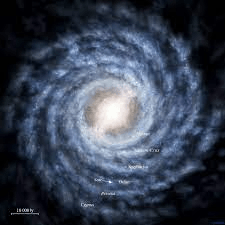
Spiral Galaxy
300
Distance Light travels in 1 year
5.8 or 6 Trillion Miles
300
Astronomers use this beyond our solar system to measure distance, the distance light travels in a year
Light Year
300
Nuclear fusion releases huge amounts of
Energy - in the form of Heat and Light
300
The name of our North Star
Polaris
300
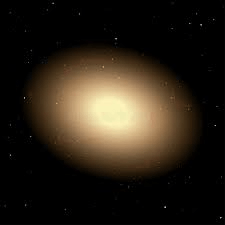
Elliptical Galaxy
400
Distance to Proxima Centauri
4.2 Light Years
400
This graph shows the increasing luminosity of stars on the y-axis and decreasing temperature of stars on the x-axis.
H-R Diagram
400
This instrument is used to spread light into different wavelengths
spectroscope
400
Patterns that people thousands of years ago identified in the night sky
Constellations
400
This galaxy has lots of young stars, lots of gas, no regular shape
Irregular Galaxy
500
If a star is 10 light years away how old is the star when we see it?
The star is 10 years older than the time the light left the star.
500
Most stars on the H-R diagram fall within this area for the majority of their life
main sequence
500
Temperature and Mass are two characteristics of stars.
1. coolest stars
2. hottest stars
1. red
2. blue
500
identify this galaxy: arms with young to medium stars, older middle
Spiral Galaxy
500
This galaxy has little gas and dust between stars, billions of old stars, and no longer forming stars
Elliptical Galaxy