Eclipses / Models
Moon Phases
Seasons
Space Objects
Tides
Gravity
100
What types of eclipse is pictured below where the moon is in between the Earth and Sun?
Normally accompanied by Day becoming night, cooler air, and the sky shifting colors.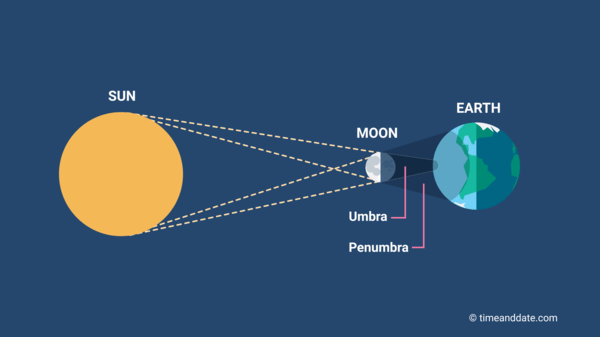
Solar Eclipse
100
What causes the phases of the Moon?
We see different portions of the Moon lit by the Sun as it orbits around the Earth.
100
What season is the northern hemisphere experiencing?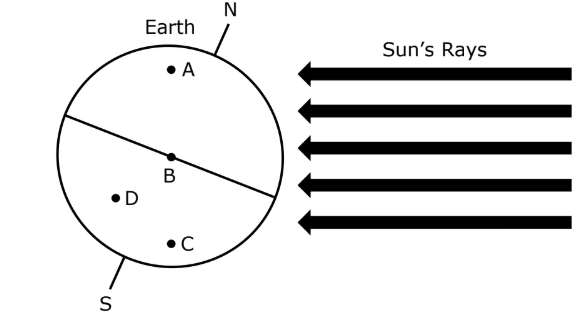
Summer
100
This object forms a glowing tail when it approaches the Sun because its ice begins to vaporize.
A Comet
(remember: My dog COMET has a TAIL; and the tail points AWAY from the sun)
100
Tides are caused by....
The gravitational pull of the Moon on Earth’s oceans.
100
What is the Law of Universal Gravitation?
All objects with mass attract each other
200
What types of eclipse is pictured below where the Earth is in between the sun and moon?
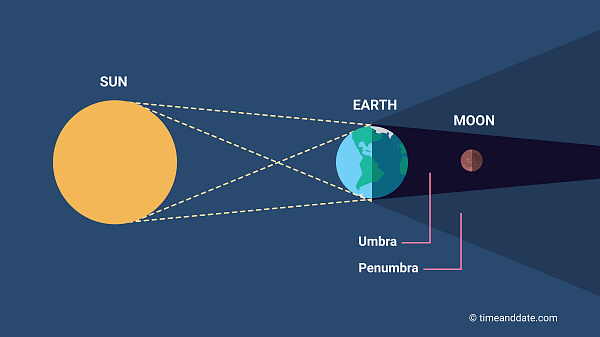
Lunar Eclipse
200
What does the word “waxing” mean?
What does the word “Waning” mean?
Waxing=Growing
Waning=Shrinking
200
Which point is experiencing the Longest days and the Shortest Nights?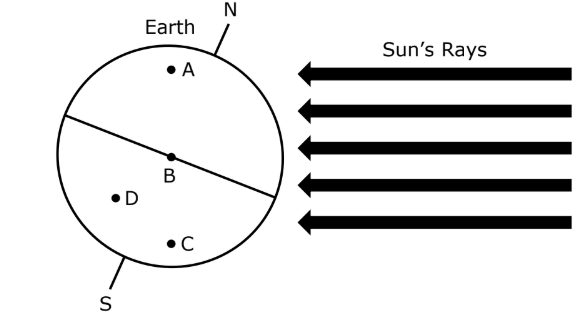 nights?
Point A
The Earth is tilted about 23.5° on its axis.
During the summer in the Northern Hemisphere, the North Pole is tilted toward the Sun.
This means places far north, like Alaska, get direct sunlight for a longer part of the day.
Even when the Sun is lower in the sky, Alaska still receives indirect sunlight, which adds to the total daylight hours.
This combination of direct and indirect sunlight makes the days very long—sometimes almost 24 hours of daylight in the far north, called the Midnight Sun.
Basically: tilt + high latitude = super long summer days!
200
Correctly order the space bodies from smallest to largest?
Moon, Star, Asteroid, Comet, Meteor, Planet
Meteor → Asteroid → Comet → Moon →Planet → Star
Meteor – smallest (a meteoroid burning in Earth’s atmosphere)
Asteroid – rocky object, usually larger than meteoroids
Comet – often larger than most asteroids and made of ice and dust
Moon – natural satellite, much larger than asteroids and comets
Planet - A planet must be large enough to clear its orbital path
Star– largest object in our Solar System
200
What are spring tides? (looking for 2 major points)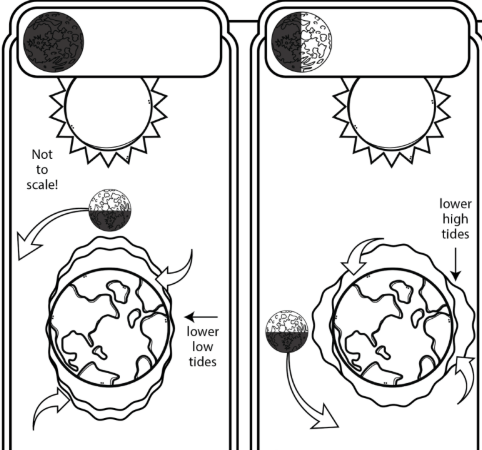
When tides with the greatest difference between high and low tide caused when the Sun, Earth, and Moon are aligned.
200
What scientist is responsible for the Law of Universal Gravitation?
Isaac Newton
300
What is the name of the following Solar System Model, which highlights being the Sun at the center of the solar system and all other objects orbit said Sun.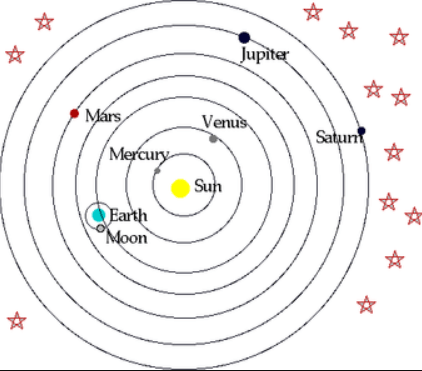
The Heliocentric Model
300
Identify the New Moon's number. 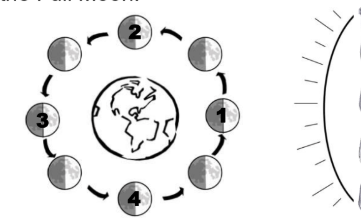
#1 Is the New Moon
Moon is Completely dark (shadowed)
Moon between Earth and Sun
300
The change in temperature in the northern hemisphere during winter is due to
the northern hemisphere being tilted away from the Sun and thus receiving less direct sunlight
300
Describe the following features of Inner Planets.
# of Moons:____
Orbit length:_______
Made of (surface):_________
Shape:________
Overall Temperature:_________
Rings?:_____________
Location:______________
Inner Planets
# of Moons: 0–2 (Mercury and Venus: 0, Earth: 1, Mars: 2)
Orbit length: Shorter orbits around the Sun (88–687 Earth days)
Made of (surface): Terrestrial Rocky surfaces (metallic cores with solid crusts)
Shape: Rounded (like most planets)
Overall Temperature: Generally warmer than outer planets (Mercury is extremely hot in sunlight, Venus is very hot, Earth is moderate, Mars is cold)
Rings?: No rings
Location: Inside the asteroid belt, closest to the Sun
300
What are Neap Tides? (Looking for 3 major points)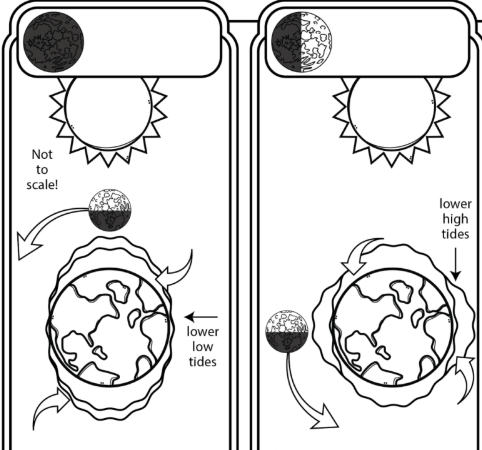
When tides with the smallest difference between high and low tide (lower high tides and higher low tides) . Occurs during quarter moons when the sun is at a 90 degree angle with the Earth and Moon.
300
Gravity is affected primarily by what 2 things?
distance and mass
400
What is the name of the following Solar System Model, which highlights being the Earth at the center of the solar system and all other objects orbit said Earth.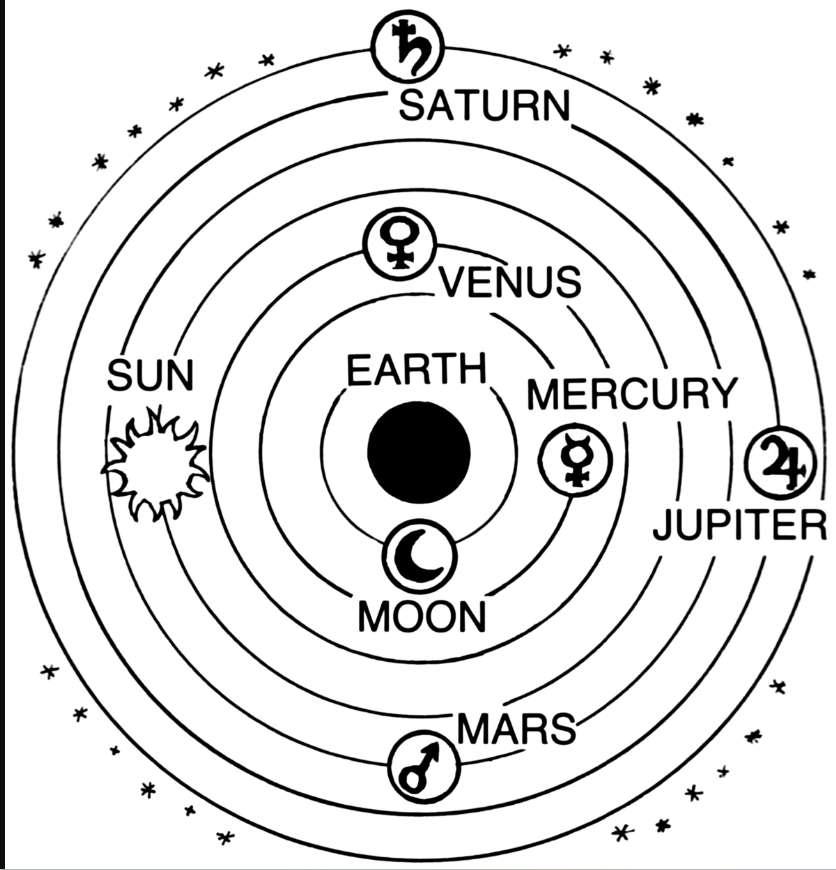
The Geocentric Model
400
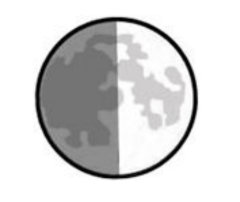
Identify the First Quarter Moon's Number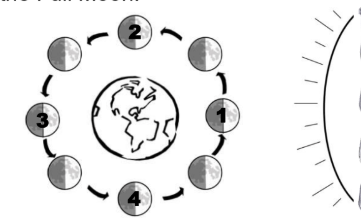
#2 is the First Quarter Moon
Half of the Moon is visible
The right half is lit (Northern Hemisphere)
The Moon is still waxing (growing)
The Moon is 90° from the Sun in the sky
400
DAILY DOUBLE:
Daily Double Rules
You can wager any amount of your points (up to all of them).
Correct answer: you win your wager.
Wrong answer: you lose your wager.
If you have 0 points: you can still wager the question’s points, but your score can go negative.
💡 Tip: Bet wisely – it could double your points or drop you into the red!
-
-
-
-
-
-
-
-
-
-
What point on the Globe is getting the MOST DIRECT LIGHT?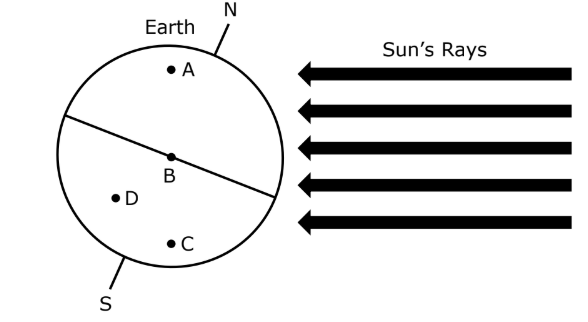
B; Because its on the equator and gets the most direct sunlight there
(note the image below shows the northern hemisphere in winter and the question showed it in summer)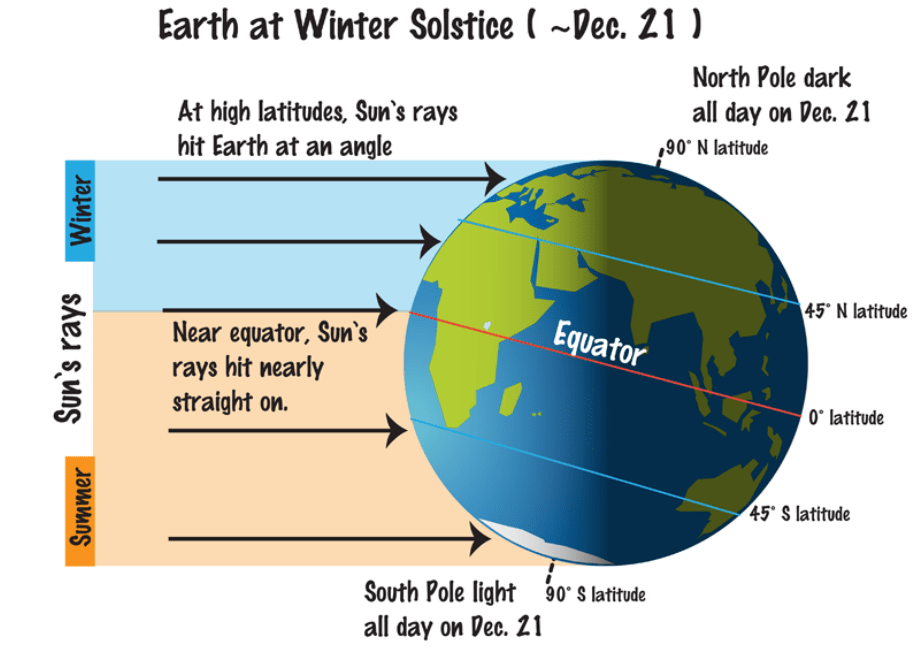
400
Describe the following features of Outer Planets.
# of Moons:____
Orbit length:_______
Made of (surface):_________
Shape:________
Overall Temperature:_________
Rings?:_____________
Location:______________
Outer Planets
# of Moons: Many (Jupiter: 80+, Saturn: 80+, Uranus: 27, Neptune: 14)
Orbit length: Long orbits around the Sun (12–165 Earth years)
Made of (surface): Mostly gas and/or ice; no solid rocky surface (gas giants: Jupiter & Saturn; ice giants: Uranus & Neptune)
Shape: Rounded, slightly flattened at the poles due to rapid rotation
Overall Temperature: Very cold (far from the Sun)
Rings?: Yes, all have ring systems (most prominent: Saturn)
Location: Beyond the asteroid belt, far from the Sun
400
A coastal town notices that the difference between high and low tide is very small.
In what position(s) is the Moon most likely located? Explain your reasoning.
The Moon is likely in the first quarter or third (last) quarter phase, when the Sun, Earth, and Moon form a right angle.
This causes neap tides, where the gravitational pulls of the Moon and the Sun partially cancel out.
400
If an object’s mass doubles while distance stays the same, the gravitational force will do this.
What is increase
500
Explain 3 reasons why we don't have solar and lunar eclipses multiple times each month?
We don’t have eclipses every month because
the Moon’s orbit is tilted,
eclipses only happen at certain moon phases near the orbit’s nodes,
and the Sun’s shadow only covers a small part of Earth.
500
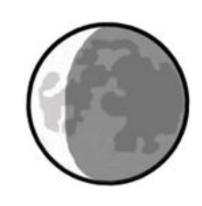
Identify the Waning Crescent: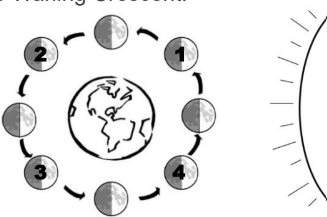
#4 is a Waning Crescent
Only a small part of the Moon is visible
The left side is lit (Northern Hemisphere)
The Moon is waning, meaning it is shrinking
500
If it is March 21st, what would the Northern hemisphere be experiencing?
(Day and night are equal in length)
The Spring Equinox (equal day and equal night)
500
Compare an asteroid and a comet. How are they similar and how are they different?
3 characteristics about asteroids
3 characteristics about comets
3 characteristics about similarities of both
Asteroids:
Made mostly of rock and metals
Usually found in the asteroid belt between Mars and Jupiter
Do not have a visible tails
Generally darker in appearance
Less volatile (don’t release gas)
Comets:
Made of ice, dust, and rocky material
Usually found in the Kuiper Belt or Oort Cloud
Develop a glowing coma and tail when near the Sun that point away from the sun
Can appear bright near the Sun
There are two parts to a comet's tail: the dust tail and the ion tail.
Release gas and dust when heated
Similarities:
Both orbit the Sun
Both are leftover remnants from the early solar system
Both can vary in size
Both can impact planets if their orbit intersects
500
Why would Spring Tides be stronger than Neap Tides?
because the Sun and Moon’s gravitational forces combine and pull in the same direction, increasing the difference between high and low tide
500
What is the role of gravity in space and with our galaxy?
It also holds together the Milky Way galaxy as all of the stars in the Milky Way are in orbit around Sagittarius A*, the supermassive black hole at its center.