Blood
Heart
Circulatory System
Circulatory System, Heart-Specific
Shock Basics
100
What is the color of blood in arteries vs. in veins? Why?
Blood in arteries is characteristically bright red, because its hemoglobin is rich in oxygen. Blood in the veins is dark blue-red, because it has passed though a capillary bed and given up its oxygen to the cells.
100
What is the resting heart rate of a normal adult? What about an athlete?
Normal adult: 60-100 beats/min. Athlete: 45-60 beats/minute.
100
What are two central pulses and where can they be felt?
Carotid artery pulse (felt at the upper portion of the neck), and femoral artery pulse (felt in the groin.)
100
What is the purpose of one-way valves in the heart chambers? How do they work?
The valves prevent backflow of blood and keep it moving through the circulatory system in the proper direction. When a valve controlling the filling of a heart chamber is open, the other valve allowing it to empty is shut (and vice versa.) Normally blood moves in only one direction through the entire system.
100
What is cardiogenic shock and what is the most common cause?
Cardiogenic shock is caused by inadequate function of the heart, or pump failure, when the heart cannot maintain sufficient cardiac output (the volume of blood that the heart can pump per minute) to meet the demands of the body. Most common cause is heart attack.
200
How much blood does the average adult have? How much blood do children have? How much blood do infants have?
The average adult has approximately 6L of blood. Children have 2-3L (depending on age and size.) Infants have ~300mL.
200
Which part of the nervous system controls the heart?
The heart is an involuntary muscle, so it is under the control of the autonomic nervous system (part of the PNS). The heart has its own electrical system and continues to function even without CNS control.
200
What are four peripheral pulses and where can they be felt?
The radial artery pulse (felt at the wrist at the base of the thumb), the brachial artery pulse (felt on the medial aspect of the arm, midway between the elbow and the shoulder), the posterior tibial artery pulse (posterior to the medial malleolus (felt inside of the ankle)), and the dorsalis pedis artery pulse (felt on the top of the foot.)
200
What is preload and afterload?
Preload is the amount of blood returning to the heart. Too little preload causes blood pressure to fall, too high preload prevents the heart from moving blood effectively. Afterload is the pressure to be overcome when the left ventricle contracts/pressure within the aorta. Diastolic pressure is the same as afterload.
200
What is hypovolemic shock and what are some possible causes?
Hypovolemic shock is the result of an inadequate amount of fluid in the circulatory system. There are hemorrhagic and nonhemorrhagic causes of hypovolemic shock. Hemorrhagic = injuries involving bleeding. Nonhemorrhagic = vomiting, diarrhea, dehydration, severe thermal burns (where intravascular plasma loss is caused when fluid leaks from the capillaries into the surrounding tissue.)
300
Do the superior and inferior vena cavae carry oxygenated or deoxygenated blood to/from the heart? What body parts are the superior and inferior vena cavae responsible for, respectively and where do they join?
Both return deoxygenated blood from the body into the heart. The superior vena cava carries blood returning from the head, neck, shoulders, and upper extremities. Blood from the abdomen, pelvis, and lower extremities passes through the inferior vena cava. The superior and inferior vena cavae join at the right atrium of the heart.
300
Which side of the heart is a high-pressure pump? Where does it pump blood? Which side is a low-pressure pump? Where does it pump blood?
The left side of the heart is a high-pressure pump that pumps blood into the body. The left side of the heart is also more muscular. The right side of the heart is a low-pressure pump that supplies blood to the lungs.
300
What is the largest type of blood vessel in the body? What smaller blood vessels does it branch into?
The arteries carry blood from the heart to all body tissues. They branch into smaller arteries, then into arterioles, then into the vast network of capillaries. The aorta is the largest blood vessel in the body and is an artery. The aorta is the main artery leaving the back left side of the heart. It carries freshly oxygenated blood to the body.
300
Where does the heart muscle's blood supply come from? What is its basic structure?
The heart muscle's blood supply comes from the aorta. The aorta has two branches at its base that form the left and right coronary arteries. These arteries supply the heart muscle with oxygenated blood.
300
What is obstructive shock and what are some possible causes?
Obstructive shock is caused by an obstruction that prevents an adequate volume of blood from being distributed to the body. Some possible/common causes: cardiac/pericardial tamponade (ventricles are prevented from filling with blood), tension pneumothorax (damage to the lung tissue allowing air normally held within the chest cavity to escape, collapsing the lung (pneumothorax) and causing air to accumulate within the chest cavity and begin applying pressure to the heart and greater vessels and shifting the chest organs towards the uninjured side), pulmonary embolism (a blood clot that occurs in the pulmonary arteries and blocks the flow of blood through the lungs.)
400
What are the components of blood and their respective functions?
White blood cells fight infection, red blood cells (hemoglobin) transport oxygen, plasma transports carbon dioxide, chemicals within the plasma controls (buffers) pH, plasma (water) transports wastes and nutrients, and platelets and clotting factors in the plasma are responsible for clotting/coagulation.
400
Explain the electrical impulses in a normal heart.
The electrical impulse begins high in the atria at the sinoatrial (SA) node, then travels to the atrioventricular (AV) node and the bundle of His, and moves through the Purkinje fibers to the ventricles. This movement produces a smooth flow of electricity through the heart, which depolarizes the muscle and produces a coordinated pumping contraction.
400
What are the only arteries in the body that carry oxygen-depleted blood? Explain its location/structure.
The pulmonary artery begins at the right side of the heart and carries oxygen-depleted blood to the lungs. It divides into finer and finer branches until it meets with the pulmonary capillary system located in the thin walls of the alveoli.
400
What does a baby tapir look like? Draw one.
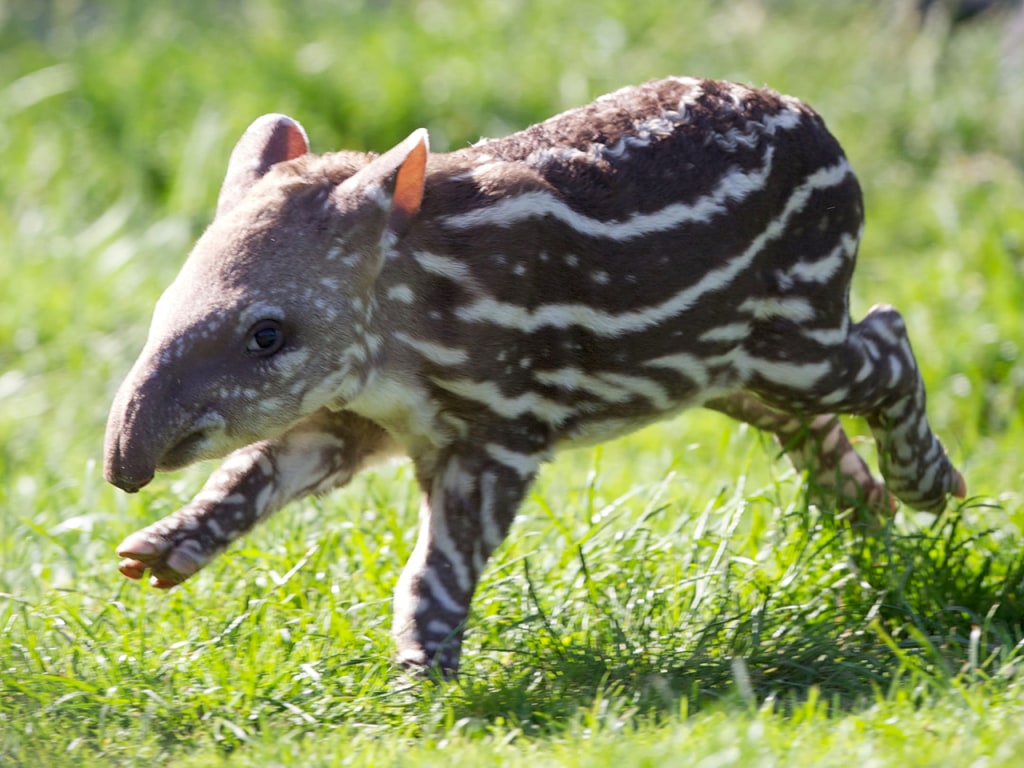
400
What is distributive shock and what are some possible causes?
Distributive shock results when there is widespread dilation of the small arterioles, small venuoles, or both. As a result, circulating blood volume pools in the expanded vascular beds and tissue perfusion decreases. Some possible/common causes: septic shock (occurs as a result of severe infections (usually bacterial) where toxins damage vessel walls, causing increased cellular permeability, vessel wall leakage, and inability to constrict well), neurogenic shock (usually caused by damage to the spinal cord, particularly at upper cervical levels, causing muscles in the walls of the blood vessels to be cut off from the sympathetic nervous system (fight-or-flight that increases blood flow to skeletal muscles, heart rate, respiratory rate, etc.) and nerve impulses that cause them to contract, causing all blood vessels below the spinal injury to dilate widely and causing blood to pool), anaphylactic shock (occurs when a person reacts quickly to a substance to which they have been sensitized, causing widespread vascular dilation, increased permeability, and bronchoconstriction), and psychogenic shock (caused by a sudden reaction of tje nervous system that produces a temporary, generalized vasodilation, resulting in syncope).