Solve by Graphing
Solve by Substitution
Solve for variable
Number of Solutions
Random
100
What is the solution?
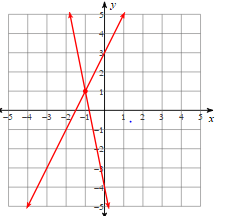
(-1,1)
100
Solve the systems of equations using substitution:
y=3x-10
x=2
(2,-4)
100
Solve for y
6 + 7y = -8
y = -2
100
How many solutions would a system of linear equations have if the equations are parallel and different y-intercepts?
Zero Solutions
100
What is the number directly attached to a variable called?
a coefficient
200
How many solutions are there?
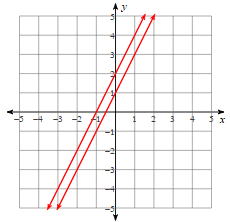
No Solutions
200
Solve the systems of equations using substitution:
y=2x-10
y=4x+8
(-9,-28)
200
Solve for x
5x - 2 = 48
x=10
200
How many solutions would a system of linear equations have if the equations have the same slope and have the same y-intercept?
Infinite Solutions
200
What is another way to say slope?
rate of change, rise/run, change in y/change in x
300
Solve Using Graphing:
y = 5/3x + 2
y = -3
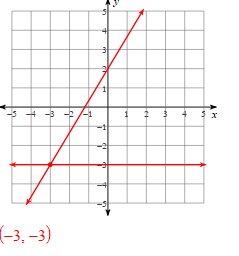
300
Solve the systems of equations using substitution:
y = -2x - 9
3x -6y = 9
(-3, -3)
300
Solve for h
6.1(14−3h)=−7.9h+59.4
h=2.5
300
Is there 1 solution, No solution, or Infinite solutions for the following question?
3x - y = 19
-3x + y = 10
No Solutions
300
How does a graph with infinitely many solutions look?
One line
400
Solve this by graphing:
y = 2x - 4
y = -1/3 x + 3
(3,2)
400
Solve the systems of equations using substitution:
2x - y = 6
x = y + 5
(1, -4)
400
6(4𝑟 + 3) = 8(2 + 3𝑟) + 2
r= Infinitely many solutions
400
How many solutions does the system have?
3y + 4x = 6
12y + 16x = 24
These are the same exact line, therefore they have
Infinite Solutions
400
How many dogs does Ms. Arroyo have?
Bonus points for their names
3
Sunny, Charlie, and Ace
500
Solve the systems of linear equations by graphing:
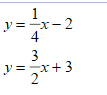
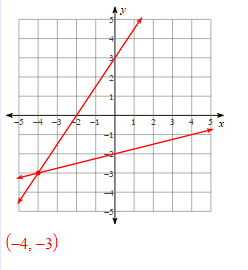
500
Solve the systems of equations using substitution:
y = 8x -7
16x - 2y = 14
Infinitely Many Solutions
500
Solve for k
1.4(−2 + 8𝑘)= 0.6(2𝑘 + 22)
k=1.6
500
How many solutions does the system have?
𝑦 = 10 − 2.5𝑥
𝑦 =(-5/2)𝑥 + 10
infinitely many
500
Is (4,-7) a solution?
y = −2.25 𝑥 + 2
y = 3𝑥 − 19
yes