Types of Energy
Potential and Kinetic Energy
Heat Transfer
Ocean Currents
Hydrologic Cycle
100
A baseball rests on a tabletop as shown in the diagram below. 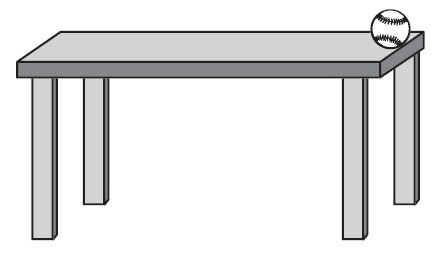
What type of potential energy is stored in the baseball based on its position on the table?
A: Chemical
B: Elastic
C: Gravitational
D: heat
C: Gravitational Potential Energy
100
When riding a roller coaster, you go up and down many hills. When do you have the maximum potential energy?
A: at the top of the tallest hill
B: going down each hill
C: at the bottom of each hill
D: going up each hill
A: at the top of the tallest hill
100
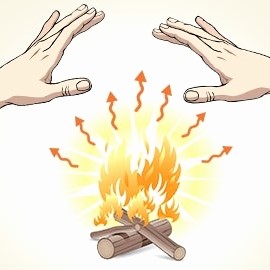
Warming your hands by the fire is an example of which type of heat transfer?
A: conduction
B: convection
C: evaporation
D: radiation
D: radiation
100
Cold ocean currents are most likely to be located at deeper ocean depths than warm water currents because
A: winds push the cold water down.
B: ocean tides force cold water downward.
C: cold water is more dense and sinks.
D: cold water has less salt to help it freeze and sink.
C: cold water is more dense and sinks.
100
Which best describes the process of transpiration within the water cycle?
A: the process in which humans release sweat through their skin back into the air
B: that which occurs when water vapor turns into a liquid
C: the process in which plants release water through their leaves back into the air
D: the scientific name for the water cycle
C: the process in which plants release water through their leaves back into the air
200
An object will have an increase in its gravitational potential energy when it
A: stretches out from its original shape.
B: is raised higher from the ground.
C: gains a large amount of mass.
D: is heated to a warmer temperature.
B: is raised higher from the ground.
200
Which of these is an example of the conversion of kinetic energy into gravitational potential energy?
A: a bicyclist coasting down a long hill
B: a car engine moving the car forward
C: a roller coaster car moving toward the top of a rise in the tracks
D: a thrown ball falling toward the ground after passing through the top part of its motion
C: a roller coaster car moving toward the top of a rise in the tracks
200
A student places a thermometer 20 cm away from a lamp, as shown.
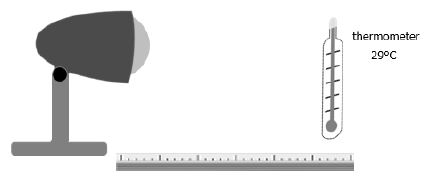
If the room temperature is 25°C, why is the reading on the thermometer 29°C?
A: Thermal energy from the room moves to the thermometer as heat from radiation.
B: Thermal energy from the lamp moves to the thermometer as heat from radiation.
C: Thermal energy from the room moves to the thermometer as heat from conduction.
D: Thermal energy from the lamp moves to the thermometer as heat from conduction.
B: Thermal energy from the lamp moves to the thermometer as heat from radiation.
200
The diagram shows the movement of a water current.
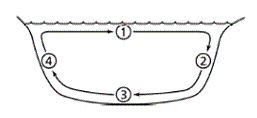
At which point is the water in the current the coldest?
A: 1
B: 2
C: 3
D: 4
C: 3
200
After a day of rain, Samuel observed that a field on his family's farm was covered in water. The next morning, the field appeared dry. Which of these statements is the least likely explanation of what happened to the water?
A: The water was absorbed into the soil.
B: The water seeped through the ground.
C: The water evaporated into the atmosphere.
D: The water slowly trickled to higher ground as runoff.
D: The water slowly trickled to higher ground as runoff.
300
The molecules of which of the following would have the most thermal kinetic energy?
A: an ice cube
B: a cold glass of water
C: a warm cup of tea
D: boiling water
D: boiling water
300
A circuit is made with a battery and a bulb. While the bulb is producing light, which type of energy is decreasing in the battery?
A: gravitational potential energy
B: elastic potential energy
C: chemical potential energy
D: mechanical potential energy
C: chemical potential energy
300
A small block is placed on top of a larger block. The image shows the initial temperature of each block.
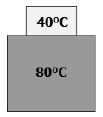
After some time passes, both blocks are recorded to have the same temperatures. Which process explains this change in temperature?
A: Heat flows from the smaller block to the larger block by convection.
B: Heat flows from the smaller block to the larger block by conduction.
C: Heat flows from the larger block to the smaller block by convection.
D: Heat flows from the larger block to the smaller block by conduction.
D: Heat flows from the larger block to the smaller block by conduction.
300
Which of these leads to the formation of deep ocean currents?
A: wind patterns
B: rising warm water from deep ocean vents
C: differences in water temperature and density
D: Earth’s rotation
C: differences in water temperature and density
300
The circle graph below shows the distribution of water and land on Earth.
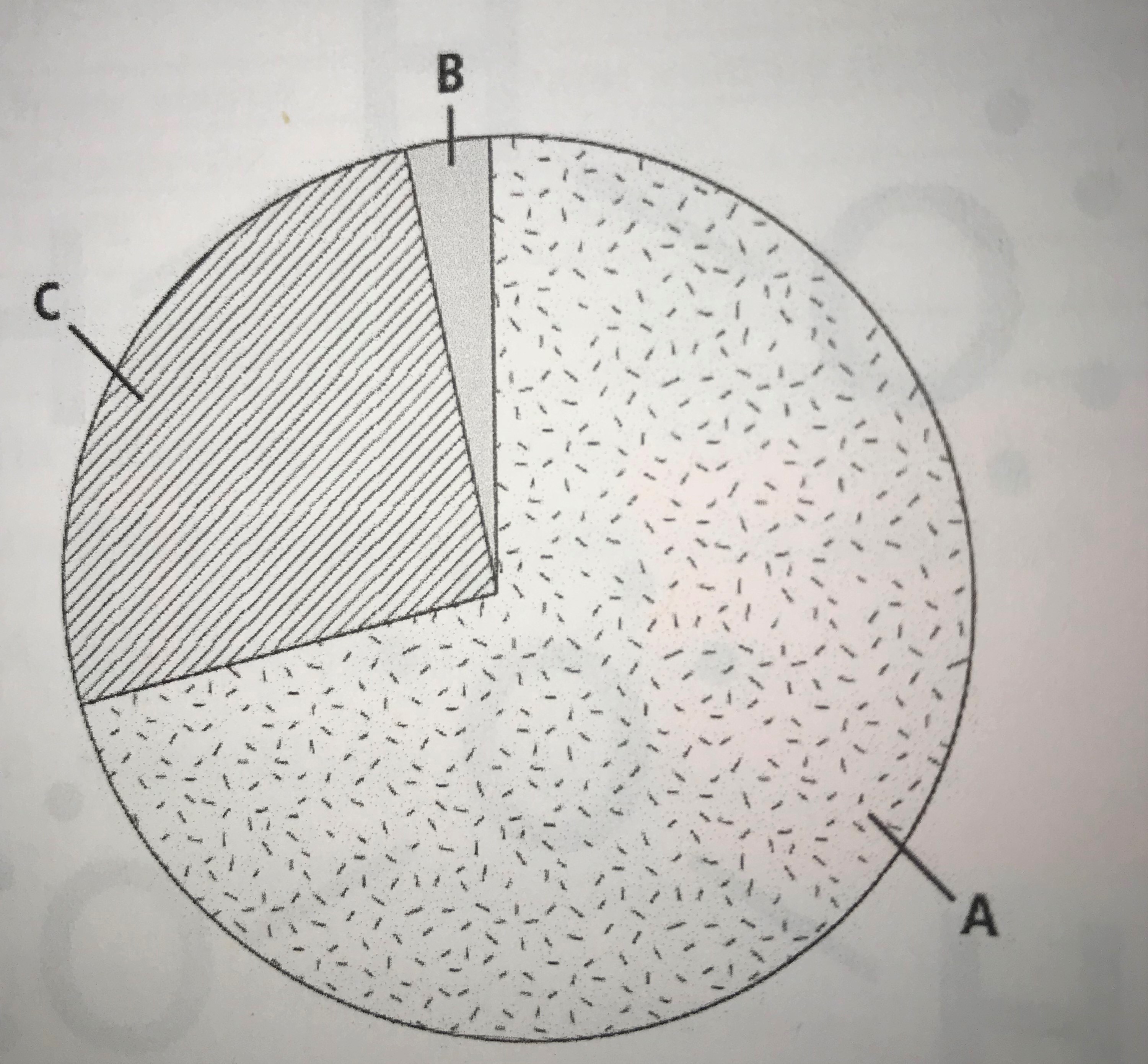
Which statement best explains the graph?
A: A is land, B is fresh water, and C is salt water.
B: A is salt water, B is fresh water, and C is land.
C: A is fresh water, B is land, and C is salt water.
D: A is salt water, B is land, and C is fresh water.
B: A is salt water, B is fresh water, and C is land.
400
Temperature is a way to measure the ___________ energy of particles within matter.
A: thermal kinetic
B: elastic potential
C: electrical potential
D: chemical potential
A: Thermal Kinetic
400
A monkey increases its gravitational potential energy by climbing to the top of a tree. What happens to that potential energy if he climbs back down halfway?
A: The potential energy would remain the same.
B: The potential energy would double.
C: The potential energy would decrease by half.
D: The potential energy would decrease by three-fourths.
C: The potential energy would decrease by half.
400
A student fills a large container with water at 60°C. The student then fills a beaker with water at 20°C, places a thermometer in the beaker, and places the setup inside the large container, as shown. The student leaves the setup on a table and records the temperature every 2 minutes for 8 minutes in a table.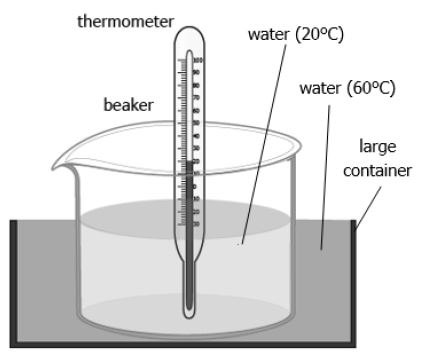
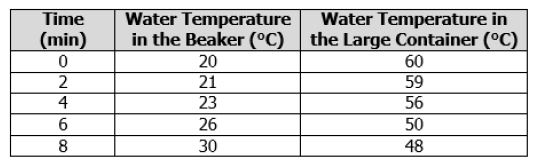
What can be inferred about thermal energy from the experiment?
A: Thermal energy is stored in objects.
B: Thermal energy cannot be transferred.
C: Thermal energy flows from hot objects to cold objects.
D: Thermal energy is transmitted as electromagnetic waves.
C: Thermal energy flows from hot objects to cold objects.
400
Which process increases the salinity of ocean water at the poles?
A: the coriolis effect
B: convection currents
C: freezing of water at the poles
D: continental deflection
C: freezing of water at the poles
400
Farmers often give their crops more nutrients by applying chemical fertilizers to the soil. Which of the following describes how this activity is most likely to affect water quality in nearby bodies of water?
A: If the fertilizers run off into the water, they can cause an overgrowth of algae known as algal bloom.
B: If the fertilizers run off into the water, the nutrient level will decrease.
C: If the fertilizers run off into the water, there will be no effect on the organism populations that live in those waters.
D: Applying chemical fertilizers to soil is unlikely to affect water quality in nearby bodies of water.
A: If the fertilizers run off into the water, they can cause an overgrowth of algae known as algal bloom.
500
The image shows a storm cloud where there are areas of positive charge and negative charge building. This storm cloud is likely to produce lightning because of this difference in charge.
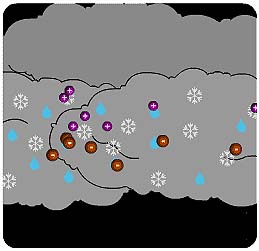
Because of the difference in charge, the storm cloud represents which type of energy source?
A: chemical potential
B: electric potential
C: thermal kinetic
D: gravitational potential
B: Electrical Potential
500
Three rocks are each taken to the top of the same cliff in different ways. Rock A is lifted straight up to the top of the cliff. Rock B is rolled up a ramp to the top of the cliff. Rock C is carried up steps to the top of the cliff. Once at the top, which rock will have the greatest amount of potential energy?
A: Rock A
B: Rock B
C: Rock C
D: All three rocks will have the same amount of potential energy.
D: All three rocks will have the same amount of potential energy.
500
The image shows how a breeze is formed at the beach during the day.
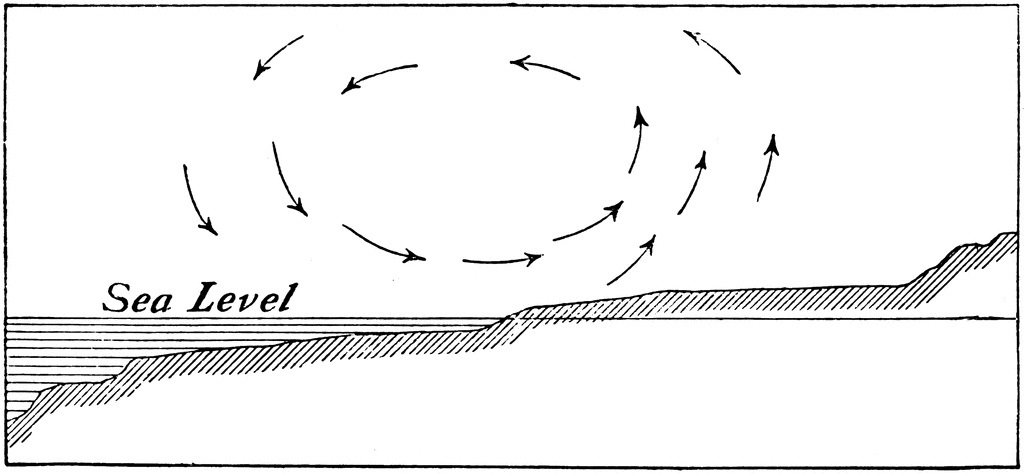
Which of the following statements are true. (Choose three.)
A: The sandy beach is heated by the Sun through radiation.
B: Thermal energy is always transferred from warmer areas to cooler areas.
C: The transfer of thermal energy due to the movement of air (gases) is called conduction.
D: The warm air rising distributes heat from the sand through convection.
A: The sandy beach is heated by the Sun through radiation.
B: Thermal energy is always transferred from warmer areas to cooler areas.
D: The warm air rising distributes heat from the sand through convection.
500
Which of the following correctly shows the chain of energy transfers that occur to create surface currents on the ocean?
A: solar energy→ wind energy→ surface currents
B: wind energy → solar energy→ surface currents
C: tidal energy → wind energy → surface currents
D: geothermal energy → wind energy → surface currents
A: solar energy→ wind energy→ surface currents
500
The town of Winchester recently built an artificial body of water. This reservoir will store drinking water for the town. Which of the following could cause contamination of the water and lead to human health-related problems and loss of native species?
A: development of a water quality plan
B: building a fence around the reservoir
C: improvements to a water treatment facility
D: increased use of pesticides by farmers within the local watershed
D: increased use of pesticides by farmers within the local watershed
600
When a battery is attached to an electrical circuit, the electrical energy produced comes from stored _________energy.
A: electrical
B: chemical
C: nuclear
D: thermal
B: chemical
600
Refer to the picture below to answer the following question.
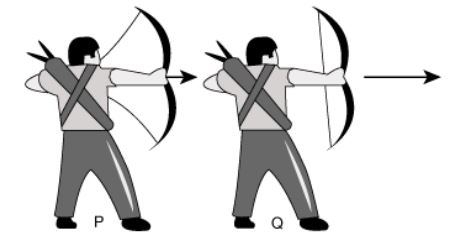
Which statement is correct about the types of energy the arrow has at positions P and Q?
A: The arrow only has potential energy at Q.
B: The arrow only has potential energy at P.
C: The arrow has both potential energy and kinetic energy at P.
D: The arrow only has potential energy at both P and Q.
B: The arrow only has potential energy at P.
600
A student labels two beakers 1 and 2, fills each beaker with 200 mL of water at 26°C, and places Beaker 1 on a table in a room with no windows and Beaker 2 in sunlight. The student places a thermometer in each beaker and records the final temperature of the water in each beaker after one hour, as shown in the table.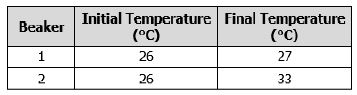
Which statement accurately explains how thermal energy impacts water particles in the beakers?
A: Thermal energy causes the particles in Beaker 1 to slow down and in Beaker 2 to speed up.
B: Thermal energy causes the particles in Beaker 1 to speed up and in Beaker 2 to slow down.
C: Thermal energy causes the particles in both Beaker 1 and Beaker 2 to speed up.
D: Thermal energy causes the particles in both Beaker 1 and Beaker 2 to slow down.
C: Thermal energy causes the particles in both Beaker 1 and Beaker 2 to speed up.
600
The Global Ocean Conveyor Belt describes the movement of ocean water around Earth in the form of currents.
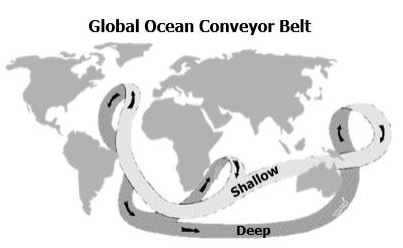
How can shallow ocean currents best be described?
A: warm water currents that are shallow due to tectonic plate movements
B: warm water currents that are shallow due to lower density
C: cold water currents that are shallow due to surface winds
D: cold water currents that are shallow due to differences in gravity
B: warm water currents that are shallow due to lower density
600
A researcher measures the amount of groundwater in two parts of a county, within the city and in a forest 25 miles away. The researcher finds that the amount of groundwater in the city is significantly lower than the amount of groundwater in the forest. Which statement about the water cycles in the city versus the forest does the finding support?
A: The city has buildings that reflect sunlight, increasing the temperature in the city and causing more precipitation than in the forest.
B: The city has sidewalks and roads that prevent water from infiltrating into the soil unlike the forest.
C: The rate of transpiration in the city is higher than in the forest due to less groundwater.
D: The rate of condensation in the city is higher than in the forest due to more air pollution.
B: The city has sidewalks and roads that prevent water from infiltrating into the soil unlike the forest.