What's the Matter?
Structurally atomic
Ch-ch-ch-changes
Subatomic Particles
States of What?
100
Matter is anything that has mass and takes up ______________
space, volume
100
Name the 3 subatomic particles and their charge
Neutron Neutral Charge
Proton Positive Charge
Electron Negative Charge
100
What is the temperature in which a solid changes into a liquid?
Melting Point
100
I am the identity of every element on the periodic table. I live in the nucleus. Who am I?
Protons
100
___________________ properties include harness and color while _______________ properties are those that include reactivity.
Physical , Chemical
200
What does Kinetic Molecular theory state?
The average speed of particle movement is equivalent to temperature.
200
Which subatomic particle has the MOST mass of all 3?
Neutron
200
The term for when a gas changes into a liquid.
Condensation
200
I'm an outsider b/c I live on the outskirts, my mass is negligible, and I help to power your cell phones. What am I?
Electrons
200
Which statement best describes a substance that is classified as a compound?
A. It is any atom from the periodic table
B. It is made up of several substances
C. It is made up of more than 1 element on the periodic table and is represented by a chemical equation such as H2O or C6H12O6
C. It is made up of more than 1 element on the periodic table and is represented by a chemical equation such as H2O or C6H12O6
300
The law of conservation of matter states that matter can never be ______________ nor _____________ . Matter only ever changes __________.
Matter can never be created nor destroyed. Matter only ever changes forms.
300
Which 2 particles make up an elements mass #? Where are they Located?
Protons and Neutrons. In the nucleus
300
Name 2 systems that are commonly used to measure temperature.
Celsius
Fahrenheit
Kelvin
300
Which model of an atom is the image below?
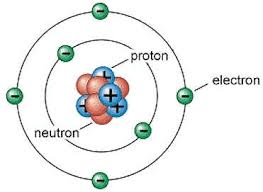
The Bohr model
300
An unknown silvery liquid is analyzed in a lab. It cannot be broken down into simpler substances by any chemical means. This matter should be classified as:
A. Element
B. Hetergeneous mixture
C. Homogeneous mixture
D. Compound
D. Compound
400
Name 4 of the 5 states of matter?
Solid, Liquid, Gas, Plasma, Bose-Einstein Condensates
400
What is the difference between an ion and an isotope?
In an ion the atom has gained or lost electrons so the number of electrons is no longer equal to the number of protons. Isotopes have the same number of protons and electrons but a different number of neutrons, resulting in a different mass number.
400
Which statement accurately describes the arrangement and motion of particles in a solid?
A. Particles are close together but can slide past one another.
B. Particles are far apart and move randomly at high speeds.
C. Particles are closely packed and vibrate in fixed positions.
D. Particles are ionized and move independently of their nuclei.
C. Particles are closely packed and vibrate in fixed positions.
400
How many electrons can occupy the first electron orbital?
2
400
What is the term that describes the change of state from a gas to a liquid?
Condensation
500
I am an objects mass divided by it's volume. What am I?
Density
500
Which element has 8 protons?
Oxygen
500
Which state of matter has a definite volume but an indefinite shape?
A. Liquid
B. Plasma
C. Gas
D. Solid
A. Liquid
500
If I have a mass number=28 and I have 13 neutrons then I am which element?
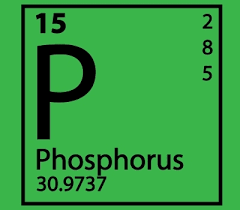
Phosphorus
500
What is the term for the change in state from a solid straight to a gas; skipping the liquid state?
Sublimation
600
I am the most prevalent state of matter in the entire universe.
Plasma
600
What is the difference between an elements mass number and their atomic mass?
Mass number= # of protons + # of neutrons
Whereas, the atomic mass is the average mass of all known isotopes of a given element by relative abundance.
600
The average kinetic energy of the particles in a substance is directly related to its:
A. Density
B. Temperature
C. Pressure
D. Volume
B. Temperature
600
C13 is an atom of Carbon with 7 neutrons instead of 6. What is the term for a different "species" of the same element but with +/- neutrons?
An Isotope
600
When a gas changes directly into a solid without becoming a liquid in between.
Deposition