Prokaryotic vs. Eukaryotic Cells
General: Organelles
Plasma Membrane
Photosynthesis
Cellular Respiration
Protein Synthesis
Interpreting Images/Graphs
Biology: Total Review
100
This type of cell does NOT have a nucleus.
What is a prokaryotic cell?
100
This organelle contains digestive enzymes that break down waste.
What is the lysosome?
100
The plasma membrane is made of a double layer of these molecules.
What are phospholipids?
100
Plants use this energy source to make their own food.
What is sunlight?
100
This molecule is the main energy currency of the cell.
What is ATP?
100
This molecule carries genetic instructions from DNA to ribosomes.
What is mRNA?
100
The molecules, in passive transport, would move from Side ____ to Side _____.
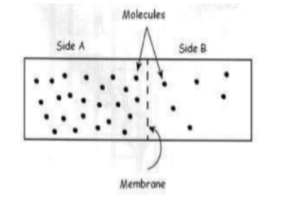
What is Side A to Side B?
100
This type of molecule makes up enzymes.
What are proteins?
200
Is the image below a prokaryotic or eukaryotic cell?
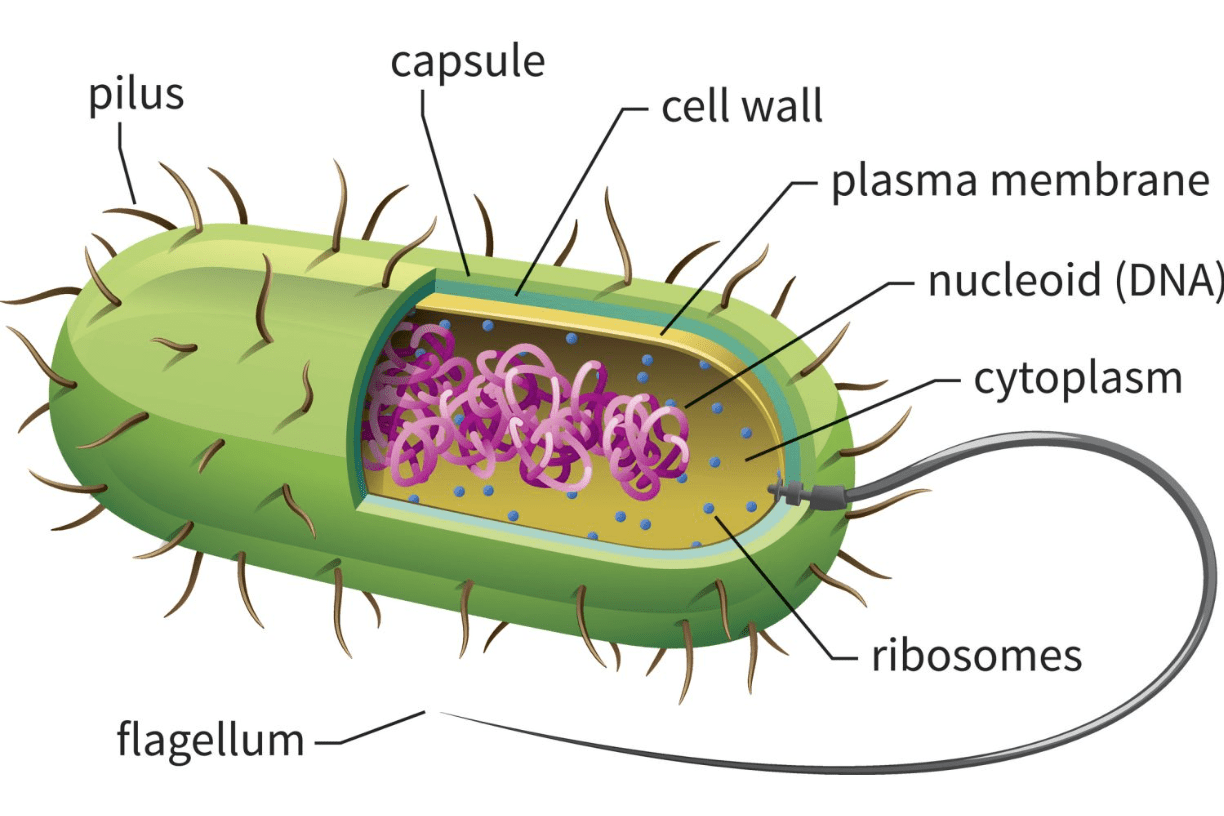
What is prokaryotic?
200
This organelle is the site of photosynthesis.
What is the chloroplast?
200
This type of transport does NOT require energy.
What is passive transport?
200
This gas is produced during photosynthesis.
What is oxygen?
200
Cellular respiration occurs primarily in this organelle.
What is the mitochondria?
200
This organelle assembles amino acids into proteins.
What is the ribosome?
200
What is happening at part 2 and part 4?
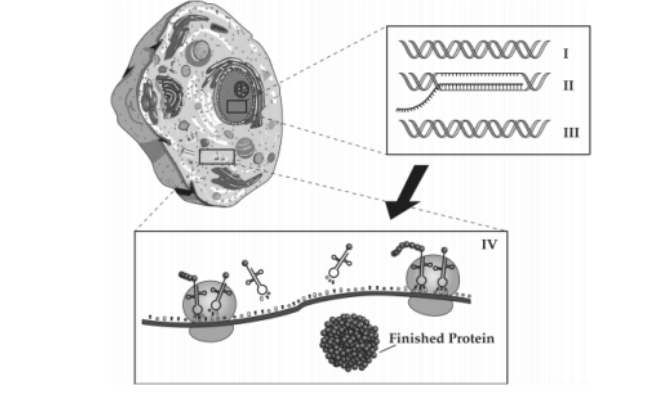
What is transcription?
What is translation?
200
This process maintains internal balance in an organism.
What is homeostasis?
300
This structure separates DNA from the cytoplasm in eukaryotic cells.
What is the nucleus?
300
This organelle is where proteins are made.
What are ribosomes?
300
This transport process involves water moving across a membrane.
What is osmosis?
300
This gas enters the leaf for photosynthesis.
What is carbon dioxide?
300
This type of respiration requires oxygen.
What is aerobic respiration?
300
This process converts mRNA into a protein.
What is translation?
300
This process is translation. Where does translation happen?
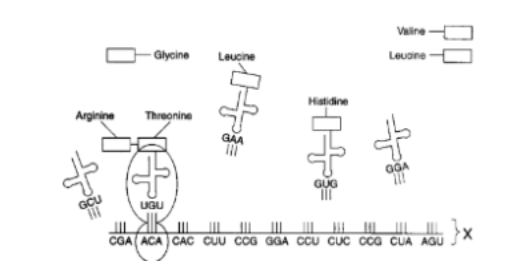
What is the ribosome?
300
This type of organism can make its own food.
What is an autotroph?
400
What type of cell is pictured below?
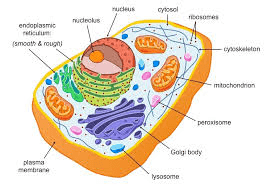
What is an animal cell?
400
This structure controls what enters and leaves the cell.
What is the cell membrane?
400
This property allows only certain substances to pass through the membrane.
What is selective permeability?
400
This gas is released during photosynthesis.
What is oxygen?
400
This process breaks down glucose to release energy.
What is cellular respiration?
400
This process occurs in the nucleus and makes mRNA from DNA.
What is transcription?
400
At what temperature does photosynthesis produce the most oxygen? 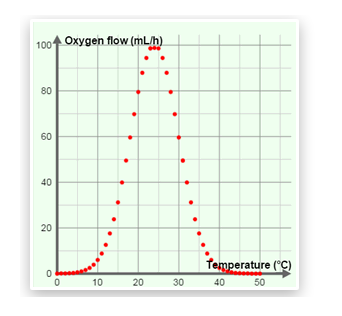
What is 25 degrees?
400
Glucose is an example of this type of carbohydrate.
What is a monosaccharide?
500
This is one major structural difference between plant and animal cells.
What is a cell wall and chloroplasts (plant cells have them; animal cells do not)?
500
A muscle cell needs more energy than a skin cell. The muscle cell is going to have more _____________ (type of organelle).
What is mitochondria?
500
This transport process moves materials from low to high concentration using ATP.
What is active transport?
500
The glucose made in photosynthesis is used in this process.
What is cellular respiration?
500
This type of respiration occurs in the absence of oxygen.
What is anaerobic respiration?
500
This three-base sequence on mRNA codes for one amino acid.
What is a codon?
500
A strand of mRNA containing a repeating sequence AAU-CGC-AAU would code for what amino acid sequence?
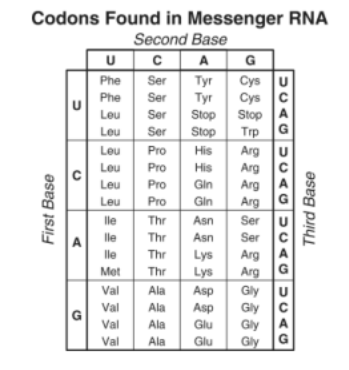
What is Asn - Arg - Asn?
500
Enzymes speed up chemical reactions by lowering this.
What is activation energy?
600
A strand of DNA containing the repeating sequence AAT - TTC - GTG would code for what amino acid sequence? 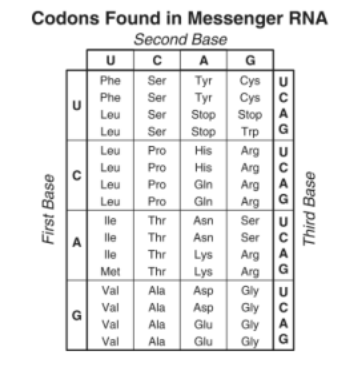
What is Leu - Lys - His?