Cell Membrane
Passive vs. Active Transport
Diffusion
Osmosis
Osmosis Practice Problems
Difficult-ish Problems
Photosynthesis
Cellular Respiration
Fermentation
ATP/Pigments
100
The cell membrane can also be called the __________ membrane.
plasma membrane/phospholipid bilayer/lipid bilayer
100
This type of transport requires energy: active or passive.
Active transport
100
The molecules will move across the cell membrane until it reaches ____________ and then they will stop moving.
Equilibrium
100
T - Osmosis is the movement of ___________ across the cell membrane [water, molecules, air] from ________ to _________ concentrations.
Water, high, low
100
What structure allows for a plant cell to not burst when it is full of water in a hypotonic solution?
The cell wall!
Super strong - prevents plant cells from bursting open.
100
What is a similarity of diffusion and active transport?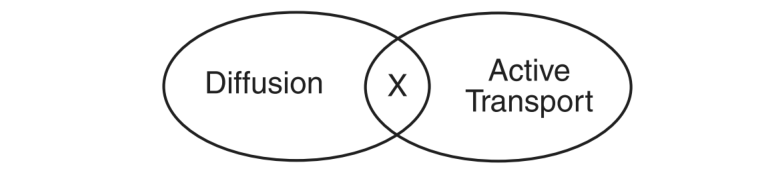
They both transport molecules, they both are modes of transportation that occur at the cell membrane.
100
What is the whole function of photosynthesis?
To make glucose
100
T or F: Cellular Respiration means to breathe
F - Cellular Respiration refers to the process used to make down glucose for energy
100
When does fermentation happen in a cell?
When the cell has ran out of oxygen
100
T - What does ATP stand for? (spell it to the best of your ability)
Adenosine Triphosphate
200
he orange dots in this picture of the cell membrane are _________ and they are considered hydro_________.
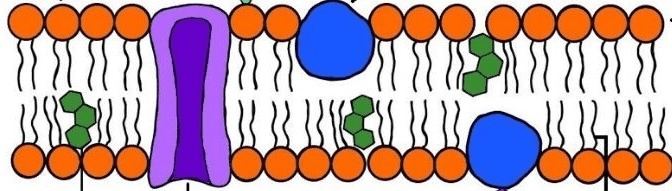
Phosphates - Hydrophilic
200
Active or Passive: This type of transport moves from areas of higher concentration to lower concentration or down the concentration gradient.
Passive
200
T - Is diffusion the movement of particles/molecules or water?
Particles! Osmosis is the movement of water!
200
Name the 3 types of solutions associated with osmosis: No short-handing, write the entire name!
Isotonic, Hypertonic, Hypotonic
200
T - What solution is shown here and what happens to the cell? Write the whole name of the solution.

This is a hypotonic solution - The water moves into the cell, causing it to swell.
200
Between these 3 solutions, which one should your cells ideally be placed in?
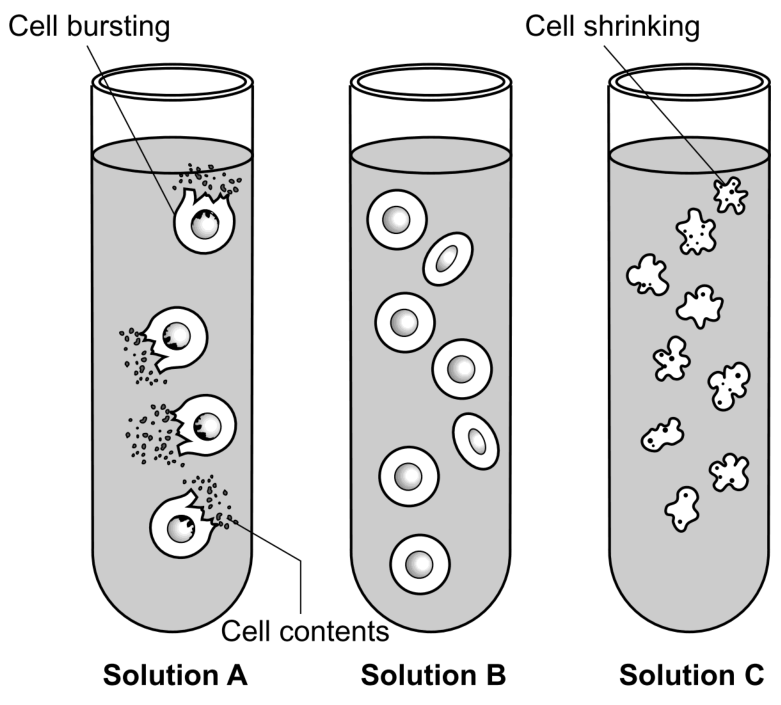
Solution 2
200
T - What is the formula for glucose?
(C6H1206)
200
What is the entire purpose of cellular respiration?
To make ATP (by breaking down glucose)
200
How many types of fermentation are there?
2
200
How many parts of ATP are there?
3 parts
300
T - T or F: The tails of a phospholipid are hydrophilic. You can write either "T" or "F"
False - They are fatty acids (lipids) which means they do not like water so they are hydrophobic.
300
T - What is the name of the energy that is used in active transport?
ATP - If you see a picture with ATP in it and something is moving into the cell, it is active transport!
300
If a molecule is too large to pass through the cell membrane but is still moving from high to low concentrations, what must be used to move it into the cell and what type of diffusion is this?
A protein and facilitated diffusion!
300
In a isotonic solution, what happens to the shape of the cell?
The cell shape does not change
300
T - In which type of solution would you say the first blood cell was placed in? Write the whole name of the solution.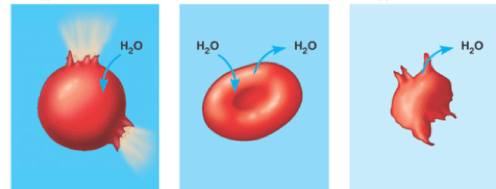
Hypotonic - The cell burst!
300
What molecule is this?
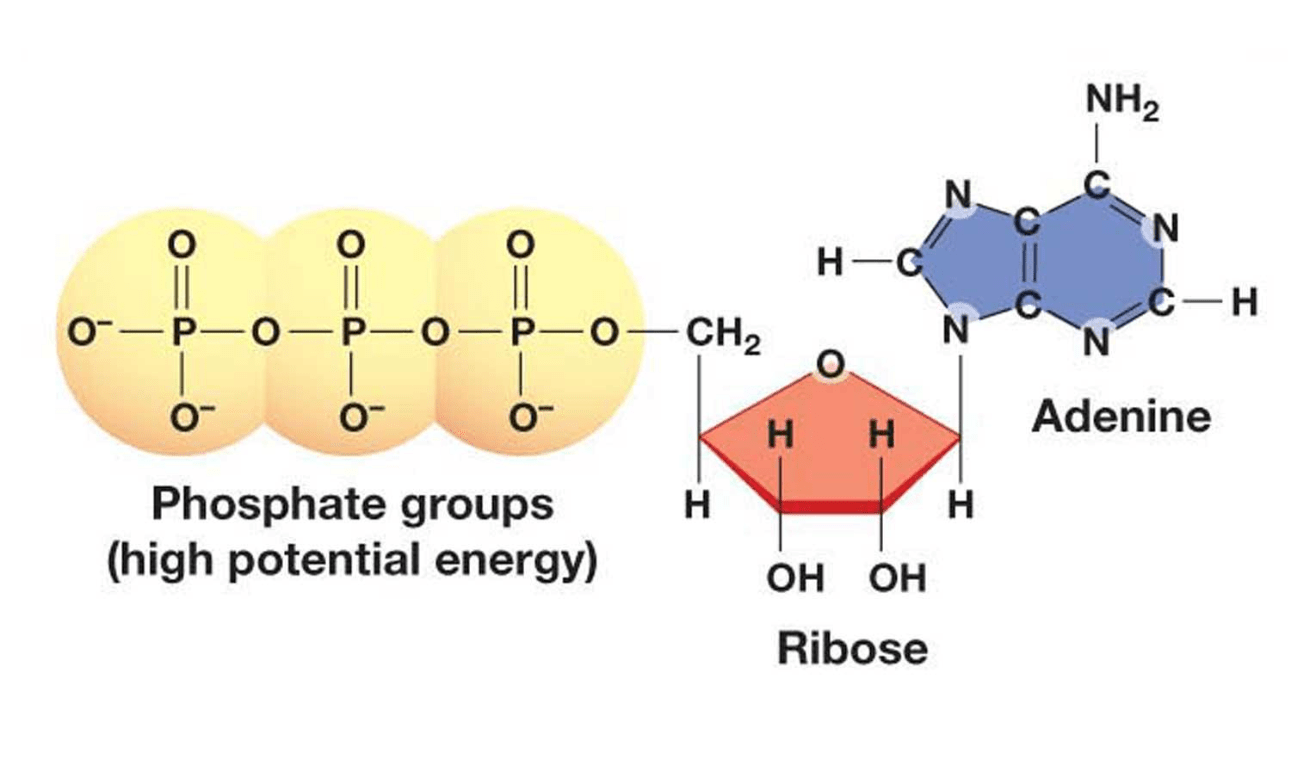
ATP!
300
What organelle does photosynthesis happen in?
Chloroplast
300
What molecule is being broken down in cellular respiration?
glucose molecule (C6H1206)
300
T - What are the names of the different types of fermentation?
Alcoholic Fermentation and Lactic Acid Fermentation
300
T - Name the 3 parts of ATP.
Adenine, Ribose (sugar), and 3 phosphate groups
400
What is the name of the macromolecule that is imbedded in the cell membrane and helps bring over large molecules AND what color is it in this picture?
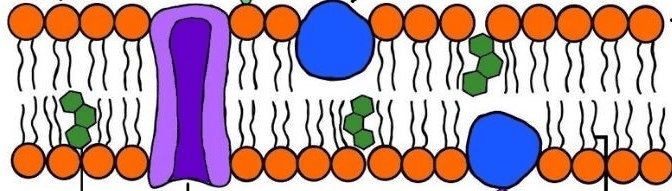
Protein - Purple!
400
T - Look at the picture: Is passive or active transport occuring?
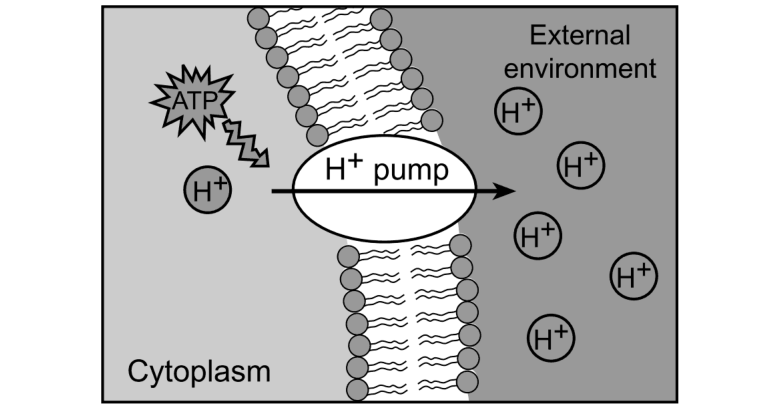
Active - ATP is present!
400
T - Diffusion is the movement of ___________ across the cell membrane [water, molecules, air] from _______ to ________ concentrations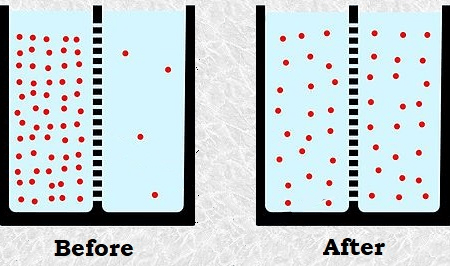
molecules, high, low
400
Hypotonic solutions cause a cell to ________ but hypertonic solutions cause a cell to ___________.
swell and shrink/shrivel up
400
What type of solution is this and what happens to the cell? Write the whole name of the solution.

Hypertonic - The cell shrinks!
400
T - What would happen to your cells and why?
This would cause your cells the shrivel up as all the water would move to the IV fluid that has a high amount of salt (a low amount of water). Your cells would have a higher amount of water and since water moves from high to low, your cells would shrink/dehydrate.
400
What gas is taken from the atmosphere for photosynthesis?
Carbon Dioxide
400
T - What organelle does cellular respiration happen in?
Mitochondria
400
T -
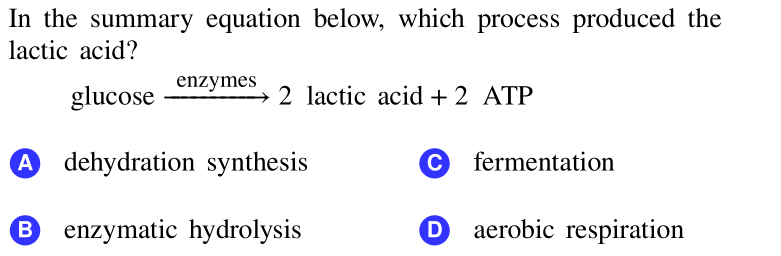
C - Fermentation
400
Between which phosphates is majority of the energy stored in ATP?
2nd and 3rd phosphate
500
T - The cell membrane picks and chooses what comes into it. What is the term used to describe this feature of the cell membrane?
Selectively permeable or semi-permeable
500
Name the 3 types of diffusion we talked about: YOU MUST WRITE THE WHOLE NAME!!
1. Simple Diffusion
2. Facilitated Diffusion
3. Osmosis
500
True of False: This is an example of diffusion/passive transport.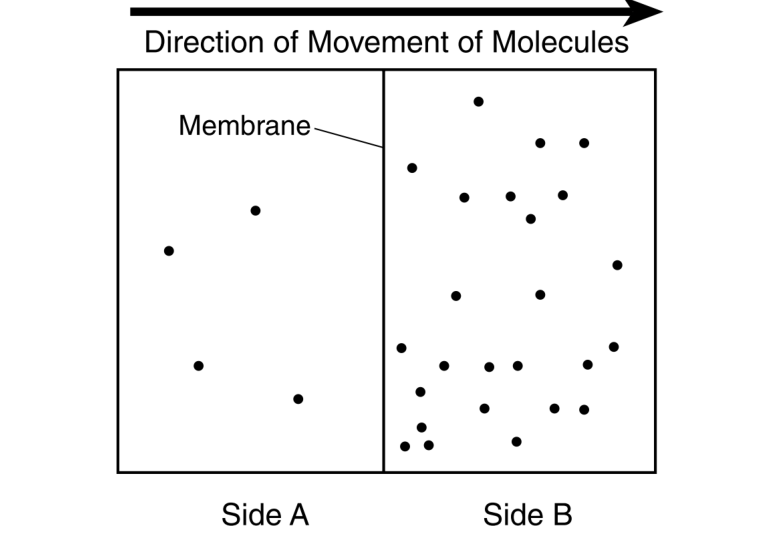
False - This is an example of active transport because the molecules are moving from low to high. Passive transport (simple diffusion, facilitated diffusion, osmosis) all move from high to low.
500
T - What type of solution do animal cells prefer?
Isotonic
500
What type of solution is this cell in? Write the whole name of the solution.
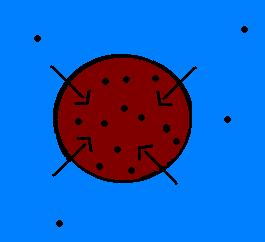
Hypotonic!
500
T - A plant is submerged in water in a beaker and is subjected to a light source. Over time, bubbles are released from the plant in the form of a gas, and the gas is captured in an inverted test tube.
What gas was collected?
Oxygen - Plant was experiencing photosynthesis which produces the gas called oxygen which was what was seen with the bubbles
500
T - Write the entire equation for photosynthesis (molecular formulas for the different molecules).
Energy
6CO2 + 6H20 --> C6H1206 + 6O2
500
T - Write the entire equation for cellular respiration (molecular formulas for the different molecules). The energy produced must say what specific energy it is. You do not have to write the name of the other molecules.
C6H1206 + C02 --> 6C02 + 6H20 + ATP
500
Alcoholic Fermentation produces what molecule that lets you know for a fact that alcoholic fermentation occured?
Ethanol
500
When an ATP molecule is broken down and a phosphate is removed what is the name of the molecule that is created?
ADP