Representations
Phenomena
Rules
Trees
Operations
100
This is what's left behind when something moves.
What is a trace/copy?
100
This dependency is famous for its principles in alphabetical order.
What is binding?
100
This constraint prevents an argument from moving from one theta-position to another.
What is the theta-criterion?
100
The relationship between a node and everything reflexively dominated by its sister.
What is c-command?
100
This operation is responsible for building sentence structure from scratch.
What is Merge?
200
This is a space consuming but visually clear way to represent syntactic structure.
What is a tree?
200
This causes an element to show up in more than one place in the structure.
What is movement?
200
This constraint prevents an element from moving or Agreeing across another element of the same type.
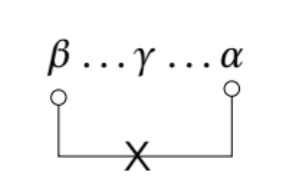
What is Relativized Minimality?
200
Its sister is the head of the phrase.
What is the complement?
200
In Minimalism, this operation obtains between a probe and a goal and underlies all syntactic dependencies.
What is Agree?
300
This type of element can bear a theta-role and case.
What is an NP/DP?
300
This dependency and agreement are sometimes seen as two sides of the same coin.
What is case assignment?
300
The rule that clauses (e.g. in English) must have an overt subject.
What is the Extended Projection Principle?
300
Its sister and mother bear the same category.
What is an adjunct?
300
This operation ships structure to LF and PF.
What is Spell Out?
400
Nothing can escape this chunk of structure except through its head or specifier.
What is a phase?
400
The phenomenon whereby certain nominals (often but not always subjects) in certain languages (e.g. Spanish) can stay silent.
What is pro-drop?
400
The constraint that a phrase XP must have a head of category X.
What is endocentricity?
400
This part of a phrase projects its features
What is a head?
400
The operation involving movement to a case position.
What is A movement?
500
This is the atom of syntax.
What is a (syntactic) feature?
500
The phenomenon involving the position of the subject in (i):
(i) The rain seems to have stopped.
What is raising?
500
The rule that every syntactic operation must involve the root node.
What is the Extension Condition?
500
It is a maximal projection and so is its mother, but not its sister.
What is a specifier?
500
The operation that gives you (2) from (1):
(1) I can eat now.
(2) Can I eat now?
What is head movement?
600
The sequence of functional heads that are built on top of a lexical head of a given category.
What is an extended projection?
600
The phenomenon affecting the subject in (a):
(a) Ali started to pour the water into the bottle.
What is (obligatory) control?
600
The rule that makes the following sentence ungrammatical by preventing says from agreeing with Alice:
*I says that [Alice went to the store].
What is (phase-)locality?
600
One daughter, two mothers!
What is multi-dominance?
600
The operation underlying the examples in (a) & (b):
(a) Mary seems to be expected to appear smart.
(b) Who did Ali tell Rahman that Saurav saw Meena meet?
What is successive cyclic movement?