Blood Flow
Pressure
Cardiovascular
Conduction System
Spread of Excitation Through the Heart Muscle
100
Total peripheral resistance is:
The combined resistance of all organs in the systemic circuit
100
Venous pressure increases:
As a result of an increase in venomotor tone
100
 Sinus Tachy
100-180
treat cause
100
Originates in the heart causing the cyclic contraction?
Electrical Activity
100
What is the natural pacemaker of the heart and what does it do?
SinoAtrial Node (SAN) autorhythmic cells under epicardium in right atrium.
They initiate action potentials through atria through gap junctions. They spontaneously depolarise, creating pacemaker potential.
There is a leakage of sodium called the funny current wihch slowly increases RMP
The resting potential is -60MV, steady rise of this inhibits eflux of potassium which raises RMP until -40MV.
The SAN sends action potentials to the AV node.
200
Lymphatic capillaries differ from blood capillaries in that:
Lymphatic capillaries are blind ended
200
If arterial pressure is elevated, baroreceptor signals trigger which of the following responses?
A fall in plasma angiotensin II levels
200
Each of the two upper chambers of the heart that receives blood that comes into the heart
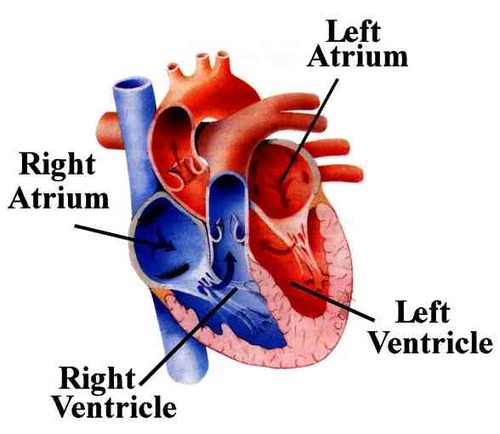
Atrium
200
The electrical activity causes muscles to contract?
Mechanical Activity
200
What also happens at the same time?
The Banchmanns Bundle transmits pacemaking impulses from SA node to left atrium to left and right atria contact in unison.
300
(An increase/A decrease) in the radius of a blood vessel raises its resistance.
decrease
300
A drop in arterial blood pressure triggers (an increase/a decrease) in sympathetic nervous activity.
increase
300
Bottom portion of the heart, thicker walled and larger

Ventricle
300
Have the unique property of automaticity?
Cardiac Cells
300
What happens when AV node is stimulated?
Action potential slows so that atrial systole can complete before ventricular. Atrial contraction is triggered by depolarisation of atrium though Bachmanns Fibres.
400
An increase in blood flow in response to a rise in metabolic activity is referred to as active hyperemia. (true/false)
true
400
arterial blood pressure
pressure exerted by the force of blood acting on the walls of arteries
400
System that provides gas exchange between the lung and the heart.

Pulmonary
400
is the ability of cardiac cells to discharge an electrical current without external stimulus?
Automaticity
400
Where does the AV node action pot travel to next then next?
Bundle of His - interventricular septum. Propagates the action pot to right and elft branches towards the Apex.
Then the Purkinje fibres from the apex to the ventricular myocardium, This triggers ventricular contraction.
500
An increase in blood flow in response to a rise in metabolic activity is referred to as active hyperemia. (true/false)
true
500
central venous pressure (CVP)
the pressure in the large veins in the thoracic cavity that lead to the heart
500
 A flap of tissue in the heart or a vein that prevents blood from flowing backward.
Valve
500
Sends electrical impulses through fibers in the septum called the Bundle of His?
Atrioventricular (AV) Node
500
How is the SAN regulated?
Has pacemaker cells which fire at an innate freq of 100 potentials per min. Autonomic control slows to 60-80 beats per min.
Funny current steadily rises RMP from-60mv, inihibiting potassium efflux which rises it more. Once it reaches -40mv the threshold is met and action potential is triggered.
This occurs due to voltage gated calcium ion channels opening which depolarises the cell to +10mv.
Repolarisation occurs when potassium channels reopen and the pump is reactivated.