Origins & Conquest
Colonial Art
Road to Independence
Landmarks in Time
100
The Spanish conqueror who officially founded the city of Quito in 1534.
Sebastián de Benalcázar 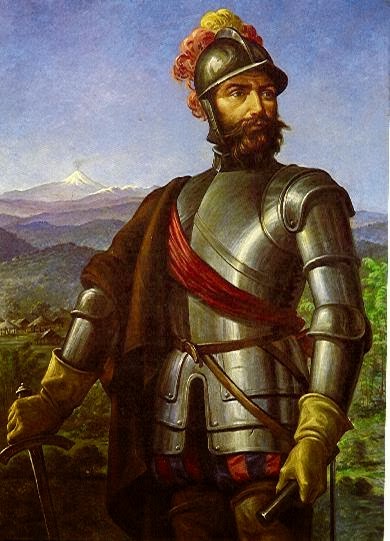
100
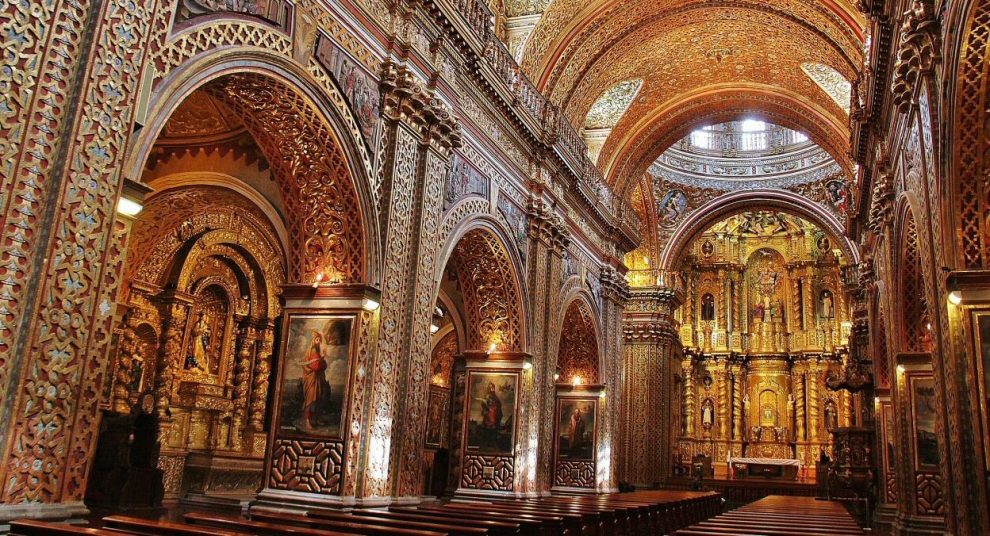
The famous Jesuit church with an interior covered in gold leaf.
La Compañía de Jesús
100
The volcano where the final battle for independence took place in 1822.
Volcan Rucu Pichincha

100
The winged aluminum statue on a hill that watches over the city.
Virgin of El Panecillo
200
The Inca general who burned the city so the Spanish would find nothing.
Rumiñahui
200
The title given to Quito by UNESCO in 1978, being the first city to receive it.
Cultural World Heritage Site

200
The Marshal (Mariscal) who led the troops to victory in the Battle of Pichincha.
Antonio José de Sucre

200
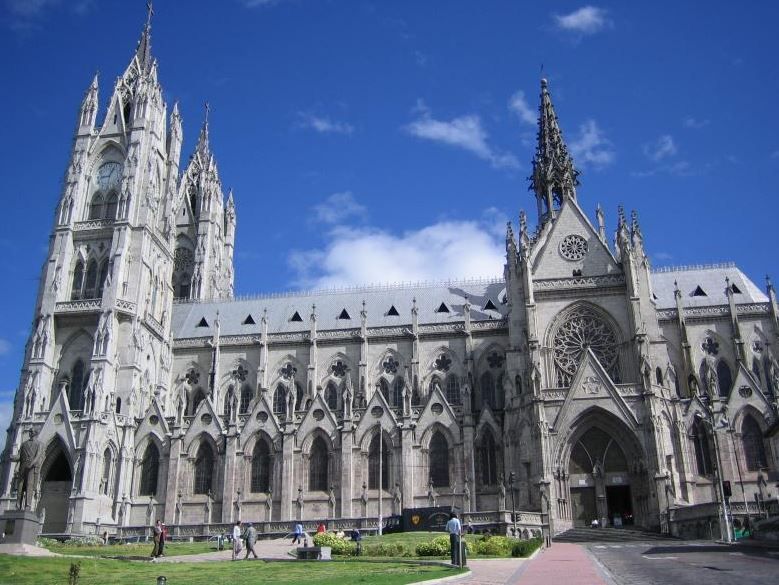
The Gothic church famous for having Ecuadorian animals as gargoyles.
Basilica del Voto Nacional
300
The indigenous kingdom that lived in this region before the Inca invasion.
Quitu-Cara

300
The artistic movement that mixed Catholic themes with indigenous techniques.
Escuela Quiteña

300
The specific date celebrated as the "First Cry of Independence" in Quito.
August 10, 1809
300
The current park in the north that used to be the International Airport.
Parque Bicentenario
400
The name of the very first city founded near Riobamba
Santiago de Quito

400
The real name of the indigenous sculptor known famously as "Caspicara"
Manuel Chili

400
The Quiteña woman who saved Simón Bolívar's life in Bogotá.
Manuela Saenz

400
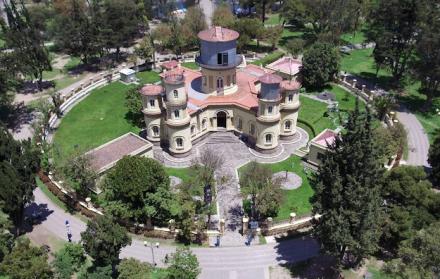
The scientific building located in the center of La Alameda Park.
Astronomical Observatory