Integumentary Layers
Basics of Skin
Effecting the System
Integumentary Anatomy Pictures
Diagnosing Stories
Diagnosing Images
Layers of Epidermis
100
List (from most superficial to least) the 3 Layers of the Integumentary System:
Enumere (de más superficial a menos) las 3 capas del sistema tegumentario:
Epidermis, Dermis, Hypodermis
100
What is the largest organ of the human body?
¿El órgano más grande del cuerpo humano?
Skin
100
What body parts other than the skin, make up the Integumentary system?
¿Qué partes del cuerpo, además de la piel, forman el sistema tegumentario?
Hair and Nails
100
What is the name of the structure labeled #2?
¿Cuál es el nombre de la estructura etiquetada como #2?
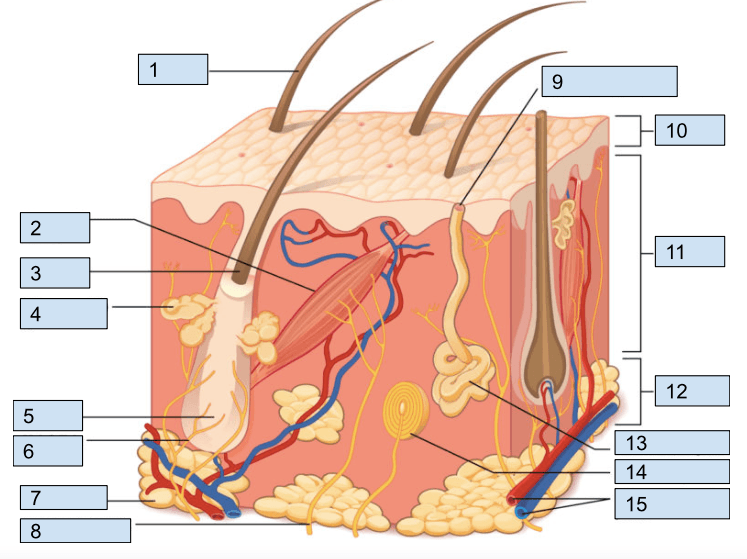
Arrector pili muscle
100
“A student stayed in the sun too long and now has red, painful skin that feels hot to the touch but has no blisters.”
1st Degree Burn
100
Which sunscreen will be more effective at protecting your skin from sun damage (left or right)?
¿Qué protector solar será más eficaz para proteger tu piel del daño solar (izquierda o derecha)?

Right
100
What is our mnemonic to remember the layers of the Epidermis?
¿Cuál es nuestra regla mnemotécnica para recordar las capas de la epidermis?
Come, Lets Get Sun Burnt
200
What is the name for the smooth muscle in the skin responsible for the movement of our hair follicles?
¿Cuál es el nombre del músculo liso de la piel responsable del movimiento de los folículos pilosos?
Arrector pili muscle
200
What part of our hair is visible above the skin?
What part of our hair is visible above the skin?
Hair Shaft
200
What provides the characteristics associated to the pigmentation in your skin?
¿Qué aporta las características asociadas a la pigmentación en tu piel?
melanin
200
What is the name of the structure labeled #4?
¿Cuál es el nombre de la estructura etiquetada #4?
Sebaceous gland
200
“A 32-year-old woman has red, itchy patches on her hands and wrists that become dry and cracked in the winter. She mentions her skin gets worse with stress and often flares up when she uses certain soaps.”
Eczema
200
What degree of burn would this most likely be?
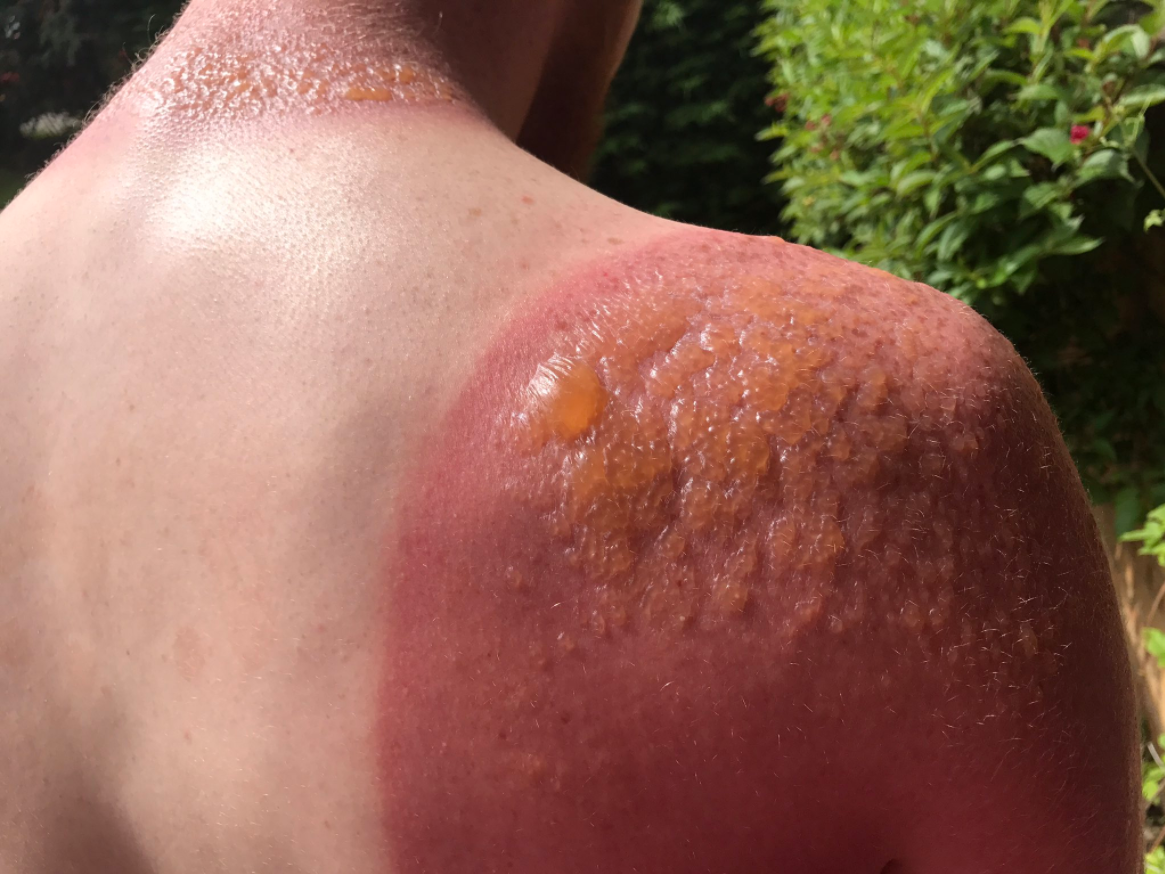
2nd-Degree burn
200
What are the two types of skin cells we learned about? (try your best to pronounce them)
¿Cuáles son los dos tipos de células de la piel que aprendimos? (Intenta pronunciarlos lo mejor posible).
Keratinocytes & Melanocytes
300
What is name for the substance recreated by the sebaceous gland?
¿Cuál es el nombre de la sustancia recreada por la glándula sebácea?
Sebum
300
Since skin is a sensory organ, what does it help our bodies regulate?
Dado que la piel es un órgano sensorial, ¿qué ayuda a regular nuestro cuerpo?
Body Temperature
300
What is cancer or more specifically, skin cancer?
¿Qué es el cáncer o, más concretamente, el cáncer de piel?
Rapid overproduction (and death) of skin cells
300
What is the name of the structure labeled #13?
¿Cuál es el nombre de la estructura etiquetada #13?
Sweat gland
300
“A college student complains of dry, itchy skin on their knees and elbows. The skin is flaky, and there is silvery plaques on the skin but no obvious triggers like allergies.”
Psoriasis
300
What disease is (most likely) shown in this photo?
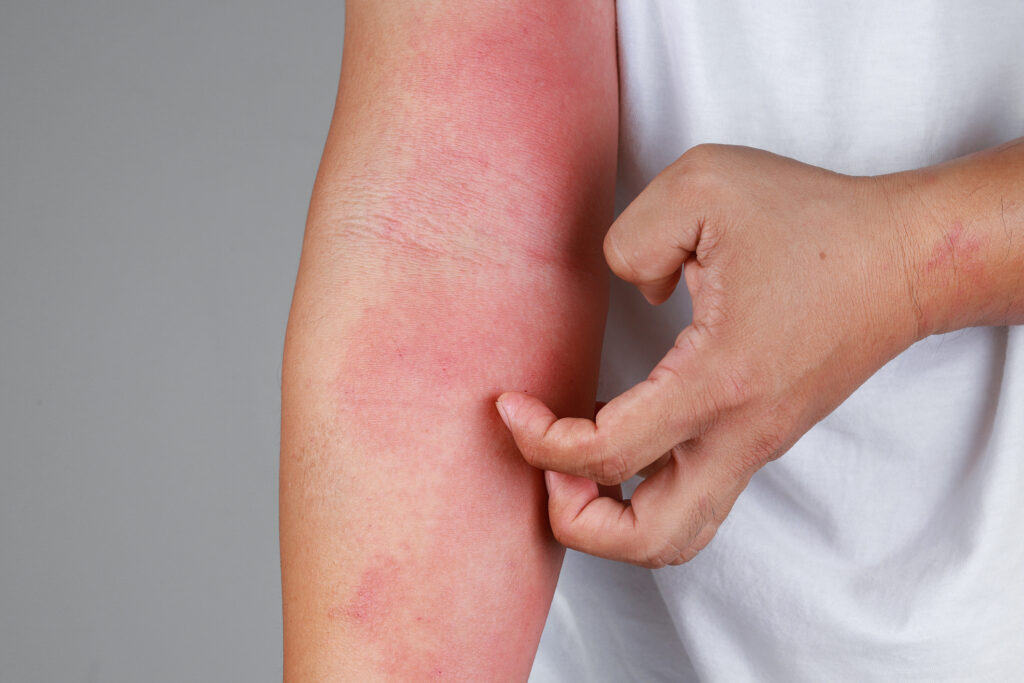
Eczema
300
What layer of the Epidermis consists of many flattened, dead keratinocytes?
¿Qué capa de la epidermis está formada por numerosos queratinocitos muertos y aplanados?
Stratum Corneum
400
What is the name for the tubelike depression in the skin where a hair develops?
¿Cuál es el nombre de la depresión en forma de tubo en la piel donde se desarrolla un cabello?
Hair follicle
400
List three functions of the skin:
Enumere tres funciones de la piel:
Protection, Temperature Control, Vitamin D Synthesis, Sensory Reception and Excretion
400
What does SPF stand for?
¿Qué significa SPF?
Sun Protection Factor
400
What is this microscopic image showing you?
¿Qué te muestra esta imagen microscópica?
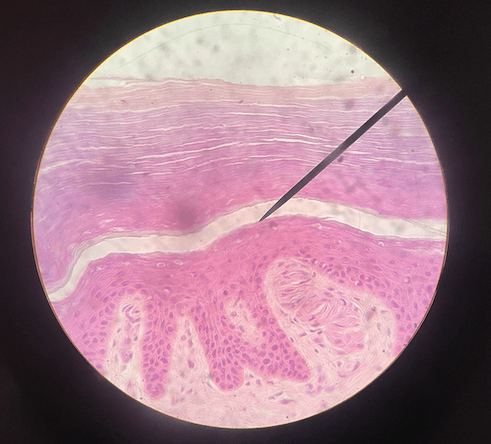
The layers of the epidermis
400
“A 55-year-old man has a rough, scaly red bump on his ear that has been slowly growing. He works outdoors and has had several bad sunburns in the past.”
Carcinoma
400
Is this an image of skin cancer or a normal mole? If it is skin cancer, then which type?
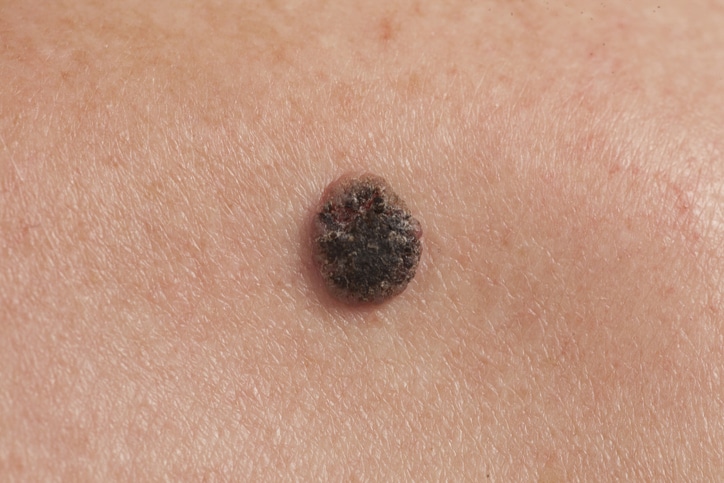
No this is a mole
400
What layer of the Epidermis has Keratinocytes beginning to die?
¿En qué capa de la epidermis comienzan a morir los queratinocitos?
Stratum Granulosum
500
What does the subcutaneous layer (Hypodermis) consist of?
¿En qué consiste la capa subcutánea (Hipodermis)?
Adipose tissue
500
What are the two rays of light that damages our skin cells?
¿Cuáles son los tres rayos de luz que dañan nuestras células de la piel?
UVA and UVB
500
Are most moles malignant or benign and what do these words mean?
¿La mayoría de los lunares son malignos o benignos y qué significan estas palabras?
Most are benign (non cancerous) and not malignant (cancerous)
500
How often are skin cells replaced in the epidermis?
¿Con qué frecuencia se reemplazan las células de la piel en la epidermis?
Every 27 Days
500
“A 47-year-old man notices a mole on his back that is symmetrical, has a round border and has one shade of brown”
A mole
500
Identify which type of skin cancer we see in each image: 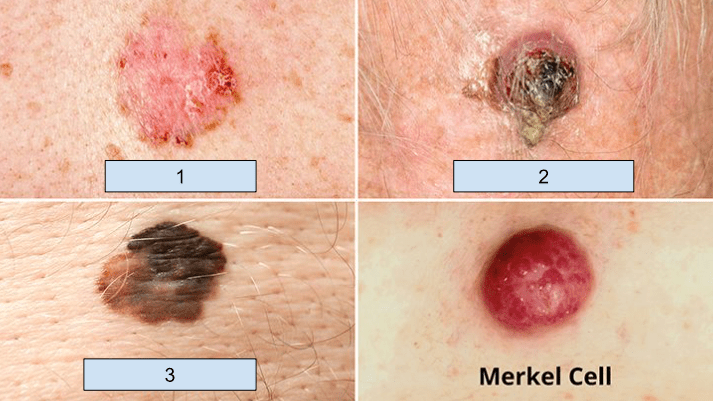
1. Carcinoma
2. Carcinoma
3. Melanoma
500
Which layer of the Epidermis is the origin of this skin Cancer?
¿En qué capa de la epidermis se origina este cáncer de piel?
:max_bytes(150000):strip_icc()/mel-is10-ec578b15c26e426d86a6f8171a61227a.JPG)
Stratum Basale