functions
skin layers
hair
Nails
glands
100
chemical protection
- skin secretes nature antiboitics defensins and most secretions have low pH both for killing bacteria.
100
what is the epidermis?
It is the superficial layer of skin made of epithelial tissue.
100
What are the three layers of hair?
1 Medulla (center core made of soft keratin)
2. Cortex (the bulky layer)
3. Cuticle (single layer of overlapping cells)
100
what are the 3 parts of the nail?
1- root (embedded in skin)
2- plate/body
3- free edge (what you trim)
100
list everything we need to know about the Eccrine gland
- most abundant, sweat gland, palms, forehead and soles of feet.
- function: temperature control and antibacterial properties
- type of secretion: sweat
- where secretion exits: surface of the skin
-where in the body: everywhere but extra in palms, soles, and forehead
200
biological protection
immune cells
200
what are the 4 types of epidermal cells?
1- Keratinocytes (produce keratin)
2- Melanocytes (produce melanin)
3- Dendritic/ Langerhans (ingest foreign invaders)
4- tactile epithelial/ merkel (they attach to the epidermis and dermis with sensory receptors)
200
What is the Arrector Pillar?
smooth muscle cell bundles that contract to raise hair up right-aka give you chill bumps
200
what is the rest of the epidermis called?
nail bed
200
what do we need to know about the Apocrine sweat gland?
-sweat gland
- lie dermis and are larger
- come in during puberty
- empty into the hair follicles, around armpits and groin.
-function: unknown, potentially sexual scent glands
- type of secretion: sweat + protien, and fatty substances
-where secretion exits: usually upper part of hair follicle, rarely skin surface
-where in the body: Axillary and Anogenital region of the body.
300
macrophages protection
- in the dermis acts as a 2nd line of defense-- an immune response if invaders make it through the epidermis
300
what are the 5 layers of the epidermis?
1- stratum corneum/ horrney layer (20-30 layers of dead cells for protection)
2- stratum lucidum/clear layer (only in thick skin, dead kartinocytes below the stratum corneum)
3. stratum granulosum/granular layer (1-5 layers of cells filled with keratin)
4. stratum spinosum/spinous layer (contains intermediate filaments that resist tension, dendritic cells are the most abundant here)
5. stratum basale/basal layer ( single row of stem cells attached to the dermis)
300
What is the Root hair plexus?
AKA hair follicle receptor-nerve fiber endings that perceive touch and warp around each bulb
300
what is the nail matrix?
where the nail grows.
300
tell me about the sebaceous gland
- function: soften skin and hair, slow water loss, and anibacterial properties
-type of secretion: sebum(oily secretion)
-where secretion exits: usually upper part of hair follicle, sometimes skin surface
- where in the body:everywhere EXCEPT palms and soles
400
Lamellar (pacinian) corpuscles
deeper pressure and fast vibrations
400
What are the 2 layers of the dermis?
1. Papillary dermis (made of areolar tissue interwoven loosley with collagen, elastic fibers, and blood vessles)
- Dermal papillae ( projections from the dermis surface into the edpidermis with capillary loops, nerve endings, and sensory receptors)
2. Recticular Dermis (made of dense irregular connective tissure, and houses a network of vessles, and thick bundles of collagen fibers.)
400
What is the dermal papillae?
Has the capillaries that supply hair with nutrients and allows for hair growth.
400
label the nail
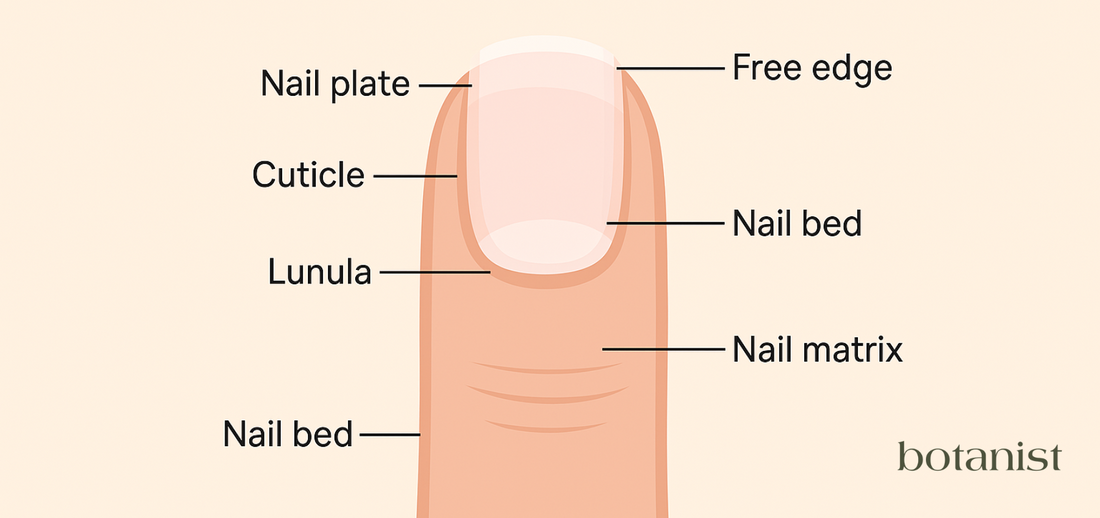
400
what are the 2 types of modified apocrine glands?
1. ceruminous gland: in the ear canal that make ear wax
2. mammary glands: secrete milk
500
how does are body regulate body temerature?
1- loses heat by causing vasodilation of dermal blood vessels and releasing sweat to cool the body down as it evaporates.
2- retains heat by causing vasoconstriction dermal blood vessels
500
What is the Hypodermis?
Technically not a skin layer but is just a layer of fat. Functions: energy storage, shock absorbers, insulation, and anchors skin to muscles.
500
What determines the shape of your hair?
Hair follicle?
500
what is the nail made of?
keratinized cells
500
what do sweat glands do?
- mainly work to keep us from overheating