Temples and sacred spaces
Power and public space
Death and the afterlife
Rulers and their image
Ideal bodies, real bodies
Stories and daily life
100
After the Persians destroyed it, Athens rebuilt this rocky hilltop sanctuary, crowned by a marble Doric temple to the city's patron goddess, Athena.
Acropolis
Athens, Greece; Iktinos and Kallikrates
c. 447–410 BCE
Marble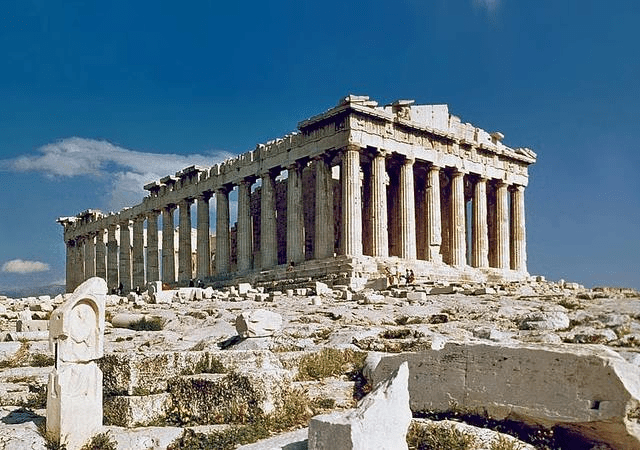
100
This composite guardian, with a human head, a bull’s body, and a bird’s wings, is carved with five legs so it reads correctly from both the front and the side.
Required work #25
Lamassu from the citadel of Sargon II
Dur Sharrukin (modern Khorsabad, Iraq), Neo-Assyrian
c. 720–705 BCE
Alabaster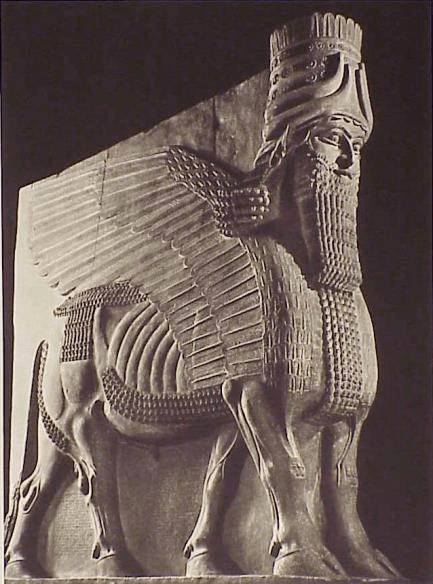
100
Three royal tombs of cut limestone rise over a desert plateau, watched over by a colossal lion-bodied guardian carved with a pharaoh’s face.
Required work #17
Great Pyramids (Menkaura, Khafre, Khufu) and Great Sphinx
Giza, Egypt, Old Kingdom, Fourth Dynasty
c. 2550–2490 BCE
Cut limestone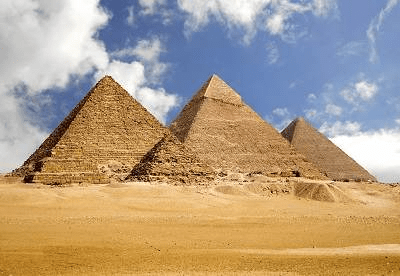
100
This floor mosaic, likely copying a lost Greek painting, captures the clash between a young Macedonian conqueror and a fleeing Persian king.
Required work #40
Alexander Mosaic, from the House of the Faun
Pompeii, Italy, Republican Roman
c. 100 BCE
Mosaic
100
Built on a written “Canon” of ideal proportions, this bronze original, known through Roman marble copies, shows an athlete in relaxed contrapposto.
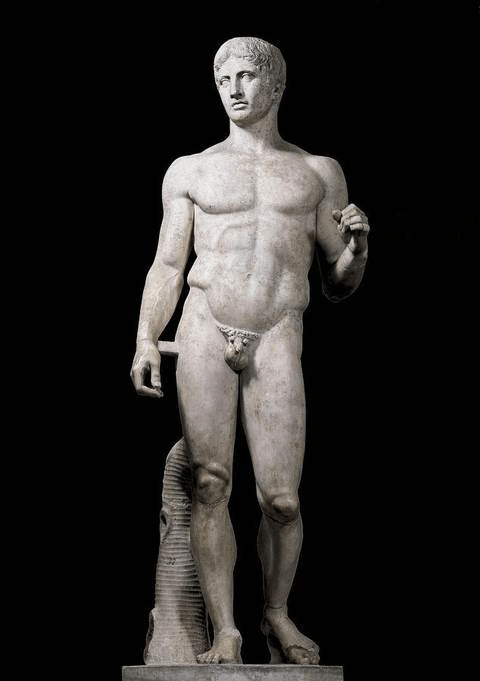 Required work #34
Doryphoros (Spear Bearer)
Polykleitos, Classical Greek
Original 450–440 BCE
Roman copy (marble) of Greek original (bronze)
100
This trapezoidal wooden box, inlaid with shell, lapis lazuli, and red limestone, shows a “War Side” and a “Peace Side” of Mesopotamian life.
Required work #16
Standard of Ur, from the Royal Tombs at Ur
Modern Tell el-Muqayyar, Iraq, Sumerian
c. 2600–2400 BCE
Wood inlaid with shell, lapis lazuli, and red limestone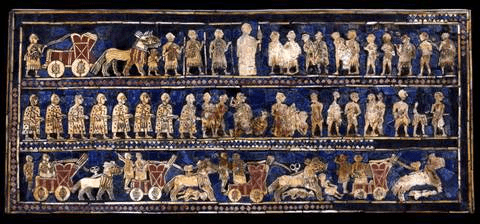
200
Built atop a stepped mud-brick platform in the Sumerian city of Uruk, this temple honored a sky god and required a symbolic climb to reach.
Required work #12
White Temple and its ziggurat
Uruk (modern Warka, Iraq), Sumerian
c. 3500–3000 BCE
Mud brick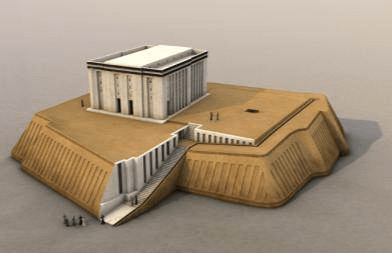
200
This plaza at the base of the Athenian Acropolis hosted commerce, civic life, and the Panathenaic Festival for over 700 years.
Required work #26
Athenian agora
Athens, Archaic through Hellenistic Greek
600 BCE–150 CE
Plan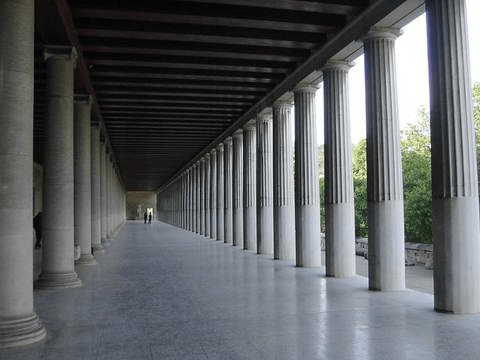
200
Made of solid gold inlaid with enamel and semiprecious stones, this was the innermost of three nested coffins protecting a boy-king’s mummy.
Required work #23
Tutankhamun’s tomb, innermost coffin
Egypt, New Kingdom, 18th Dynasty
c. 1323 BCE
Gold with inlay of enamel and semiprecious stones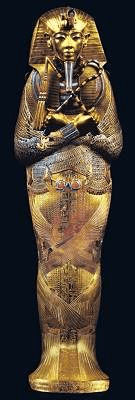
200
Regarded as one of the earliest historical artworks, this greywacke palette commemorates the unification of Upper and Lower Egypt.
Required work #13
Palette of King Narmer
Predynastic Egypt
c. 3000–2920 BCE
Greywacke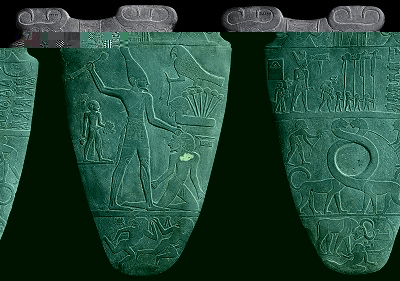
200
This marble goddess once landed on a ship’s prow above a fountain, her drapery whipped against her body by an unseen wind.
Required work #37
Winged Victory of Samothrace
Hellenistic Greek
c. 190 BCE
Marble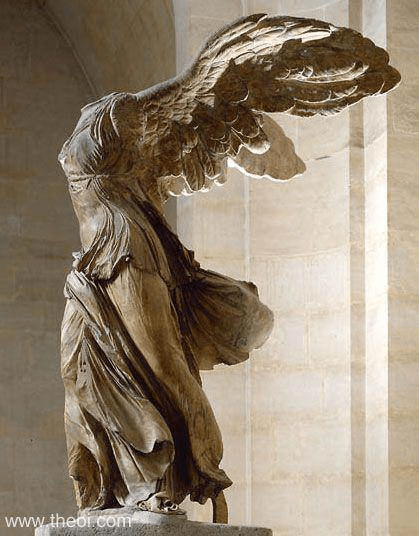
200
These wide-eyed gypsum figures from a Sumerian temple were left behind so their owners could “pray” perpetually, even after going home.
Required work #14
Statues of votive figures, from the Square Temple at Eshnunna
Modern Tell Asmar, Iraq, Sumerian
c. 2700 BCE
Gypsum inlaid with shell and black limestone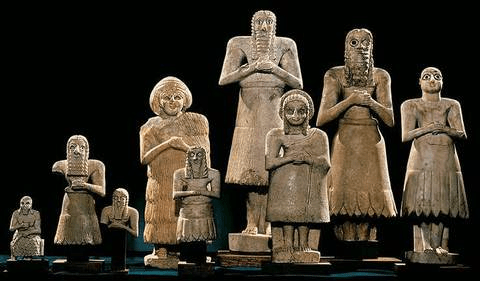
300
At this temple complex near Luxor, 134 massive columns crowd a forest-like hall built to overwhelm worshippers on their way to the sanctuary.
Required work #20
Temple of Amun-Re and Hypostyle Hall
Karnak, near Luxor, Egypt, New Kingdom, 18th and 19th Dynasties
Temple c. 1550 BCE; hall c. 1250 BCE
Cut sandstone and mud brick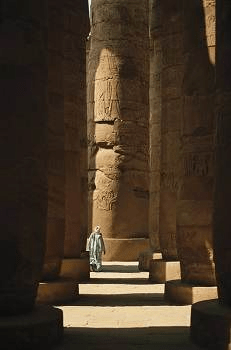
300
DAILY DOUBLE!!!
Built for two Persian kings, this hypostyle hall once had 72 columns standing about 24 meters tall, approached by stairways carved with tribute bearers.
Required work #30
Audience Hall (apadana) of Darius and Xerxes
Persepolis, Iran, Persian
c. 520–465 BCE
Limestone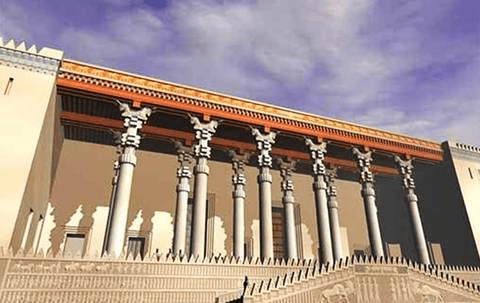
300
In this painted papyrus scene, the jackal-headed god Anubis weighs a scribe’s heart against a feather to decide his fate in the afterlife.
Required work #24
Last judgment of Hunefer, from his tomb (page from the Book of the Dead)
Egypt, New Kingdom, 19th Dynasty
c. 1275 BCE
Painted papyrus scroll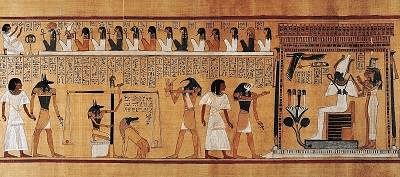
300
This 7-foot basalt stele shows a Babylonian king receiving the laws from the sun god Shamash, with the laws inscribed below.
Required work #19
The Code of Hammurabi
Babylon (found at Susa, modern Iran), Susian
c. 1792–1750 BCE
Basalt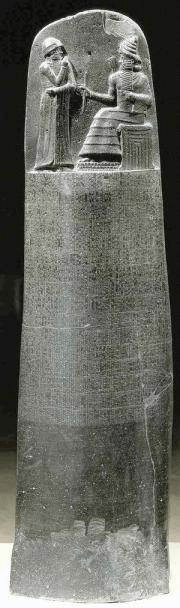
300
This bronze breaks from Classical idealism, showing a battered athlete with a broken nose, fresh cuts, and scarred “cauliflower ears.”
Required work #41
Seated boxer
Hellenistic Greek
c. 100 BCE
Bronze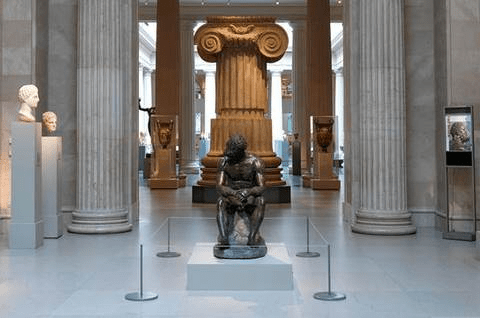
300
This Athenian grave marker shows a seated woman lifting a piece of jewelry from a box held out by her standing maidservant.
Required work #36
Grave stele of Hegeso
Athens, attributed to Kallimachos
c. 410 BCE
Marble and paint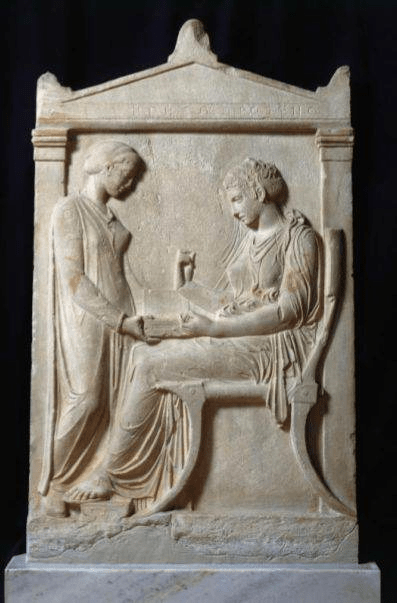
400
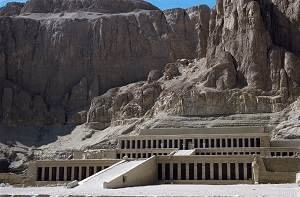
Carved partly into a cliff face near Luxor, this terraced temple honors a female pharaoh often shown wearing the traditional false beard of kingship.
Required work #21
Mortuary temple of Hatshepsut
Near Luxor, Egypt, New Kingdom, 18th Dynasty
c. 1473–1458 BCE
Sandstone, partially carved into a rock cliff, and red granite
400
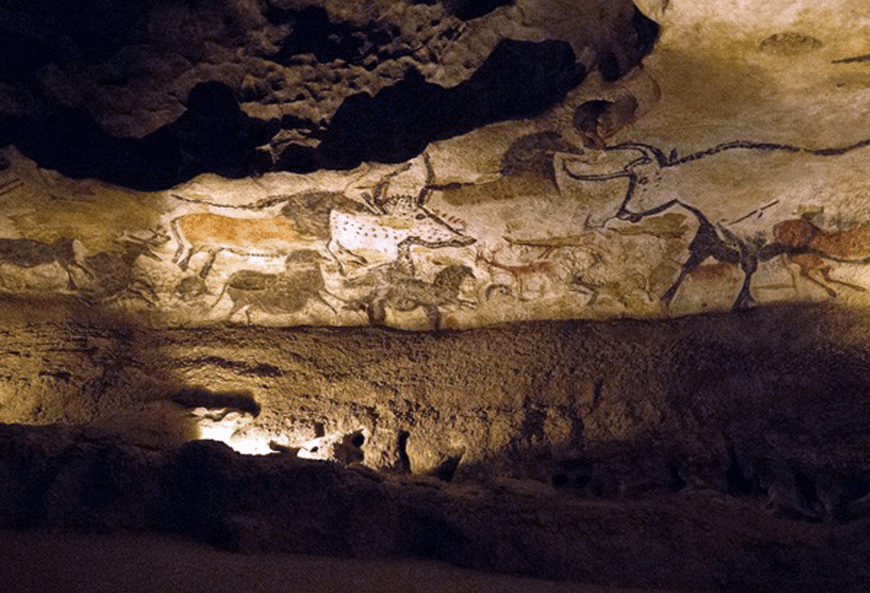
Art historians proposed that ritual specialists entered states of altered consciousness when creating these Paleolithic paintings. Give the name and /or location.
Required work #2
Great Hall of Bulls
Lascaux, France
c.16,000-14,000 B.C.E.
400
This Archaic freestanding male statue, nude and striding forward, marked the grave of a young man named Kroisos who died in battle.
Required work #27
Anavysos Kouros
Archaic Greek
c. 530 BCE
Marble with remnants of paint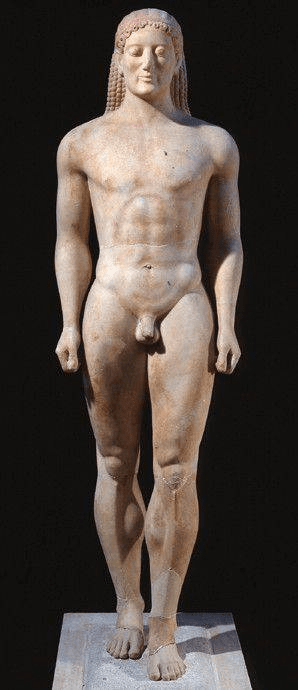
400
DAILY DOUBLE!!!
This limestone relief from the Amarna Period breaks with tradition, showing an informal royal family moment bathed in the rays of the sun disk Aten.
Required work #22
Akhenaton, Nefertiti, and three daughters
Egypt, New Kingdom (Amarna), 18th Dynasty
c. 1353–1335 BCE
Limestone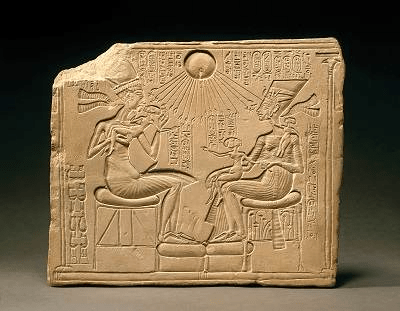
400
This painted limestone figure, with inlaid rock-crystal eyes and a soft, unidealized belly, shows an official literate enough to record for the pharaoh.
Required work #15
Seated scribe
Saqqara, Egypt, Old Kingdom, Fourth Dynasty
c. 2620–2500 BCE
Painted limestone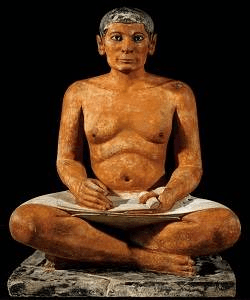
400
This red-figure vase, used to mix wine and water, shows Apollo and Artemis striking down the children of Niobe on one side.
Required work #33
Niobides Krater
Classical Greek; the Niobid Painter
c. 460–450 BCE
Clay, red-figure technique (white highlights)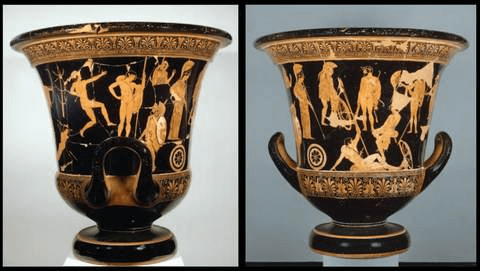
500
The megalithic structure uses a mortise and tenon construction on it's posts and lintels.
required work 8
Stonehenge, Salisbury Plain, Wiltshire, England, c. 2550–1600 B.C.E. 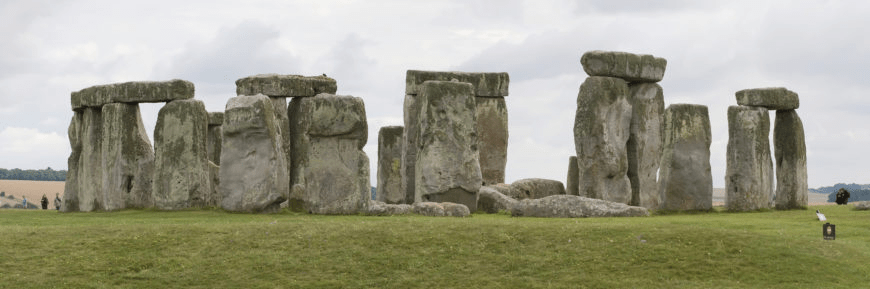
500
This monumental altar features a frieze nearly 400 feet long showing the Gigantomachy, the battle between gods and giants.
Required work #38
Great Altar of Zeus and Athena at Pergamon
Asia Minor (present-day Turkey), Hellenistic Greek
c. 175 BCE
Marble (architecture and sculpture)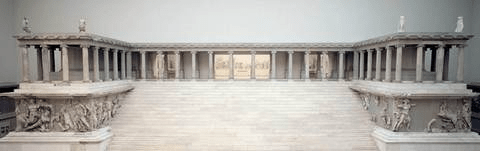
500
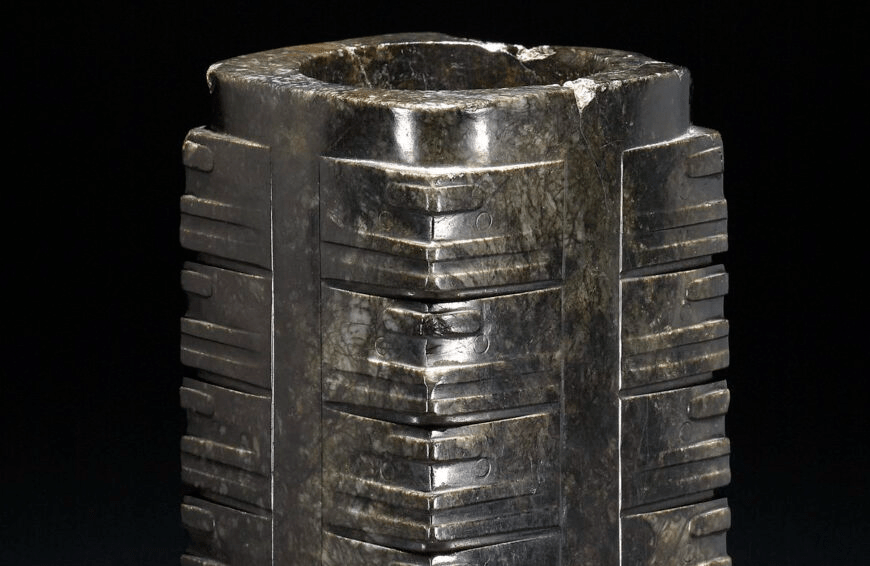
In Neolithic China, artisans shaped these objects of ritual by rubbing them with abrasive sand.
required work 7
Jade Cong, c. 2500 B.C.E., Liangzhu culture, Neolithic period, China, nephrite, 20.5 cm high
500
This greywacke statue pairs an idealized, youthful pharaoh with his queen, her arm circling his waist in a rare gesture of affection for Old Kingdom sculpture.
Required work #18
King Menkaura and queen
Egypt, Old Kingdom, Fourth Dynasty
c. 2490–2472 BCE
Greywacke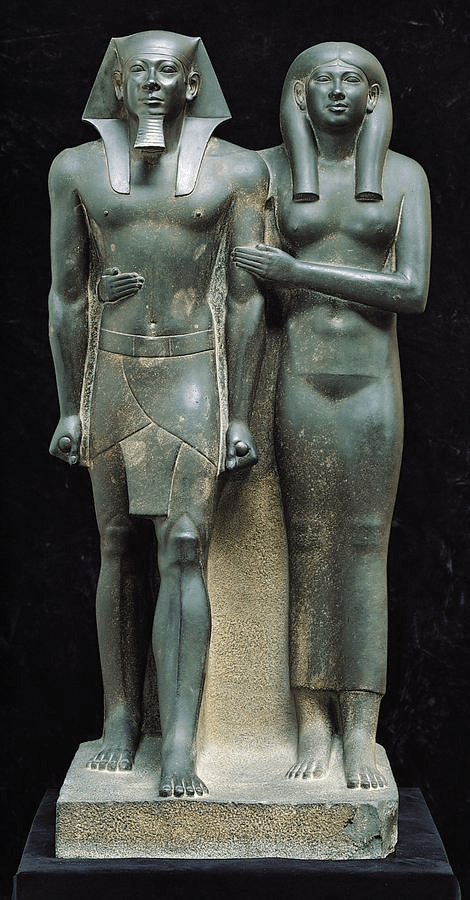
500
The Archaic female counterpart to the kouros, this figure wears a simple belted garment and once stood as a votive offering in Athena’s sanctuary.
Required work #28
Peplos Kore from the Acropolis
Athens, Archaic Greek
c. 530 BCE
Marble, painted details
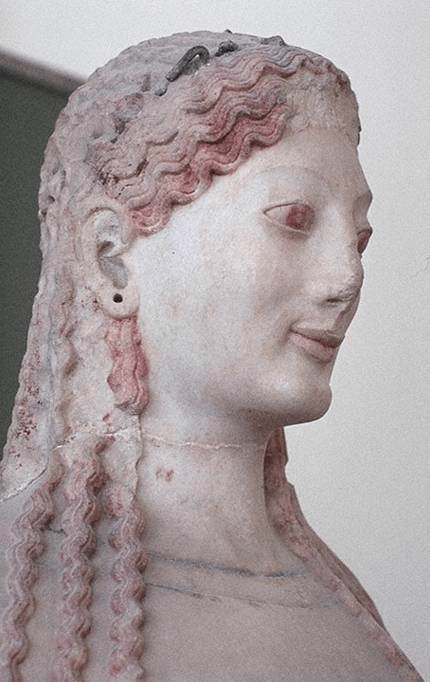
500
Spanning the time from Archaic to Hellenistic Greece, this pathway was the route through the Athenian Agora for the annual religious festival.
Required work #26
Panathenaic Way
Athens, Greece, c. 5th century B.C.E.
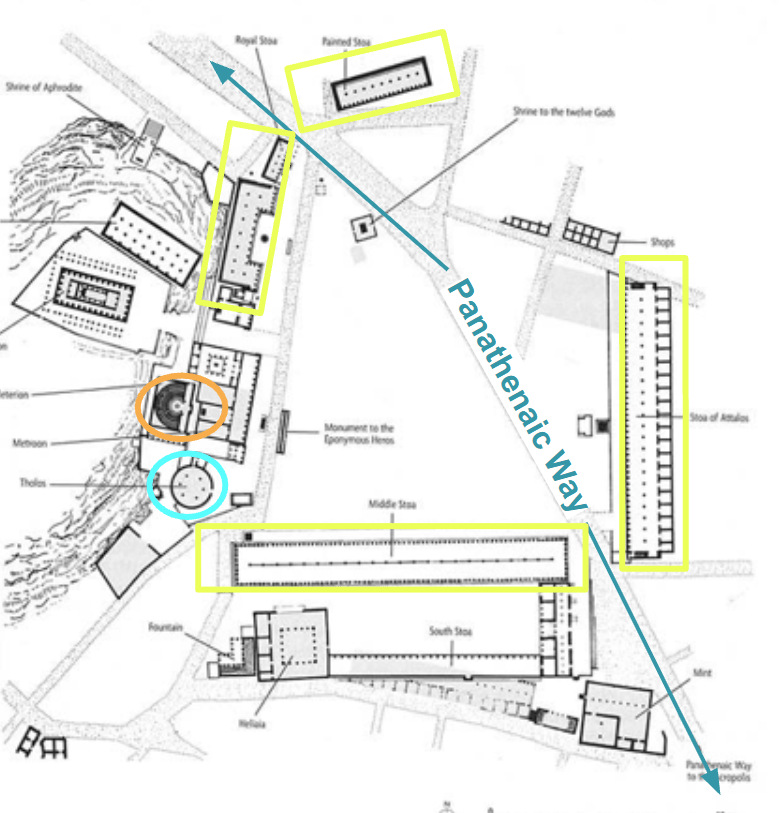
600
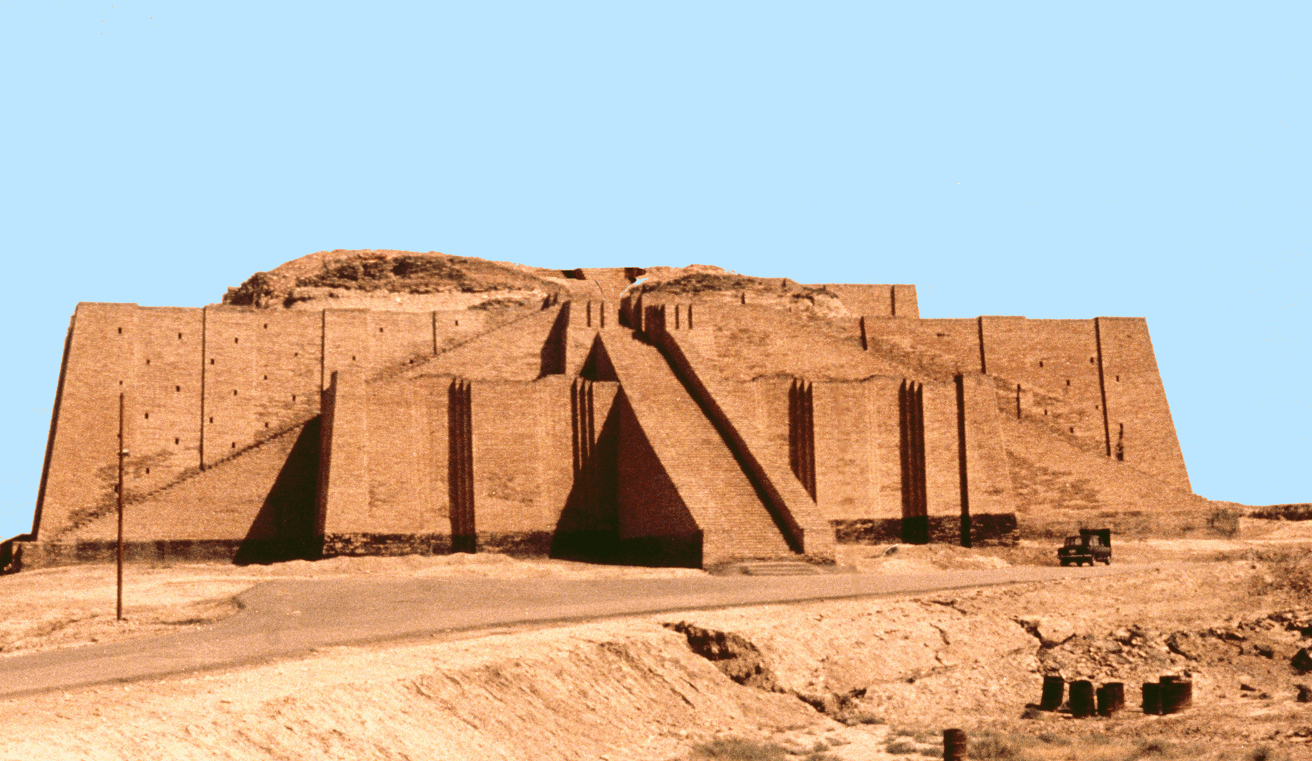
Identify the civilization and nae of the type of structure shown.
Sumerian ziggurat
600

This sunken relief can be attributed to this period of ancient Egypt
Related to required work #22
Amarna period of Akhenaton
600
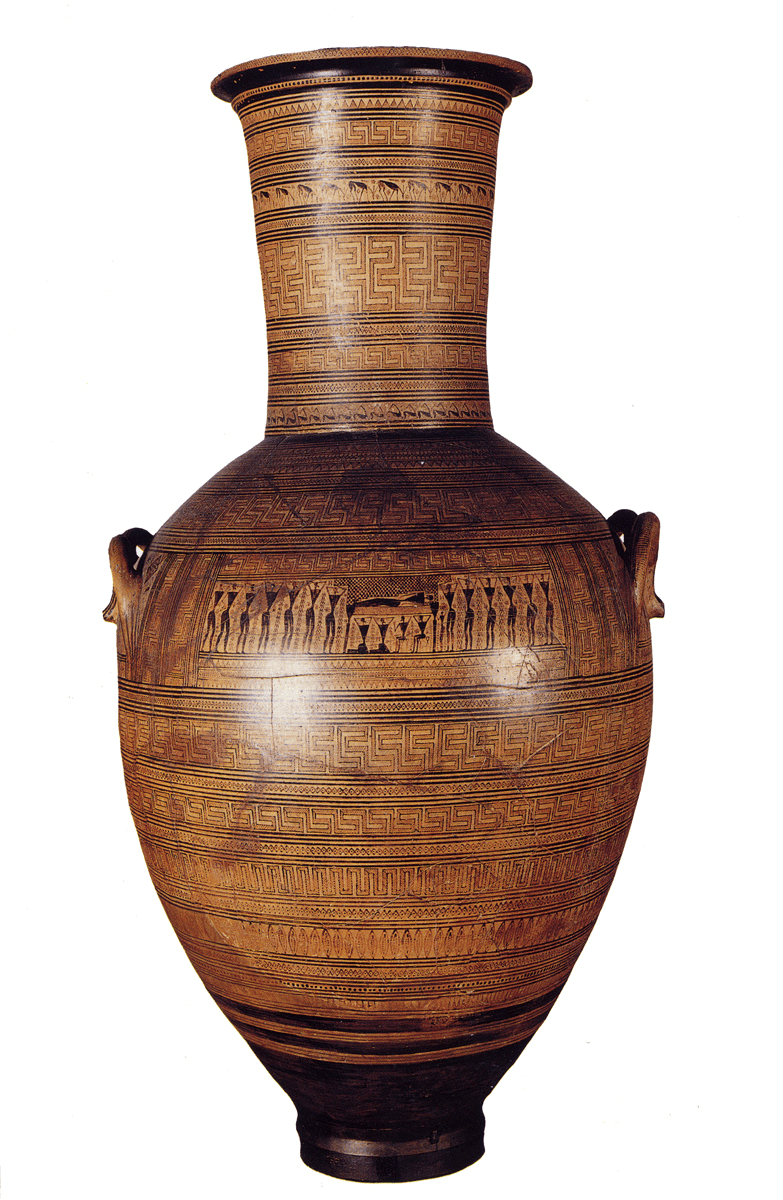
The style of this work is referred to as...
Geometric
600
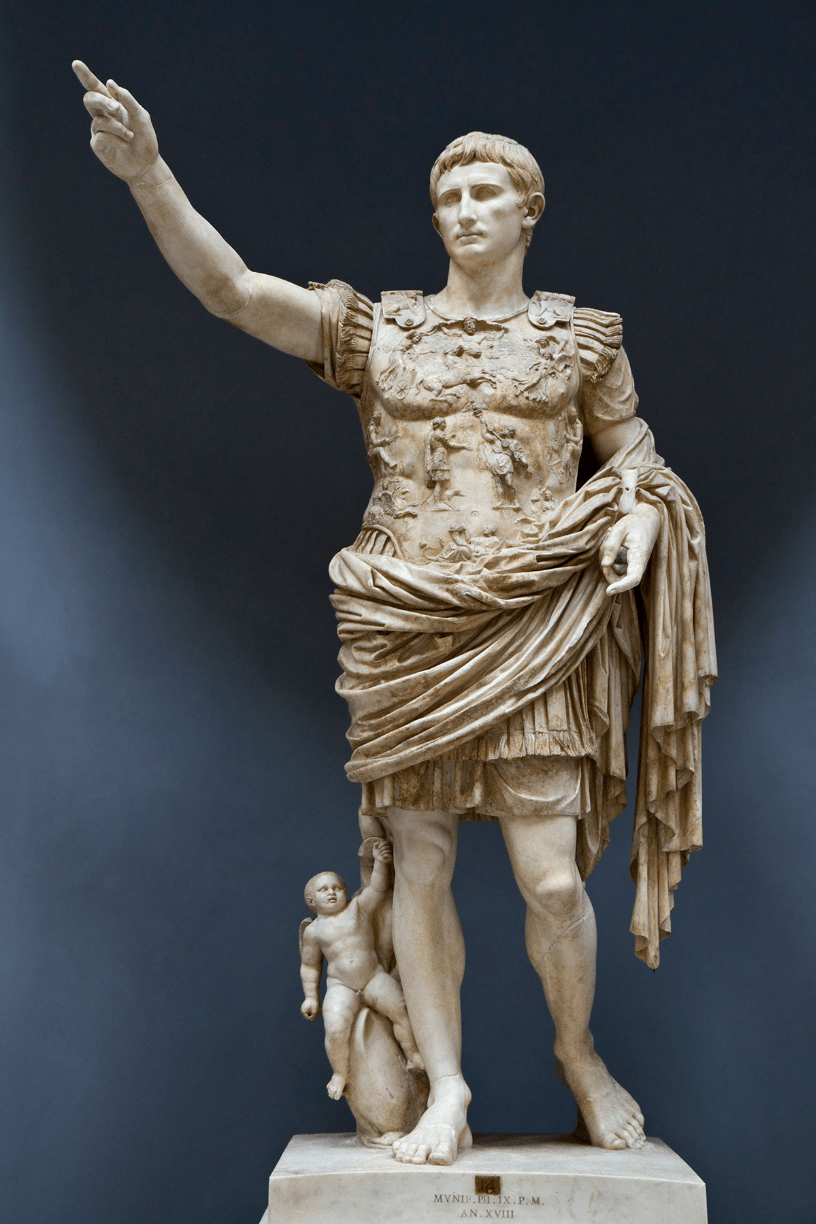
The formal qualities of the sculpture shown suggest a strong influence by which Classical Grecian work by Polykleitos?
required work #34
Doryphoros (spear-bearer)
Polykleitos
Roman marble copy after Greek bronze original
c. 450-440 B.C.E.
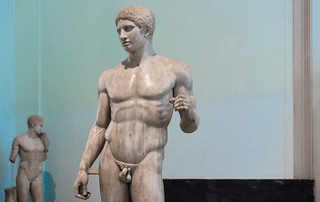
600

Exaggerated proportions that place an emphasis on truncated arms and expansive hips were common in this modern day country.
Related to required works #10
Mexico
Tatlico
Ceramic
c. 1200-900 B.C.E.
600


Identify Architects
Iktinos and Kalikrates