The Brain
The Mind
Influential Figures
Nerve Publications
BU Neuro-Psychology Discoveries
100
This lobe of the brain is responsible for planning, decision-making, impulse control, voluntary movement, and higher-order thought.
Frontal Lobe
100
This type of conditioning, demonstrated by Pavlov, involves learning through associations between a neutral stimulus and an automatic response.
Classical Conditioning
100
This founder of psychoanalysis emphasized the unconscious mind, dream symbolism, and early childhood experiences in shaping behavior.
Sigmund Freud

100
The key neurotransmitter involved in screen addiction, which we become less sensitive following 'Doomscrolling.'
Dopamine
100
Researchers Dr. Naomi Shvedov and Dr. Ben Scott showed that newly created brain cells are capable of migrating through the brain during adulthood. What is the process of creating new neurons called?
Neurogenesis
200
The major excitatory neurotransmitter in the brain.
Glutamate
200
This basic memory process involves converting sensory information into a form the brain can store, serving as the first step before storage or retrieval.
Encoding
200
Oftentimes called the "father of modern neuroscience," this individual created detailed drawings that established neurons as distinct, functional units in the brain.
Santiago Ramón y Cajal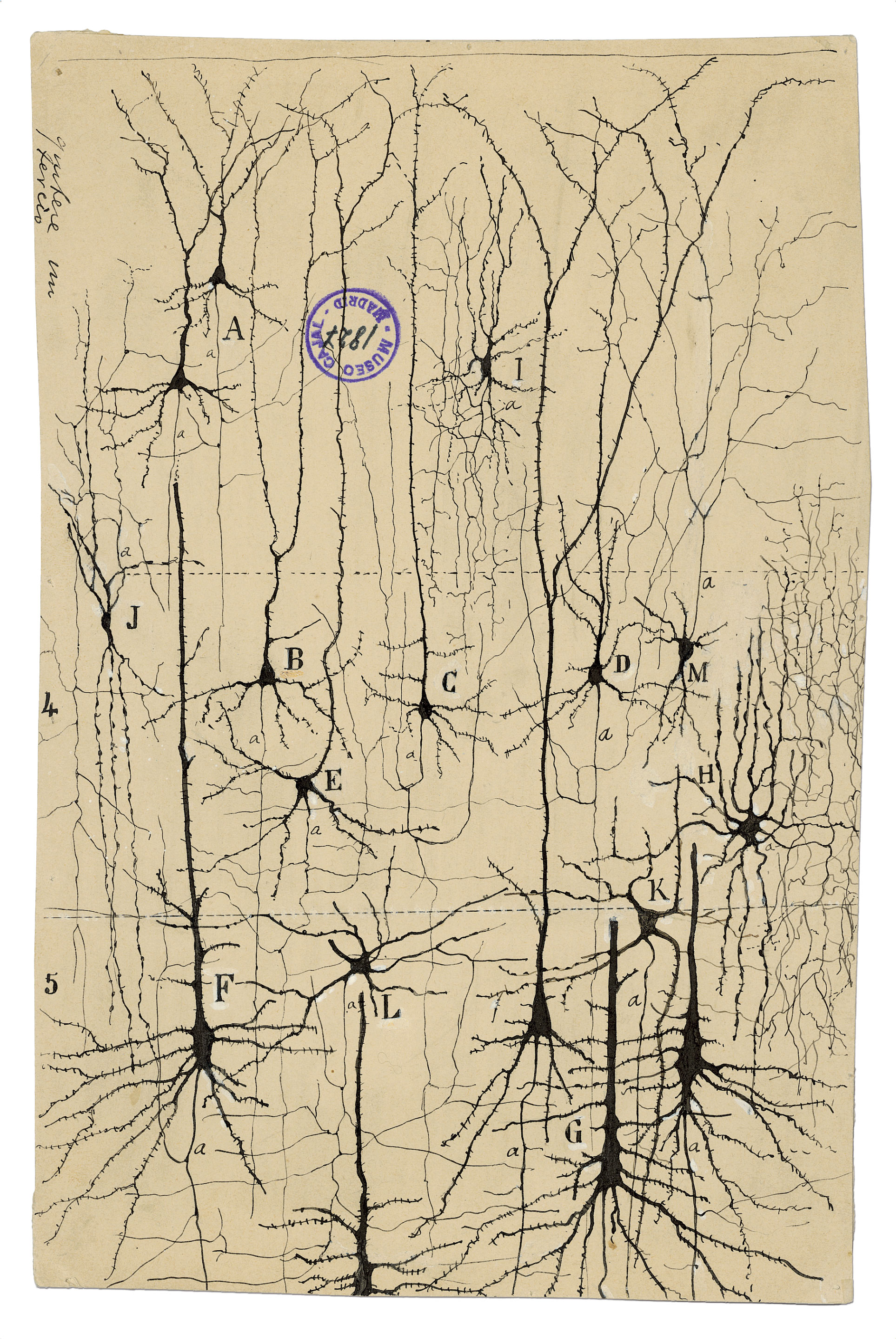
200
A neuroscience technique which uses light to control genetically modified neurons, oftentimes employed in research with the fruit fly Drosophila Melanogaster to activate or deactive target neurons.
Optogenetics
200
BU Researcher Dr. Steve Ramirez and colleagues showed that neurons associated with a specific memory can be artificially activated or deleted in mice. What is the physical network of neurons associated with a specific memory called?
Memory Engram
300
What plane of the brain is being shown here?

Sagittal Plane
300
A psychological phenomenon that occurs when an individual experiences discomfort due to holding conflicting beliefs, values, or attitudes.
Cognitive Dissonance
300
This railroad worker survived an accident in which an iron tamping rod shot through his skull, providing early evidence that frontal lobe damage can dramatically alter personality and behavior.
Phineas Gage
300
This neuro-imaging technique allowed researchers to infer brain activity during pain perception by measuring changes in blood oxygenation.
fMRI
300
Dr. Lucia Pastorino in her landmark Nature paper showed that the loss of the enzyme Pin1 in Alzheimer's Disease leads to accumulation of Aβ in the brain. This reflects which hallmark symptom of Alzheimer's Disease?
Aβ Plaques
400
This system in the brain, which includes structures like the nucleus accumbens and amygdala, is best known for processing rewards, motivation, and emotion.
Limbic System
400
A psychological phenomenon that occurs after repeated exposure to uncontrollable stressors where an organism stops trying to avoid or escape, even once escape becomes possible.
Learned Helplessness
400
This behaviorist developed the principles of operant conditioning and designed a box in his name to study how reinforcement and punishment shape behavior.
BF Skinner (The Skinner Box)
400
A brain region involved in generating fear response during horror movies, acting in conjunction with the prefrontal cortex allowing us to integrate fear in context.
Amygdala
400
Similar to the way that place cells allow the brain to map out physical space spatially, these cells discovered by Howard Eichenbaum allow the brain to link events temporally to create a mental 'timeline.'
Time Cells
500
A small neuromodulatory nucleus located in the brainstem, this structure is the brain's primary source of norepinephrine and is involved in arousal, attention, and stress.
Locus Coeruleus
500
According to Maslow's Hierarchy of Needs, this is the highest motivational state an individual can achieve which focuses on fulfillment, creativity, and realizing one's full potential.
Self-Actualization
(Also acceptable: transcendence)
500
These two neuroscientists used the giant squid axon to develop the first quantitative model of the action potential, demonstrating how voltage-gated ion channels generate electrical signals in neurons.
Hodgkin & Huxley
500
Developed in 1950 by the father of modern computing, this test evaluates whether a machine can exhibit behavior indistinguishable from a human in a text-based conversation.
Turing Test
500
Boston University is a world leader in research regarding brain injury from contact sports, showing in 2017 that repetitive head impacts (like in football) are associated with neuron loss and long term brain damage. What is the name of the neurodegenerative disease associated with repeated head trauma?
Chronic Traumatic Encephalopathy (CTE)