Elements
General 1
General 2
Important figures
True or False
100
What is the symbol for oxygen?
O
100
____________ is the smallest particle a simple substance can be divided into without losing its chemical properties.
Atom
100
____________ is a substance made of only one type of atoms.
Chemical element
100
Name the Danish physicist that discovered that electrons do not move randomly. They revolve around the nucleus in stable orbit.
Niels Bohr
100
True or False.
There are two types of subatomic particles.
False; There are three types of subatomic particles: electrons, protons and neutrons.
200
What is the symbol for Gold?
Au
200
____________ cannot be separated into other substances because they are made of just one element.
Simple substances
200
______________ are pure substances which can be separated into other simpler substances.
Compound substances
200
Who created the first atomic model?
(Hint:) This model suggested the existence of a sphere of positive electricity.
J.J. Thomson
200
True or False.
An atom is the smallest unit of pure substance that conserves all its properties.
False; A molecule is the smallest unit of pure substance that conserves all its properties.
300
What element does the symbol "K" represent?
Potassium
300
___________ are a variety of _________ with the same atomic number but a different mass number.
Isotopes ; atoms
300
Choose the correct definition of an ION:
A) Atoms which have gained or lost electrons.
B) Atoms which have gained or lost protons.
C) Atoms which have gained or lost neutrons.
A) Atoms which have gained or lost electrons.
300
Who formulated the hypothesis that matter was composed of elemental units that could not be altered or divided?
John Dalton
300
True or False.
Protons and neutrons can not be split into smaller particles.
False; Protons and neutrons CAN be split into smaller particles called quarks.
400
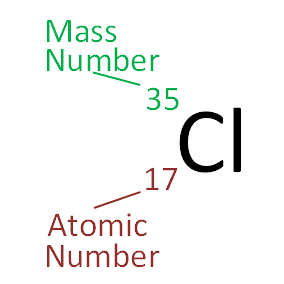
What does the mass number represent?
What does the atomic number represent?
The mass number represents the # Protons + #Neutrons.
The atomic number represents the #Protons.
400
________ is a DNA molecule, which is responsible for genetic codes, is a molecule made of other, different molecules.
Polymer
400
_______ are atoms that gain or lose electrons in their shell. They are called ______ when they are positive and _______ when they are negative.
Ions; Cations; Anions
400
___________ and __________ were scientist that believed the number of protons atoms have in their nuclei is what characterises them and identifies them from others.
Henry Moseley; Ernest Rutherford
400
True or False.
The Carbon-14 isotope is used to find out the age of the organic remains of different organisms.
True
500
List the full names of the following 6 elements:
H, N, Na, Cu, Fe and Ag.
Hydrogen, Nitrogen, Sodium, Copper, Iron and Silver.
500
Determine what type of bond will be made:
Atoms which bond Non-metal with non-metal create a _________ bond.
Atoms which bond metal with non-metal create a _________ bond.
Atoms which bond metal with metal create a _________ bond.
Covalent bond; Ionic bond; Metallic bond.
500
Which crystal properties are being described below: covalent properties, ionic crystal properties or metallic properties?
-Soluble in water : Yes
-Melting temperature: Very High
-Conductor of electricity: Only when dissolved or melted.
Ionic properties
500
Who is Leucippus and Democritus and what did they believe?
Leucippus and Democritus were philosophers in ancient Greece. They believed that matter was made of small particles and therefore could not be divided indefinitely.
500
True or False.
Inert gases, also known as noble gases, have atoms that DO NOT bond to others. These gases are located in the far right column of the periodic table.
True.