Pulmonary Medicine
Cardiology
Endocrinology
Neuro/Geriatrics
General IM
Gastroenterology
Nephrology
Rehumatology
100
A 42-year-old woman with a history of limited cutaneous systemic sclerosis presents with progressive exertional dyspnea and near-syncope. Physical examination reveals elevated JVP, loud P2, and lower extremity edema. Echocardiogram shows RV dilation and estimated RV systolic pressure of 70 mmHg. She undergoes right heart catheterization with the following results:
- Mean pulmonary artery pressure (mPAP): 38 mmHg
- Pulmonary capillary wedge pressure (PCWP): 9 mmHg
- Cardiac output: 4.0 L/min
- Pulmonary vascular resistance (PVR): 6 Wood units
Which type of pulmonary hypertension is most consistent with these findings?
Answer: Pre-capillary pulmonary hypertension
Precapillary PH: mPAP>20 mmHg, PCWP≤15 mmHg, PVR>2 Wood Units
- Elevated mean pulmonary artery pressure
- Normal wedge pressure (≤15 mmHg) indicating absence of elevated left-sided filling pressures
- Elevated pulmonary vascular resistance
100
A 68-year-old man with ischemic cardiomyopathy presents for follow-up despite optimal guideline-directed medical therapy including sacubitril/valsartan, metoprolol succinate, spironolactone, and empagliflozin. He reports persistent exertional dyspnea and fatigue consistent with NYHA class III symptoms.
Echocardiogram shows:
- Left ventricular ejection fraction: 28%
Electrocardiogram demonstrates:
- Sinus rhythm
- Left bundle branch block
- QRS duration: 168 ms
Which is the most appropriate next step?
Answer: Cardiac resynchronization therapy with defibrillator (CRT-D)
This patient meets classic criteria for CRT:
- LVEF ≤35%
- Symptomatic heart failure despite GDMT
- LBBB morphology
- QRS ≥150 ms
CRT improves:
- Mortality
- Heart failure hospitalizations
- Functional status
- Ventricular remodeling
100
A 68-year-old man is admitted to the ICU with septic shock. Thyroid studies obtained during hospitalization show:
- TSH: low-normal
- Free T4: normal
- Total T3: low
He has no history of thyroid disease.
What is the most appropriate next step?
Answer: Repeat thyroid studies after recovery from illness
Explanation:
This patient has Euthyroid Sick Syndrome, commonly seen in critically ill patients.
Typical pattern:
- Low T3 initially
- Normal/low TSH
- Severe illness may later lower T4
Treatment of the underlying illness is recommended; thyroid hormone replacement is generally not indicated.
100
A 79-year-old man is hospitalized with pneumonia and develops acute confusion, agitation, visual hallucinations, and sleep-wake cycle disturbance overnight. He repeatedly attempts to remove his IV lines despite frequent reorientation and presence of family at bedside. Physical examination is otherwise nonfocal, and ECG shows QTc within normal range.
Nonpharmacologic delirium interventions have been attempted without success.
Which is the most appropriate next step?
Answer: Begin quetiapine for severe hyperactive delirium symptoms threatening patient safety
Explanation:
Quetiapine may be used short term in hospitalized patients with severe hyperactive delirium when:
- The patient poses danger to self/staff
- Nonpharmacologic measures fail
- Agitation interferes with essential medical care
100
A 30-year-old man is newly diagnosed with Acute Lymphoblastic Leukemia and is scheduled to begin induction chemotherapy in 10 days. He has not received routine adult vaccinations in several years. He has no fever or active infection.
Which is the most appropriate recommendation regarding vaccination and chemotherapy?
Answer: Administer indicated inactivated vaccines before chemotherapy initiation and avoid live vaccines during immunosuppression
Explanation:
Patients about to undergo intensive chemotherapy should ideally receive age-appropriate vaccines before immunosuppression begins, especially:
- Influenza vaccine
- Pneumococcal vaccination
- COVID vaccination if indicated
100
A 56-year-old man with obesity, type 2 diabetes mellitus, and Metabolic Dysfunction-Associated Steatotic Liver Disease is evaluated in clinic. Laboratory studies show mildly elevated aminotransferases. His FIB-4 score is calculated at 2.1.
According to current fibrosis risk stratification approaches, what is the most appropriate next step?
Answer: C. Referral for transient elastography assessment
Explanation:
FIB-4 is commonly used as an initial noninvasive fibrosis risk stratification tool in MASLD/MASH.
Typical interpretation:
- Low-risk: FIB-4 <1.3
- Intermediate/high-risk: FIB-4 ≥1.3 → further fibrosis assessment recommended
Patients with elevated FIB-4 should undergo:
- Transient elastography (FibroScan/VCTE)
- Other secondary fibrosis testing
100
A 31-year-old woman at 33 weeks of pregnancy presents for routine prenatal follow-up. Blood pressure is persistently 162/104 mmHg on repeat measurements. She has no proteinuria, platelet count is normal, liver enzymes are normal, and she denies headache or visual changes. Fetal monitoring is reassuring.
Which of the following is the most appropriate antihypertensive therapy?
Answer: Methyldopa
Explanation:
This patient has gestational hypertension with severe-range blood pressure.
Preferred antihypertensive medications in pregnancy include:
- Labetalol
- Nifedipine
- Methyldopa
ACE inhibitors, ARBs, direct renin inhibitors, and mineralocorticoid antagonists are contraindicated because of fetal toxicity.
100
A 48-year-old man with resistant hypertension develops fatigue, arthralgias, low-grade fevers, and pleuritic chest pain several months after starting a new antihypertensive medication. Now presenting this rash:

Laboratory testing reveals positive ANA with normal complement levels and negative anti-dsDNA antibodies.
Which autoantibody is most strongly associated with this condition?
Answer: Anti-histone antibody
Explanation:
This patient has features suggestive of Drug-Induced Lupus, classically associated with medications such as:
- Hydralazine
- Procainamide
- Isoniazid
The characteristic serologic marker is:
- Anti-histone antibodies
200
A 38-year-old man with poorly controlled HIV presents with progressive exertional dyspnea, fatigue, and occasional presyncope. Physical examination reveals a loud P2 and right ventricular heave. CT angiography is negative for pulmonary embolism, and pulmonary function tests are normal. Right heart catheterization demonstrates:
- Mean pulmonary artery pressure: 32 mmHg
- Pulmonary capillary wedge pressure: 10 mmHg
- Pulmonary vascular resistance: 5 Wood units
Which WHO classification group best describes this patient’s pulmonary hypertension?
HIV infection is a recognized cause of WHO Group 1 pulmonary arterial hypertension (PAH).
A. Group 1 — Pulmonary arterial hypertension
B. Group 2 — Pulmonary hypertension due to left heart disease
C. Group 3 — Pulmonary hypertension due to lung disease
D. Group 4 — Chronic thromboembolic pulmonary hypertension
E. Group 5 — Multifactorial pulmonary hypertension
200
A 66-year-old woman with metastatic breast cancer is being evaluated prior to initiation of chemotherapy. Her oncologist notes that the planned regimen includes a medication associated with potential cardiomyopathy and recommends obtaining a baseline echocardiogram to assess left ventricular ejection fraction before treatment.
Which of the following medications is most likely responsible for this recommendation?
Answer: Sunitinib
Explanation:
Sunitinib is a VEGF tyrosine kinase inhibitor associated with:
- Left ventricular dysfunction
- Heart failure
- Hypertension
- Ischemic cardiovascular events
Because of its cardiotoxic potential, patients often require:
- Baseline echocardiographic evaluation of LVEF
200
A 27-year-old man presents with infertility and decreased testicular size. Laboratory studies reveal:
- Total testosterone: markedly elevated
- LH: 2
- FSH: 2
Which is the most likely explanation?
Answer: C. Exogenous anabolic steroid use
Explanation:
Exogenous anabolic steroids suppress the hypothalamic-pituitary-gonadal axis through negative feedback:
- ↓ GnRH
- ↓ LH
- ↓ FSH
Resulting in:
- Testicular atrophy
- Infertility
- Suppressed endogenous testosterone production
200
A 38-year-old woman with no significant past medical history is admitted after an embolic-appearing ischemic stroke involving the left MCA territory. CTA head and neck are unremarkable. Transthoracic echocardiogram with bubble study is negative, inpatient telemetry shows normal sinus rhythm, and hypercoagulable workup is unrevealing.
She is discharged neurologically intact on aspirin and statin therapy.
Which of the following is the most appropriate next step to evaluate the etiology of her stroke?
Answer: B. Implantable loop recorder placement for prolonged rhythm monitoring
Explanation:
This patient has a cryptogenic embolic stroke at a young age with no identified source after standard inpatient evaluation.
Paroxysmal Atrial Fibrillation may be intermittent and missed on short-term telemetry.
Prolonged cardiac rhythm monitoring with an implantable loop recorder significantly increases detection of occult atrial fibrillation in cryptogenic stroke patients.
200
A 58-year-old woman with rheumatoid arthritis treated with methotrexate and prednisone presents for preventive care prior to starting a biologic agent. She reports receiving the older live attenuated zoster vaccine 3 years ago.
Which of the following is the most appropriate recommendation regarding herpes zoster vaccination?
Answer: C. Administer recombinant zoster vaccine series
Explanation:
Recombinant Zoster Vaccine is recommended even in patients who previously received the older live attenuated zoster vaccine (Zostavax).
Why?
- Recombinant zoster vaccine provides stronger and longer-lasting protection.
200
A 34-year-old man is evaluated for chronic fatigue and pruritus. Laboratory studies demonstrate a cholestatic liver enzyme pattern. MRCP shows multifocal stricturing and segmental dilatation involving the intrahepatic and extrahepatic bile ducts.
He denies diarrhea, hematochezia, or abdominal pain.
Which of the following is the most appropriate next step in management?
Answer: Schedule screening colonoscopy with biopsies
Explanation:
This patient has imaging findings highly suggestive of Primary Sclerosing Cholangitis.
PSC has a strong association with inflammatory bowel disease, particularly ulcerative colitis, and many patients may have asymptomatic colitis.
Therefore:
- Colonoscopy with biopsies is recommended at diagnosis, even without GI symptoms.
200
A 24-year-old man with longstanding Type 1 Diabetes Mellitus presents for nephrology follow-up. He uses an insulin pump and continuous glucose monitor. Laboratory studies show:
- HbA1c: 9.1%
- Urine albumin-to-creatinine ratio: 180 mg/g
- eGFR: 92 mL/min/1.73 m²
- Blood pressure: 118/72 mmHg
What interventions has the strongest evidence for preventing progression of diabetic kidney disease in this patient?
Answer: Intensive glycemic control with optimization of insulin therapy
Explanation:
In type 1 diabetes, the strongest intervention proven to prevent development and progression of diabetic nephropathy is:
- Tight glycemic control
Studies such as the DCCT demonstrated that intensive insulin therapy significantly reduces:
- Microalbuminuria
- Progression to overt nephropathy
- Long-term CKD complications
Use of:
- Insulin pumps
- Continuous glucose monitoring
- Time-in-range optimization
200
A 42-year-old woman presents with several months of annular, photosensitive erythematous plaques over her upper chest and arms. She reports mild arthralgias but denies nephritis, oral ulcers, or neurologic symptoms. Examination shows non-scarring, psoriasiform lesions in sun-exposed areas.
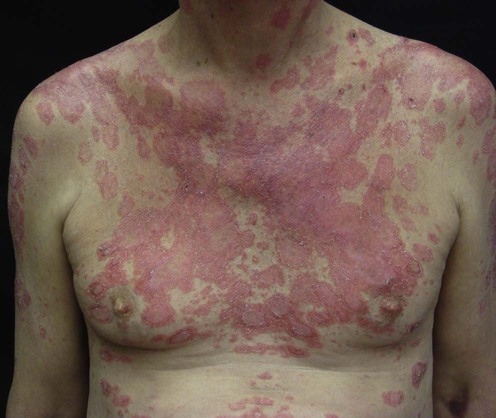
Laboratory studies reveal:
- Positive ANA
- Positive anti-Ro/SSA antibodies
Which of the following is the most likely diagnosis?
Answer: C. Subacute Cutaneous Lupus Erythematosus
Explanation:
Subacute cutaneous lupus erythematosus (SCLE) classically presents with:
- Photosensitive annular or psoriasiform plaques
- Non-scarring lesions
- Mild systemic symptoms
Strong association:
- Anti-Ro/SSA antibodies
300
A 54-year-old man is admitted to the ICU with severe pneumonia and septic shock. He is intubated for worsening hypoxemia. Current ventilator settings are:
- FiO2: 80%
- PEEP: 12 cm H2O
- Tidal volume: 6 mL/kg predicted body weight
Arterial blood gas shows:
- pH: 7.43
- PaCO2: 38 mmHg
- PaO2: 58 mmHg
Chest radiograph demonstrates diffuse bilateral alveolar infiltrates. Echocardiogram shows normal left ventricular function.
What is the next best intervention to improve mortality?
Answer: Start prone positioning
This patient has severe Acute Respiratory Distress Syndrome with:
- Bilateral infiltrates
- Severe hypoxemia
- PaO2/FiO2 ratio <100 despite high FiO2 and PEEP
- Lung-protective ventilation already in place
Prone positioning significantly improves mortality in severe ARDS, particularly when:
PaO2/FiO2<150PaO_2/FiO_2 < 150PaO2/FiO2<150
300
A 72-year-old woman with hypertension, diabetes, and chronic stable angina is evaluated for worsening exertional chest discomfort. Baseline ECG here.
She is able to walk only short distances because of severe knee osteoarthritis.
Which is the most appropriate stress test for evaluation of myocardial ischemia?
Answer: Pharmacologic nuclear perfusion imaging with vasodilator stress
Patients with baseline Left Bundle Branch Block often develop false-positive septal wall motion abnormalities and ST-segment changes during exercise testing, making standard exercise ECG testing unreliable.
Key ABIM principle:
- Avoid exercise-based ischemia testing in patients with LBBB.
Preferred testing:
- Vasodilator nuclear perfusion imaging (adenosine/regadenoson)
Why not dobutamine?
- Dobutamine may worsen septal artifacts in LBBB.
300
A 64-year-old man is admitted to the ICU with septic shock. He has no evidence of diabetic ketoacidosis or hyperosmolar hyperglycemic state. Blood glucose levels remain persistently between 240–280 mg/dL despite subcutaneous insulin.
What is the most appropriate management?
Answer: Start IV insulin infusion targeting glucose 140–180 mg/dL
Explanation:
Critically ill ICU patients with persistent hyperglycemia benefit from IV insulin protocols.
Recommended ICU glucose target:
Target glucose: 140−180 mg/dL
Very tight glycemic control increases risk of hypoglycemia and mortality.
300
A 69-year-old woman is admitted with a spontaneous intracerebral hemorrhage involving the basal ganglia. She is managed in the neuro ICU with blood pressure control and close neurologic monitoring. Repeat head CT performed 24 hours later shows stable hematoma size without expansion.
Which of the following is the most appropriate next step regarding venous thromboembolism prophylaxis?
After confirmation of hematoma stability on repeat imaging (typically within 24–48 hours), low-dose pharmacologic VTE prophylaxis with unfractionated heparin or LMWH is generally considered safe and recommended.
300
A 66-year-old man presents with progressive urinary hesitancy, weak stream, and nocturia. He also reports erectile dysfunction over the past year. His medical history includes hypertension and hyperlipidemia. Physical examination reveals an enlarged, smooth prostate. He would like a medication that could help both urinary and sexual symptoms.
Which of the following is the most appropriate treatment?
Answer: D. Tadalafil
Explanation:
Tadalafil is a phosphodiesterase-5 inhibitor approved for treatment of:
- Erectile dysfunction
- Benign prostatic hyperplasia symptoms
It can improve:
- Lower urinary tract symptoms
- Erectile function simultaneously
300
A 58-year-old man with decompensated cirrhosis is hospitalized for abdominal pain and fever. Diagnostic paracentesis reveals:
- Ascitic PMN count: 420 cells/mm³
- Ascitic fluid culture: positive for E. coli
- Ascitic total protein: 0.8 g/dL
He improves after treatment with ceftriaxone and albumin.
Which of the following is the most appropriate next step after completing antibiotic therapy?
Answer: Start chronic prophylactic antibiotics for prevention of recurrence
Explanation:
This patient had Spontaneous Bacterial Peritonitis, diagnosed by:
- Ascitic PMN ≥250 cells/mm³
Patients who survive an episode of SBP have very high recurrence risk; therefore, secondary prophylaxis is recommended.
Common prophylactic regimens include:
- Ciprofloxacin
- Trimethoprim-sulfamethoxazole
300
A 34-year-old man presents with progressive lower extremity edema and frothy urine. Laboratory studies reveal:
- Serum albumin: 2.0 g/dL
- Urine protein excretion: 8.1 g/day
- Creatinine: normal
Kidney biopsy demonstrates diffuse capillary wall thickening with subepithelial immune complex deposits. PLA2R antibodies are negative.
Further history reveals several months of night sweats, pruritus, and painless cervical lymphadenopathy.
Which underlying condition is most likely associated with this patient’s renal disease?
Answer: Hodgkin Lymphoma
Explanation:
This patient has secondary Membranous Nephropathy suggested by:
- Nephrotic syndrome
- Subepithelial immune deposits
- Negative PLA2R antibodies
- Constitutional “B symptoms”
Membranous nephropathy may occur secondary to:
- Malignancy
- Autoimmune disease
- Infection
- Drugs
300
A 39-year-old man presents with chronic nasal congestion and slowly progressive violaceous plaques over her nose. He also reports dyspnea on exertion and dry cough.
Spot the diagnosis:

Answer: Sarcoidosis
Explanation:
Lupus pernio is a chronic cutaneous manifestation of sarcoidosis characterized by:
- Violaceous indurated plaques on the nose, cheeks, lips, or ears
- Strong association with chronic pulmonary sarcoidosis
Associated findings often include:
- Bilateral hilar lymphadenopathy
- Upper respiratory tract involvement
- Pulmonary fibrosis
400
A 29-year-old woman presents with progressive dyspnea and dry cough 8 months after undergoing allogeneic hematopoietic stem cell transplantation for acute leukemia. She denies fever or sputum production. Physical examination reveals scattered wheezing without crackles. Pulmonary function tests show:
- FEV1/FVC: reduced
- TLC: normal
- DLCO: mildly reduced
High-resolution CT chest demonstrates mosaic attenuation and air trapping, especially on expiratory imaging.

Which diagnosis is most likely?
Answer: Bronchiolitis obliterans syndrome
Bronchiolitis Obliterans Syndrome is a chronic small-airway obstructive disease commonly associated with:
- Chronic graft-versus-host disease after stem cell transplant
- Lung transplantation
- Toxic inhalational exposures
- Autoimmune diseases
Key findings include:
- Progressive obstructive physiology
- Air trapping and mosaic attenuation on expiratory CT
- Dyspnea and cough without infectious symptoms
Unlike most interstitial lung diseases, bronchiolitis obliterans causes an obstructive—not restrictive—pattern on PFTs.
400
A 74-year-old man with known aortic stenosis presents for routine follow-up. He denies chest pain, syncope, dyspnea, or exercise intolerance and remains physically active. Transthoracic echocardiogram demonstrates:
- Aortic valve area: 0.7 cm²
- Mean gradient: 48 mmHg
- Peak aortic velocity: 4.5 m/s
- Left ventricular ejection fraction: 40%
Which of the following is the most appropriate next step?
Answer: Surgical or transcatheter aortic valve replacement evaluation
This patient has severe Aortic Stenosis with:
- Valve area <1.0 cm²
- Mean gradient >40 mmHg
- Peak velocity >4 m/s
Although he is asymptomatic, the presence of reduced LVEF (<50%) is a Class I indication for valve replacement because it suggests subclinical LV decompensation from pressure overload.
400
A 61-year-old woman undergoes CT abdomen for nephrolithiasis and is found to have a 3.8 cm adrenal mass with Hounsfield units of 8. She has hypertension but no overt endocrine symptoms.
What is the next best step?
nswer: Perform hormonal evaluation for functional adrenal tumor
Explanation:
All adrenal incidentalomas require assessment for:
- Hormonal activity
- Malignancy risk
Recommended hormonal workup typically includes:
- Overnight dexamethasone suppression test
- Plasma metanephrines
- Aldosterone/renin ratio if hypertensive/hypokalemic
ABIM pearl:
- Never biopsy an adrenal mass before excluding pheochromocytoma due to risk of hypertensive crisis.
400
An 81-year-old man with advanced Parkinson Disease is admitted for worsening visual hallucinations and nighttime agitation. He reports seeing “people in the room,” and his family notes increasing paranoia. Current medications include carbidopa-levodopa and amantadine. On examination, he has marked resting tremor and rigidity.
Which of the following is the most appropriate pharmacologic treatment for his psychosis?
Answer: D. Pimavanserin
Explanation:
Pimavanserin is a selective serotonin 5-HT2A inverse agonist approved for psychosis associated with Parkinson disease.
Key advantage:
- Does not significantly worsen dopaminergic function or motor symptoms
Many traditional antipsychotics worsen parkinsonism because of dopamine blockade, especially:
- Haloperidol
- Risperidone
- Olanzapine
400
A 72-year-old man presents with 3 days of progressive left scrotal pain, swelling, dysuria, and urinary frequency. He denies urethral discharge or recent sexual partners. Temperature is 38.2°C. Examination reveals tenderness and swelling localized to the epididymis with preserved cremasteric reflex. Urinalysis shows pyuria and positive leukocyte esterase.
Which of the following is the most likely cause and appropriate treatment?
Answer: C. Enteric gram-negative organisms — levofloxacin
Explanation:
In older men, Epididymitis is most commonly caused by enteric gram-negative organisms due to:
- Bladder outlet obstruction
- Urinary retention
- Instrumentation
- BPH
Typical organisms:
- E. coli
- Other Enterobacterales
Recommended treatment:
- Fluoroquinolone therapy (e.g., levofloxacin) when enteric organisms are suspected
400
A 59-year-old man undergoes average-risk screening colonoscopy. Examination reveals:
- Two tubular adenomas measuring 4 mm and 6 mm
- Both completely removed
- No villous features or high-grade dysplasia
Which is the most appropriate interval for repeat colonoscopy?
This patient has:
- 1–2 small (<10 mm) tubular adenomas
- No advanced histology
Current surveillance recommendations support repeat colonoscopy in:
1−2 small tubular adenomas → repeat colonoscopy in 7−10 years1-2\ small\ tubular\ adenomas\ \rightarrow\ repeat\ colonoscopy\ in\ 7-10\ years1−2 small tubular adenomas → repeat colonoscopy in 7−10 years
Higher-risk findings requiring shorter intervals include:
- ≥3 adenomas
- Size ≥10 mm
- Villous histology
- High-grade dysplasia
400
A 64-year-old man with type 2 diabetes mellitus, hypertension, and chronic kidney disease presents for follow-up. Current medications include maximally tolerated lisinopril, empagliflozin, atorvastatin, and metformin. Laboratory studies show:
- eGFR: 48 mL/min/1.73 m²
- Urine albumin-to-creatinine ratio: 420 mg/g
- Potassium: 4.5 mEq/L
Despite optimized therapy, he continues to have persistent albuminuria.
Which of the following is the most appropriate additional therapy to reduce progression of kidney disease and cardiovascular events?
Answer: Finerenone
Explanation:
Finerenone is a nonsteroidal mineralocorticoid receptor antagonist shown to reduce:
- CKD progression
- Albuminuria
- Cardiovascular events
in patients with:
- Type 2 diabetes
- Albuminuric chronic kidney disease
- Already receiving ACEi/ARB therapy
400
A 58-year-old woman with Systemic Lupus Erythematosus treated with belimumab and hydroxychloroquine is scheduled for elective total knee replacement in 3 weeks. Her rheumatologist is asked about perioperative medication management.
Which is the most appropriate recommendation regarding her biologic therapy?
Answer: Hold biologic therapy prior to surgery and resume after adequate wound healing and infection assessment, continue HXQ
Explanation:
Biologic immunosuppressive agents are typically held perioperatively for major elective surgery because they increase risk of:
- Postoperative infection
- Impaired wound healing
For many rheumatologic biologics:
- Therapy is held for one dosing interval before surgery
- Resumed once wound healing is satisfactory and infection risk is low
500
A 67-year-old man is admitted to the ICU with urosepsis. Despite receiving 4 liters of IV crystalloids, broad-spectrum antibiotics, and norepinephrine at escalating doses, he remains hypotensive with MAP persistently around 58 mmHg. Vasopressin has been added. Laboratory studies show:
- Lactate: 4.8 mmol/L
- Creatinine: 2.3 mg/dL
- WBC: 22,000/mm³
He is mechanically ventilated and remains critically ill.
What is the next best step in management?
Answer: Start IV hydrocortisone
In septic shock requiring ongoing vasopressor support, stress-dose corticosteroids improve time to shock reversal and reduce vasopressor requirements.
Typical regimen:
- Hydrocortisone 200 mg/day IV
ACTH stimulation testing is not recommended before starting steroids in refractory septic shock because treatment should not be delayed.
500
A 28-year-old man presents with exertional syncope and palpitations. Physical examination reveals a harsh crescendo-decrescendo systolic murmur heard best at the left lower sternal border. Echocardiography confirms hypertrophic obstructive cardiomyopathy (HOCM).
Which maneuver would most likely decrease the intensity of this murmur?
Answer: Squatting
Explanation:
The murmur of Hypertrophic Cardiomyopathy increases when left ventricular volume decreases because this worsens dynamic LV outflow tract obstruction.
Maneuvers that increase preload or afterload reduce obstruction and therefore decrease the murmur intensity.
Squatting:
- Increases venous return (preload)
- Increases afterload
- Expands LV cavity size
- Reduces LVOT obstruction
Maneuvers that increase HOCM murmur:
- Valsalva
- Standing suddenly
- Nitroglycerin
- Dehydration
500
A 30-year-old woman with primary hypothyroidism becomes pregnant. She currently takes levothyroxine 100 mcg daily and has stable thyroid function tests before pregnancy.
What is the most appropriate next step?
Answer: Increase levothyroxine dose immediately
Explanation:
Pregnancy increases thyroid hormone requirements because of:
- Increased thyroxine-binding globulin
- Placental metabolism of thyroid hormone
- Increased maternal demands
Most patients require:
- ~25–30% increase in levothyroxine dose early in pregnancy
500
An 84-year-old woman with hypertension, diabetes, osteoarthritis, insomnia, and urinary incontinence presents for geriatric evaluation after two recent falls. Her medication list includes 11 daily medications prescribed by multiple specialists.
According to geriatric prescribing principles and Beers Criteria concepts, which of the following best defines polypharmacy?
Answer: Use of 5 or more medications
500
A 27-year-old woman presents to clinic 4 days after unprotected intercourse requesting emergency contraception. She asks specifically for the most effective oral emergency contraceptive option available by prescription in the United States.
Which of the following medications should be prescribed?
Answer: D. Ulipristal Acetate
Explanation:
Ulipristal acetate is a selective progesterone receptor modulator used for emergency contraception.
Key ABIM points:
- Effective up to 120 hours (5 days) after intercourse
- More effective than levonorgestrel later in the post-exposure window
- Requires prescription in the United States
- Works primarily by delaying ovulation
500
A 29-year-old woman with moderate-to-severe Crohn Disease presents for prenatal counseling after learning she is 10 weeks pregnant. Her disease has been well controlled on infliximab for the past 2 years. She is worried about fetal safety and asks whether she should discontinue therapy immediately.
Which of the following is the most appropriate recommendation?
A. Stop infliximab immediately because it is absolutely contraindicated in pregnancy
B. Continue infliximab to maintain disease remission during pregnancy
C. Switch to methotrexate during pregnancy
D. Discontinue all biologic therapy and monitor symptoms only
E. Replace infliximab with chronic corticosteroids throughout pregnancy
Answer: B. Continue infliximab to maintain disease remission during pregnancy
Explanation:
Infliximab is generally considered safe in pregnancy and is commonly continued in patients with inflammatory bowel disease when needed to maintain remission.
500
A 29-year-old man presents with hemoptysis, fatigue, and dark urine for 1 week. Examination reveals bibasilar crackles and mild lower extremity edema. Laboratory studies show:
- Creatinine: 4.2 mg/dL
- Hemoglobin: 8.9 g/dL
- Urinalysis: dysmorphic RBCs and RBC casts
Chest radiograph demonstrates diffuse bilateral alveolar infiltrates. Kidney biopsy shows this:

Which of the following is the most likely diagnosis?
Answer: Anti-Glomerular Basement Membrane Disease
Explanation:
This patient has pulmonary-renal syndrome with:
- Diffuse alveolar hemorrhage
- Rapidly progressive glomerulonephritis
- Linear IgG deposition on immunofluorescence
These findings are classic for anti-GBM disease (Goodpasture disease).
Key diagnostic clue:
- Linear IgG staining along basement membrane
Typical treatment:
- Plasmapheresis
- High-dose corticosteroids
- Cyclophosphamide
500
A 52-year-old woman presents with progressive Raynaud phenomenon, dysphagia, and tightening of the skin over her fingers. Examination reveals telangiectasias and calcified nodules over the fingertips. Esophageal manometry demonstrates decreased distal esophageal motility.
Which autoantibody is most strongly associated with this condition?
Answer: C. Anti-centromere antibody
Explanation:
This patient has features of limited cutaneous systemic sclerosis (CREST syndrome):
- Calcinosis
- Raynaud phenomenon
- Esophageal dysmotility
- Sclerodactyly
- Telangiectasias
The classic associated antibody is:
- Anti-centromere antibody