Seasons
Earth's 4 Spheres
Our Solar System 1
Our Solar System 2
The Earth
100
What are the four seasons?
Spring, Summer, Winter, Autumn/Fall
100
The Hydrosphere includes what?
All water on Earth (ice, rain, groundwater, lakes, oceans, etc.)
100
What is a nebula?
A cloud of gas and dust
100
All planets in our Solar System orbit around the Sun. What shape is the orbit?
An ellipse
100
How long is one of Earth's rotations?
Hint: How long is a day on Earth?
24 hours
200
What are the two causes of Earth's seasons?
1) The Earth's tilt
2) The Earth's location in its orbit
200
Name the 4 spheres of the Earth.
Hydrosphere, Lithosphere, Atmosphere, Biosphere
200
In which layer of the Sun does fusion start?
Core (center of Sun)
200
A perfect circle has an eccentricity of zero. A highly elliptical shape would have an eccentricity closer to what number?
One
200
During which phases of the Moon do spring tides occur?
Full and New Moon
300

Look at the picture above. The side of earth facing the sun is experiencing day time. How long will it take for the other side of the Earth to experience day time?
12 hours
1 day is 24 hours= 12 hours of night + 12 hours of day
300
Which sphere is shown below?
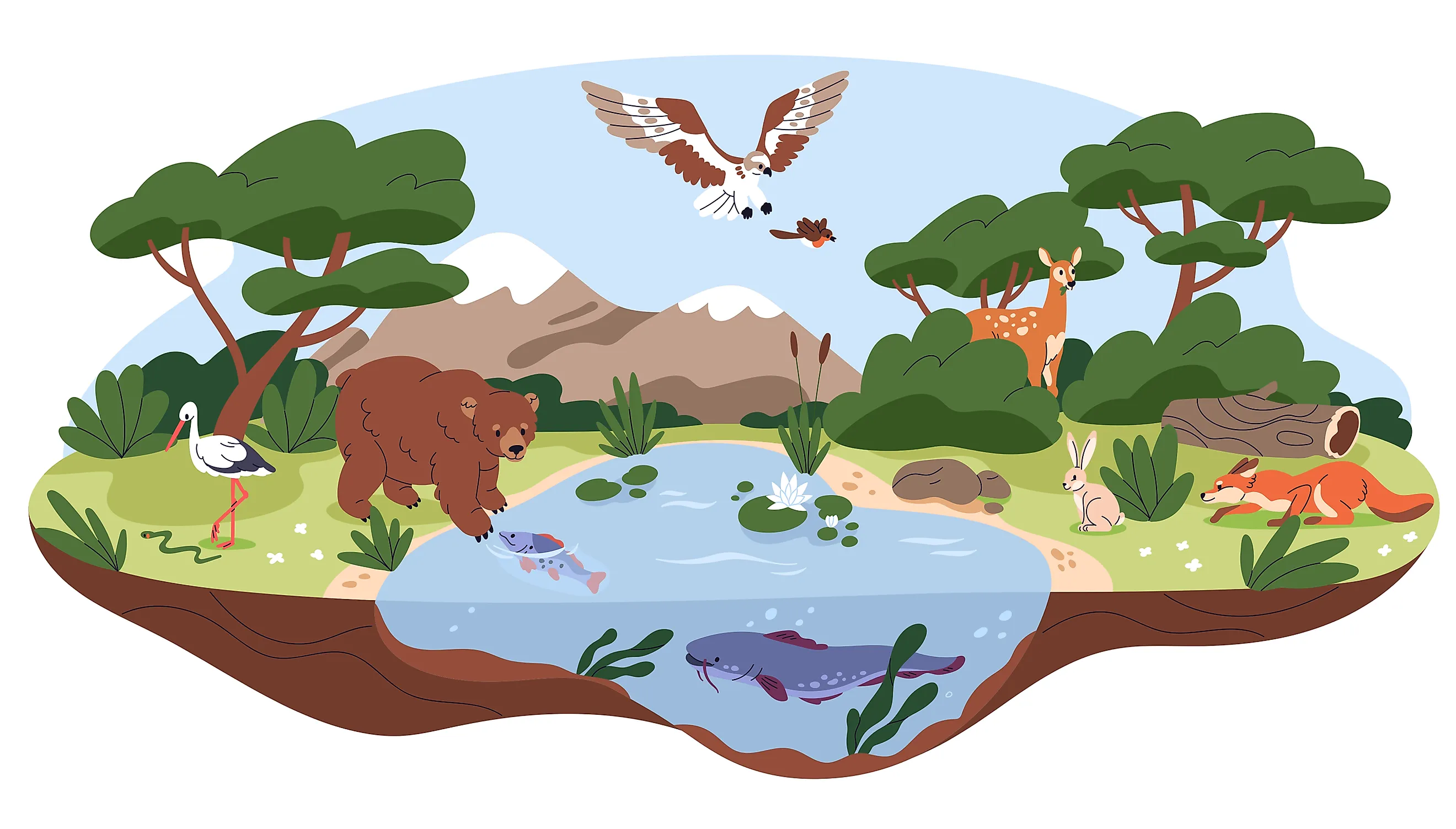
Biosphere
300
Which light has high energy and short wavelength?
Blue light
300
What is the difference between Terrestrial and Jovian planets?
Terrestrial planets- smaller, closer to the sun, made of rocks/iron
Jovian planets- bigger, farther from the sun, made of gases
300
Which of Kepler's Laws tells us that a planet travels faster when it is closer to the Sun?
Kepler's 2nd Law
400
Explain why it is important to have seasons here on Earth.
Seasons have an enormous influence on vegetation and plant growth. Seasons control the weather and climate we experience. Imagine if we were in winter all the time!
400
What is the lithosphere?
The lithosphere is the rocky layer of the Earth and includes the layers of the Earth.
400
How does the Sun make energy?
Fusion: hydrogen atoms crash into each other, release energy, and form helium
400
Which of Kepler's Laws tells us that the shape of a planet's orbit is called an ellipse?
Kepler's First Law
400
What object in our solar system is responsible for the tides on Earth?
The Moon
500
Create a drawing showing Earth rotating and revolving. Label both correctly.

500
Why is the atmosphere important?
The atmosphere gives us air to breathe, protects us from solar radiation, and controls weather.
500
Explain the Nebular Theory.
Hint: What are those 4 steps that describe the formation of the universe?
The Nebular Theory is an idea that describes the formation of the universe. It states the universe began from an explosion called The Big Bang. Next, clouds of dust and gas called nebulas began to form. As these nebulas continued spinning, rocks and other debris joined the nebulas. After millions of years, galaxies and solar systems were formed.
500
Label all of the planets,
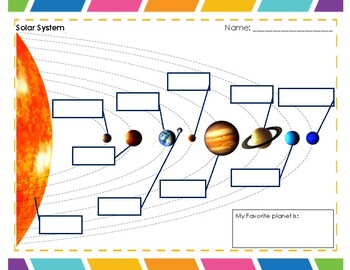
The Sun, Mercury, Venus, Earth, Mars, Jupiter, Saturn, Uranus, Neptune
500
What makes the Earth a terrestrial planet? Give 3 reasons.
1. made of rocks and metal 2. close to the Sun 3. has 1 moon 4. has no rings 5. has high density 6. small size