Cell Structure/Function 1
Cell Structure/Function 2
Macromolecules
Macromolecules
Cell Cycle 1
Random
100
controls all the activities of the cell and stores the genetic information
Nucleus
100
This organelle converts glucose and other organic molecules into a form of usable cell energy called ATP.
Mitochondria
100
Name the 4 categories of macromolecules
proteins, carbohydrates, lipids, and nucleic acids
100
Name 3 functions of proteins
enzymes, hormones, antibodies, muscles, etc.
100
The part of the cell cycle in which the nucleus divides.
What is mitosis?
100
A disease of unregulated cell division.
What is Cancer?
200
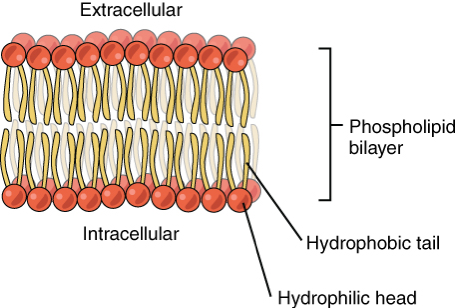 What is this a picture of?
Cell membrane - lipid bilayer
200
What is the main purpose of the cell?
To make proteins
200
Name the two polymers (examples) of nucleic acids
DNA and RNA
200
Sugar is an example of what macromolecule
carb
200
Happens during interphase?
What is DNA replication and growth?
200
What is one way stem cells may be used in the future?
Prevent disease, treat cancer, regeneration, research, etc.
300
Name the 3 organelles a plant cell has that animal cells do not
Chloroplasts, cell wall, central vacuole
300
Describe why an onion cell is missing chloroplasts
underground, no sunlight
300
Proteins are made of what monomer?
amino acids
300
Is DNA in our food?
Yes, DNA is in living organisms, so it is in most food. However, we get our DNA from our parents, not our food
300
What are the two main purposes for cell division?
Growth + Repair
300
Programmed cell death
Apoptosis
400
What are the two main cell types? Think - simple vs complex
Eukaryotic Cell and prokaryotic cell
400
What does the term selectively permeable mean? Give an example of why the cell membrane is selectively permeable.
Only allows certain molecules to pass (small, nonpolar molecules + water)
400
Starches are an example of what macromolecule
carbs
400
Describe an example of lipids
fat, wax, oil, cell membrane
400
In which phase do the chromosomes separate?
Anaphase
400
The purpose of mitosis is to create identical daughter cells (ex: skin cells). What might happen if a phase is skipped/missed? Give an example to describe reasoning.
Daughter cells would not be identical
500
Describe the importance of having organelles
Different structures to help with functions. All working together to achieve common goal
500
Describe Cell Specialization (Differentiation) - give an example
What is the term that describes how different structured cells have specific functions? Blood cells, nerve cells, bone cells, etc.
500
Name 2 ways lipids are used in the body
protection, insulation, energy storage, etc.
500
When substance A and substance B combine chemically and produce substance C and water, this chemical process is known as … A + B = C and Water
Dehydration Synthesis
500
Name the order of the stages in Mitosis
PMAT
Prophase, Metaphase, Anaphase, Telophase
500
Describe the importance of Checkpoints in the cell cycle
Controlled cell cycle/growth. Allows changes to be made or cells to be destroyed if incorrect
600
Which cell came first? prokaryotic or eukaryotic? Defend your reasoning
Prokaryotic - no membrane bound organelles. By combining 2 prokaryotes a eukaryotic cell may have been made (theory of endosymbiosis)
600
Name 3 differences between Prokaryotic and Eukaryotic Cells
- uni vs. multicellular
- membrane bound organelles in Euk (including nucleus)
- mitosis in Euk.
see table in notes
600
What is a calorie? Why is it important for them to be labeled on food/drinks?
calorie is a measure of energy, it lets a consumer know how much energy is in their food.
600
Name of the process that breaks down polymers into monomers. What is being added?
Hydrolysis. Water is added to break apart bonds
600
Describe what might cause plant and animal mitosis to be different?
Different types of organelles - ex: cell wall
600
Why may ethics be a concern when using Embryonic Stem Cells? (Hint: What may make them controversial to use?)
ESC are used from a human zygote (fertilized egg) that is undergoing differentiation.