Macromolecules 1
Macromolecules 2
Chemical Reactions
Enzymes
Hodgepodge
100
These are large molecules made from repeating smaller units called monomers.
What are macromolecules?
100
The monomers of carbohydrates.
What are monosaccharides?
100
A process that changes one set of chemicals into another by breaking and forming new bonds.
What is a Chemical Reaction?
100
In the lock-and-key model, the lock is represented by... and the key is represented by...
What is...
The lock is the active site and the substrate is the key
100
The substances at the beginning of a chemical reaction are called...
What are reactants?
200
This is the name for the individual small subunits that join together to make a larger macromolecule.
What is a monomer?
200
This type of protein speeds up chemical reactions but is not used up.
What is an enzyme?
200
This is the amount of energy that must be absorbed to start any chemical reaction.
What is Activation Energy?
200
Label the three parts of the enzyme-substrate complex.
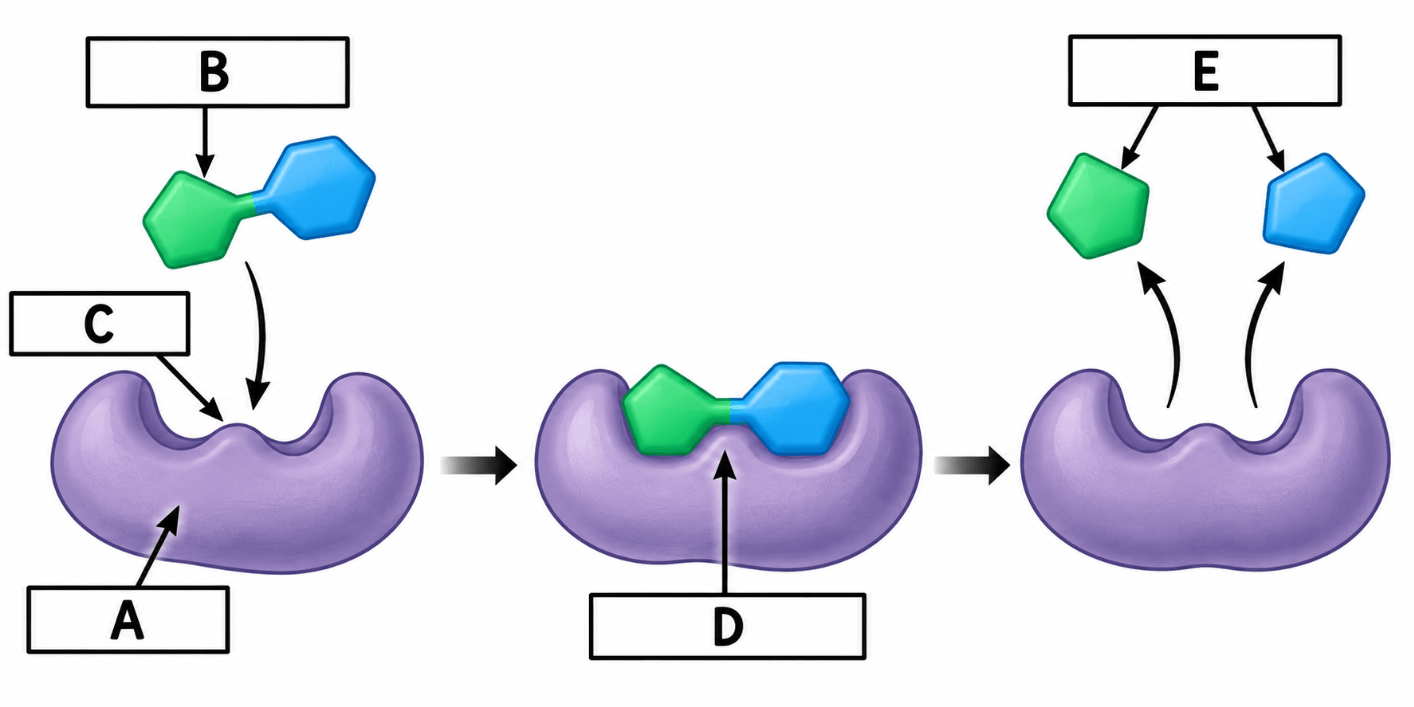
A. Enzyme
B. Substrate
C. Active Site
D. Enzyme-Substrate Complex
E. Products
200
True or False: An enzyme can bind to any substrate as long as the substrate is small enough to fit inside its active site.
What is False?
300
Glucose, fructose, and galactose are examples of these simple sugar monomers for carbohydrates.
What are monosaccharides?
300
A type of lipid that is the main structural component of the cell membrane.
What is a phospholipid?
300
Catalysts speed up a reaction by doing this to the required activation energy.
What is... decreases (or lower) it?
300
Determine what enzymes do to chemical reactions in the body
What is... speed them up?
300
Two macromolecules both provide energy, but one is used for quick energy, while the other stores energy for long periods. Identify both macromolecules.
What are carbohydrates and lipids?
400
This macromolecule provides insulation and protection around organs for long-term energy storage
What are lipids?
400
True or False. Lipids mix easily with water.
What is false?
400
Determine the reactants and products in the equation below.
6CO2 + 6H2O ---> C6H12O6 + 6O2
What is...
Reactants: 6CO2 + 6H2O
Products:C6H12O6 + 6O2
400
What happens to the substrates during an enzyme-catalyzed reaction (a type of chemical reaction)?
What is... converted into products?
400
A student eats a meal containing bread, chicken, and butter. Match each food to its primary macromolecule.
What are...
bread: carbohydrates,
chicken: proteins
butter: lipids
500
Determine what each macromolecule is based on the photos below:
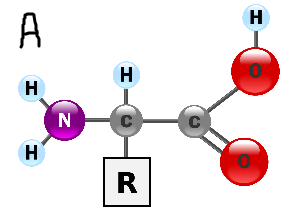
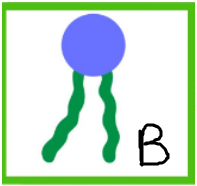
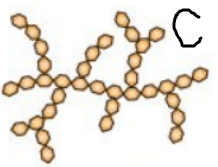
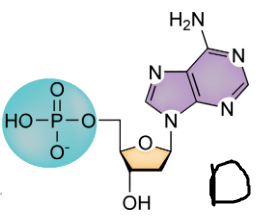
What is...
A. Proteins
B. Lipids
C. Carbohydrates
D. Nucleic Acids
500
Write the elements found in each macromolecule.
What is...
Carbohydrates: CHO
Lipids: CHO
Nucleic Acids: CHONP
Proteins: CHONPS
500
During a chemical reaction, energy is needed to break bonds. When new bonds form, the energy will be...
What is released?
500
Too much heat or a pH outside the optimal range can cause an enzyme to lose its shape and function, a process known as this.
What is Denaturation?
500
An enzyme speeds up a chemical reaction but is not used up during the process. After the reaction is complete, the enzyme can do this.
What is reused for another reaction?