Sequences
Function Talk
Build the Function
Read the Graph
Linear or Not?
100
An arithmetic sequence begins:
42, 49, 56, 63, ...
What is the common difference?
d = 7
100
A function P(t) represents the number of pages Maya has read after t days.
If P(6)=84, what does this mean?
A. Maya read 6 pages in 84 days.
B. Maya read 84 pages after 6 days.
C. Maya read 84 pages each day.
D. Maya has 6 pages left.
B. Maya read 84 pages after 6 days.
100
A dog groomer charges a $28 appointment fee plus $12 per service.
In the function, C(s)= 12s + 28
what does the 28 represent?
The initial/appointment fee.
100
Is the function linear or nonlinear?
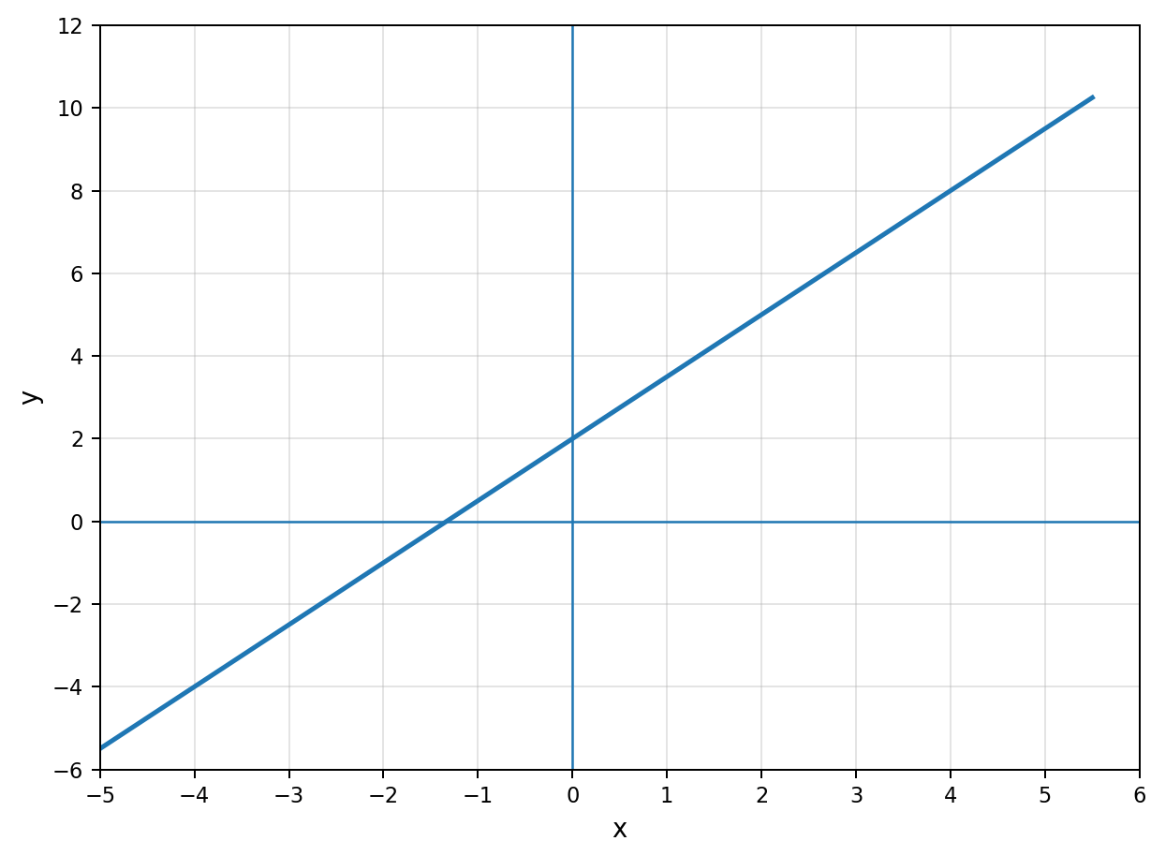
Linear
100
Which table represents a linear function?
A
200
Identify a(1) in the following graph.
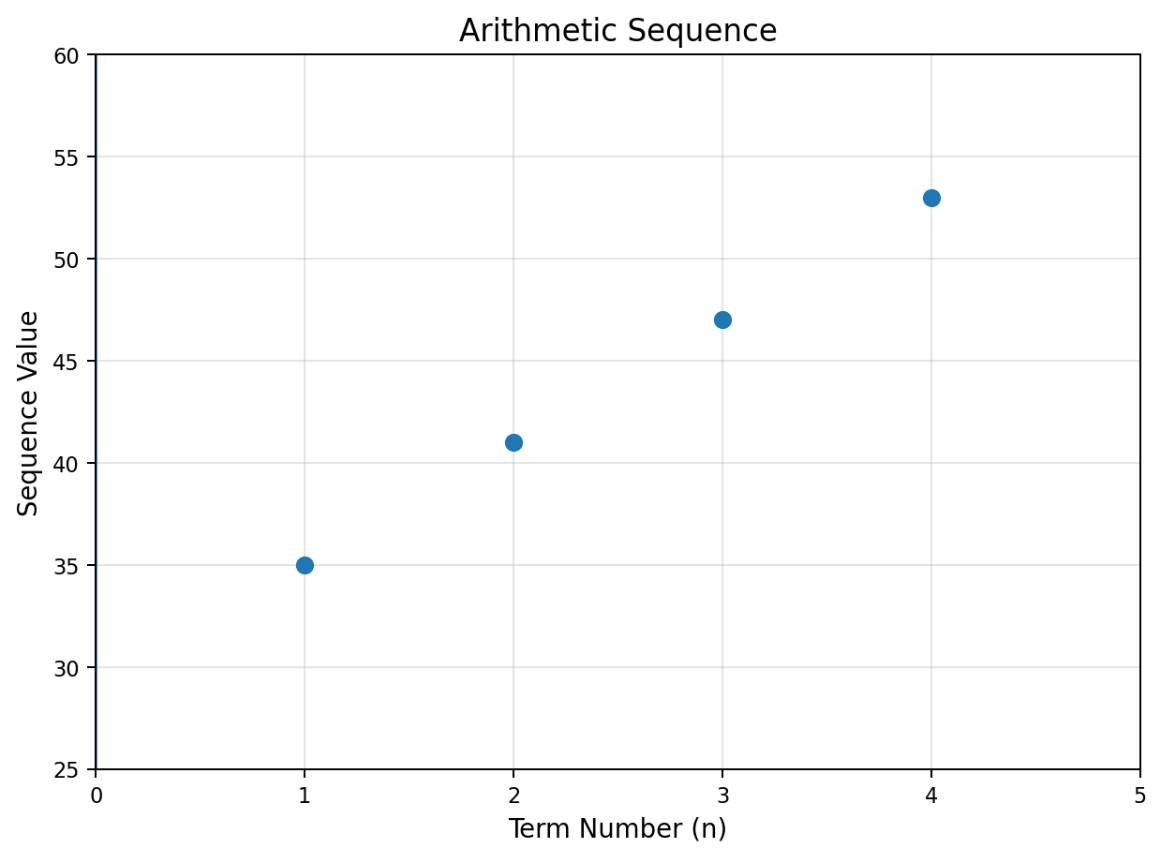
a(1)=35
200
The function C(x) represents the cost of purchasing x pounds of apples. The domain of the function is x is greater than or equal to 0.
Which interval represents the domain?
A. (0,∞)
B. (-∞,0]
C. [0,∞]
D. [0,∞)
D. [0,∞)
200
A company pays $8,400 to purchase equipment. Each item it produces costs $6.25 in materials and $1.75 in packaging.
Which function represents the total cost of producing n items?
A. C(n)= 8n + 8400
B. C(n)= 8400n + 8
C. C(n)= 8n − 8400
D. C(n)= 6.25n + 8401.75
A. C(n)= 8n + 8400
200
Which statement is true?
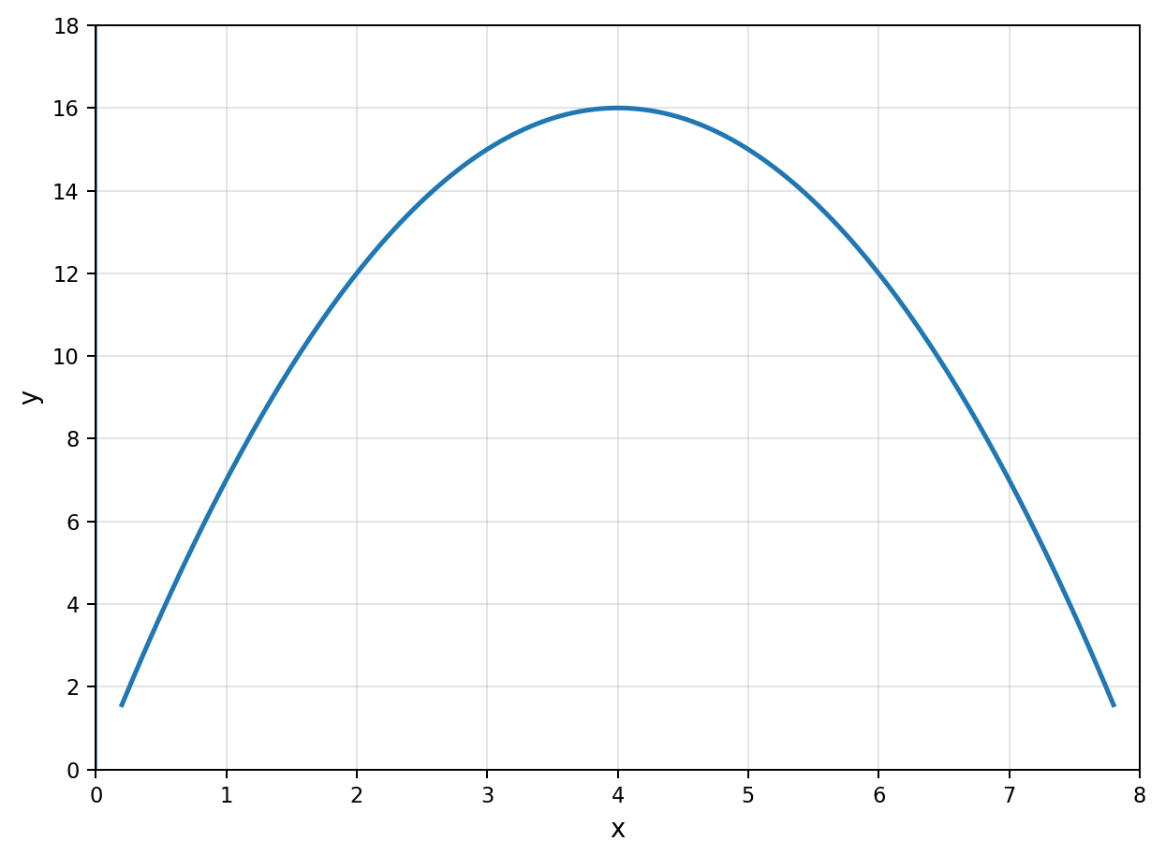
A. The function decreases before x=4 and increases after x=4.
B. The function increases before x=4 and decreases after x=4.
C. The function increases for all x-values.
D. The function is linear.
B. The function increases before x=4 and decreases after x=4.
200
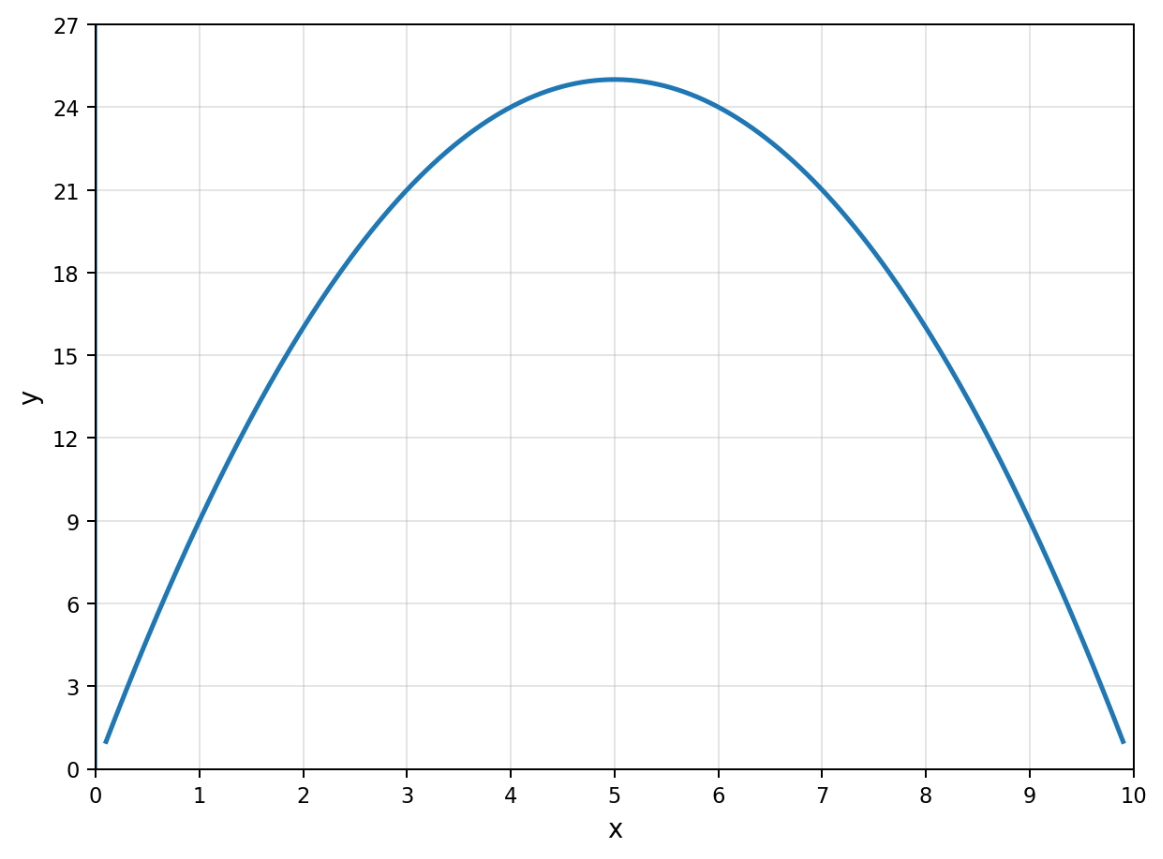
Which description is correct?
A. Increasing when x<5; decreasing when x>5
B. Decreasing when x<5; increasing when x>5
C. Increasing everywhere
D. Decreasing everywhere
A
300
Consider the arithmetic sequence:
18, 23, 28, 33, 38, ...
Which explicit rule represents the sequence?
A. a(n)=5n+13
B. a(n)=5n+18
C. a(n)=18n+5
D. a(n)=5n−13
A. a(n)=5n+13
300
Which situation would have a continuous domain with a solid line on the graph?
A. Number of students attending a game
B. Number of text messages sent
C. Amount of gasoline pumped into a car
D. Number of books checked out
C. Amount of gasoline pumped into a car
300
Identify the rate of change and initial value represented in the table below.
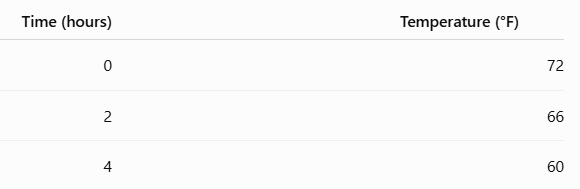
m = -3
b= 72
Explanation:
The temperature drops 6° every 2 hours, so the rate is -3 per hour.
And the initial value is wherever x = 0!
300
Which statement is true?
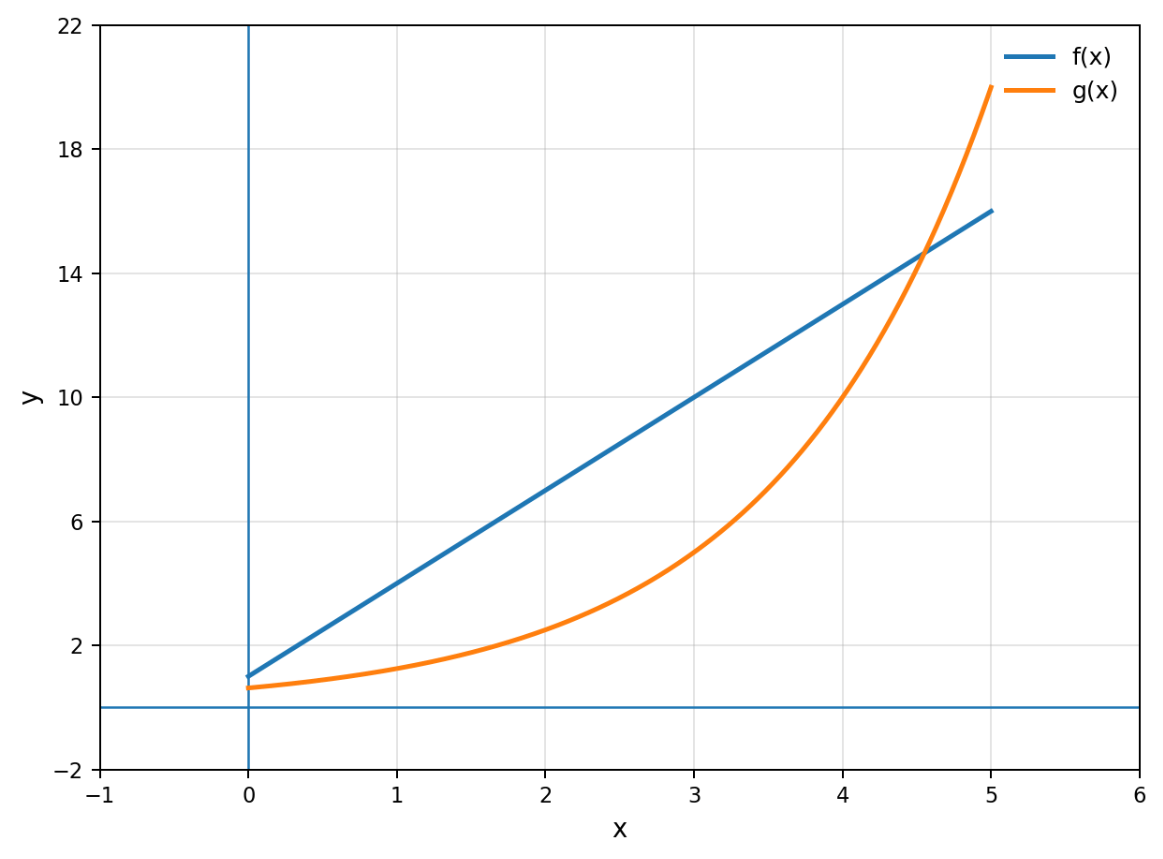
A. Both functions grow at a constant rate.
B. Only g(x) grows at a constant rate.
C. Only f(x) grows at a constant rate.
D. as x increases f(x) > g(x)
C. Only f(x) grows at a constant rate.
300
Two bacteria cultures begin with 100 bacteria.
- Culture A: gains 40 bacteria each hour.
- Culture B: increases by 30% each hour.
Which statement is true?
A. Both represent linear functions.
B. Both represent exponential functions.
C. Culture A is linear and Culture B is nonlinear.
D. Culture A is nonlinear and Culture B is linear.
C. Culture A is linear and Culture B is nonlinear.
400
A concert venue releases a limited number of tickets each hour.
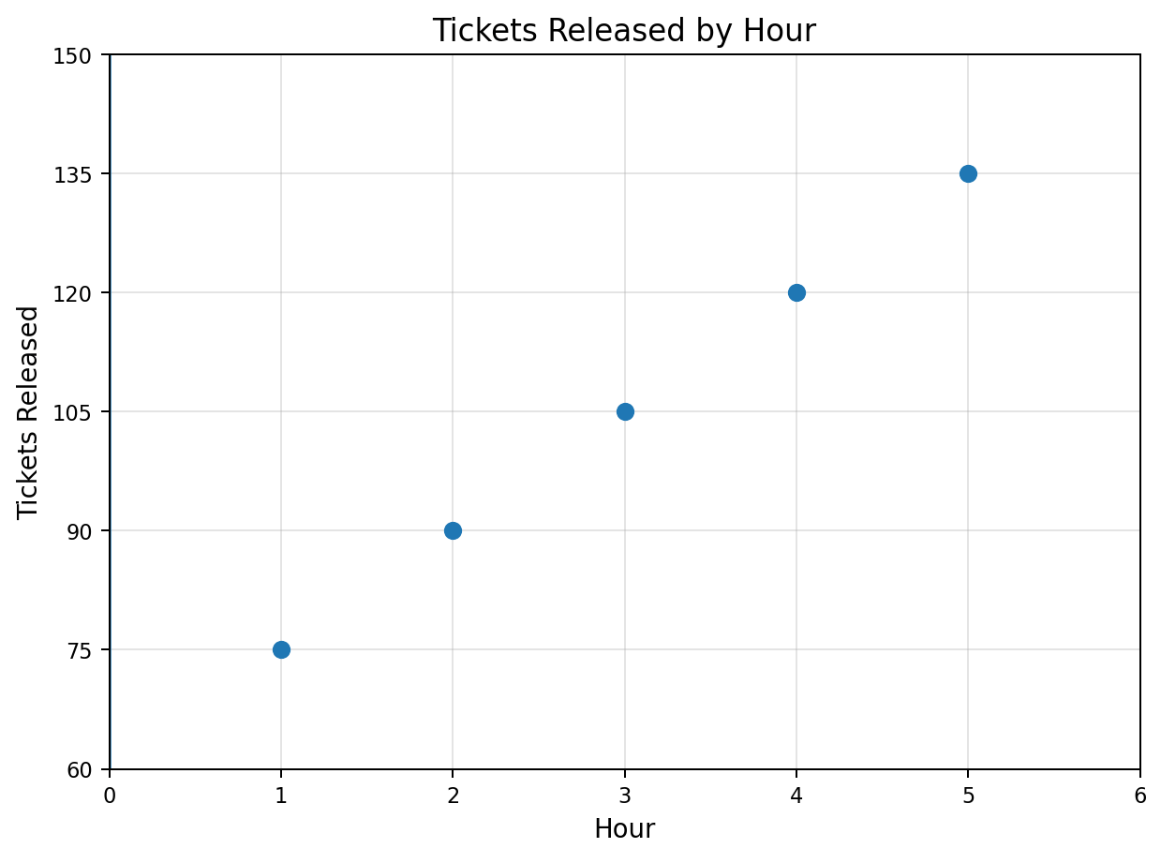
Which statement correctly describes the rate?
A. The number increases by 15 each hour, which is the common ratio.
B. The number increases by 15 each hour, which is the common difference.
C. The number increases by 75 each hour, which is the common difference.
D. The number increases by 90 each hour, which is the common ratio.
B. The number increases by 15 each hour, which is the common difference.
400
What are the domain and range of the function in set notation?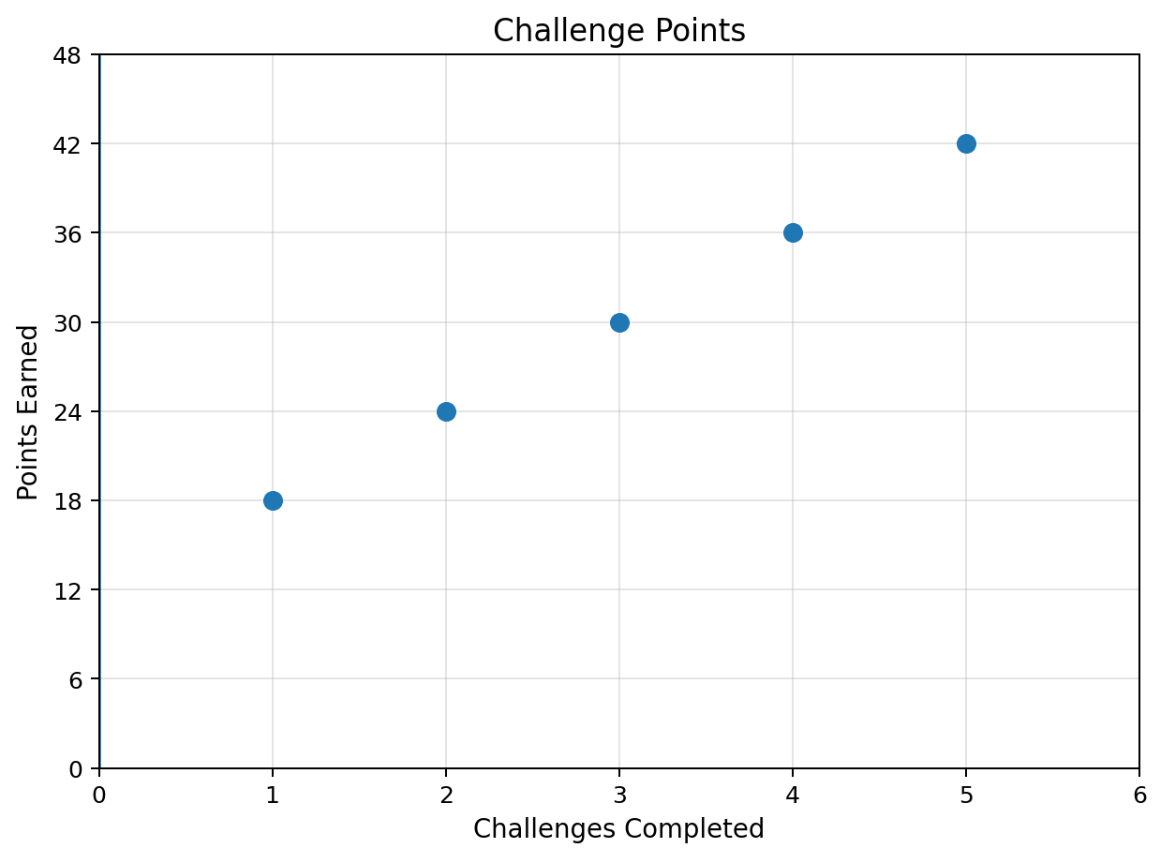
Domain = {x l 1,2,3,4,5}
Range = {y l 18,24,30,36,42}
400
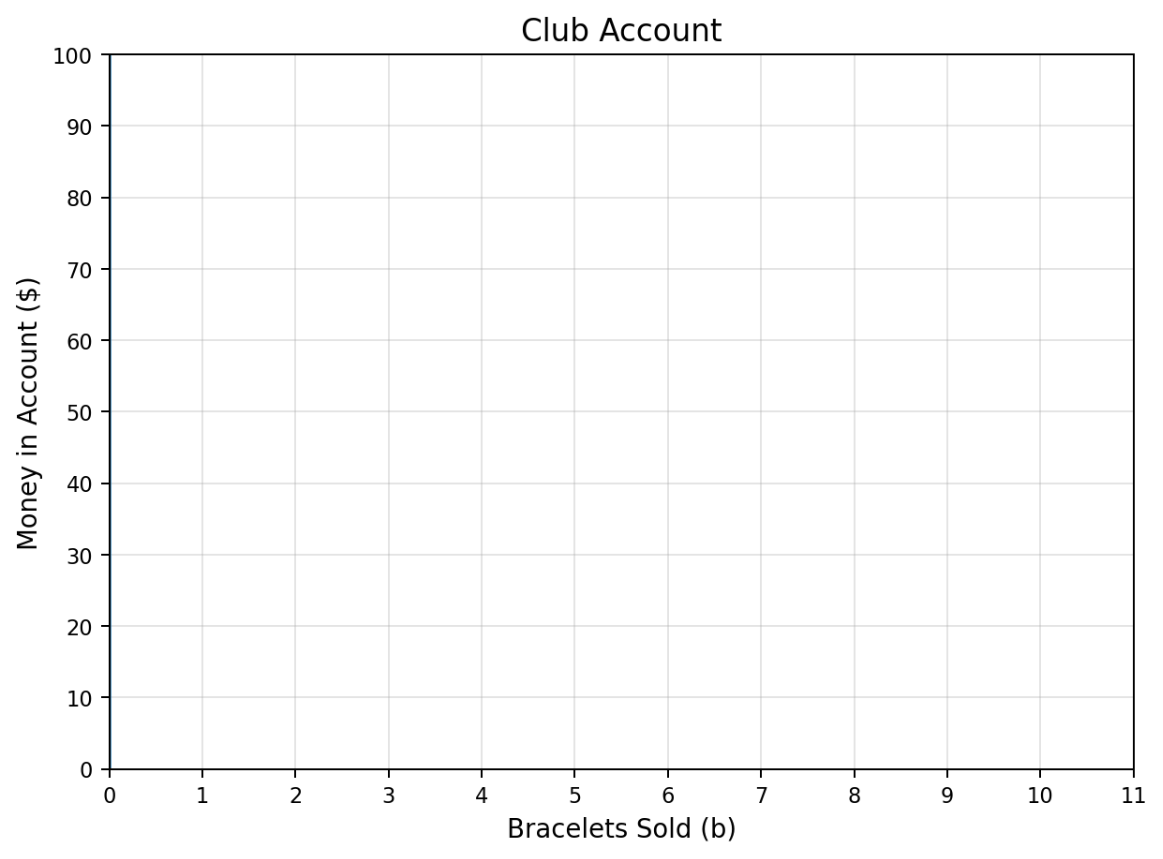
A school club already has $24 in its account. Students earn $6 for every bracelet sold.
Graph the function showing the amount of money m in the account after selling b bracelets.
m=6b+24
400
Which statement best describes the functions?
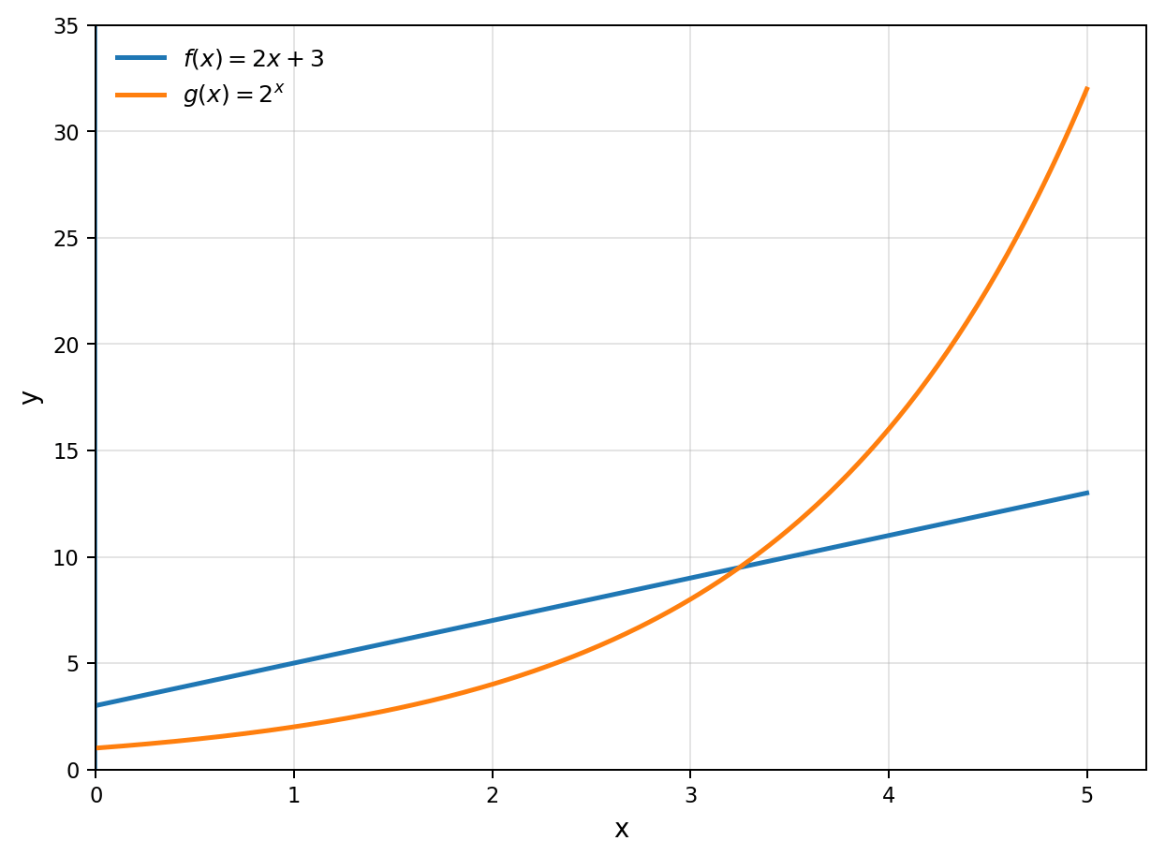
A. Both functions grow at the same rate over the interval [0, 1]
B. g(x) is linear and f(x) is nonlinear.
C. As x increases, f(x) > g(x)
D. As x increases, g(x)> f(x)
D. As x increases, g(x)> f(x)
400
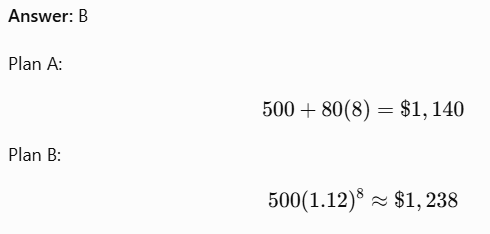
Two savings plans begin with $500.
- Plan A: Adds $80 each year.
- Plan B: Grows by 12% each year and is represented by the function f(t) = 500(1.12)t
After 8 years, which plan has more money?
A. Plan A
B. Plan B
C. They are equal
D. Not enough information