Molecules
H2O
Scientific Method
Identification
Biomolecules too
100
Starch and cellulose are both built entirely from the same repeating sugar, yet the human digestive system can break down one but not the other. Name the sugar they share.
What is glucose?
100
Methane and water are both small molecules of similar size, yet water boils at 100°C while methane boils at about -160°C. Name the type of intermolecular attraction, present in water but absent in methane, that explains this huge gap.
What is hydrogen bonding?
100
A teacher asks a student to write a testable, “if…then” style statement predicting why the plants near the classroom window are growing faster than the others. Name the type of statement the teacher is asking for.
What is a hypothesis?
100
Identify the biomolecule class shown,
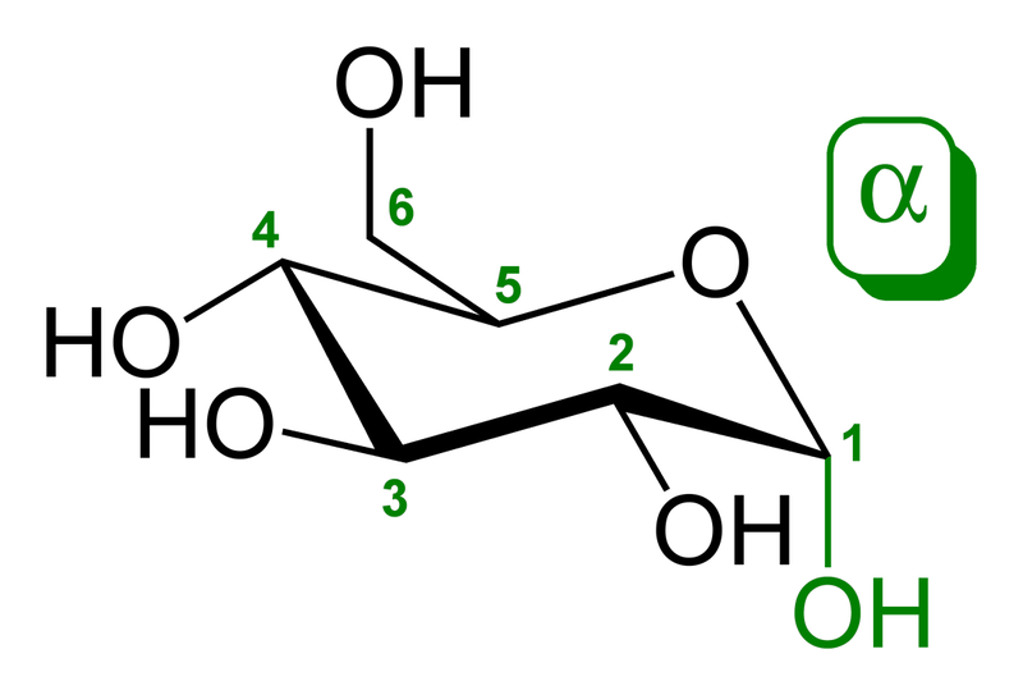
What is a monosaccharide (carbohydrate)?
100
A student adds a small amount of lemon juice (pH 2) to a solution designed to resist changes in acidity. Instead of dropping sharply, the pH shifts only slightly. Name the substance responsible for this resistance.
What is a buffer?
200
A slice of bread and a spoonful of vegetable oil belong to two different biomolecule classes, but your digestive system disassembles both using the same general category of reaction. Name that reaction category.
What is hydrolysis?
200
A drop of water beads up into a rounded dome on a freshly waxed car hood instead of spreading flat. Name the property of water, caused by water molecules attracting one another, that's responsible.
What is cohesion (surface tension)?
200
A researcher testing whether a new fertilizer affects plant height measures the height of every plant at the end of the study. Name the category of variable that “plant height” falls into here.
What is the dependent variable?
200
Identify the monomer shown below, and name the three components attached to its central carbon.
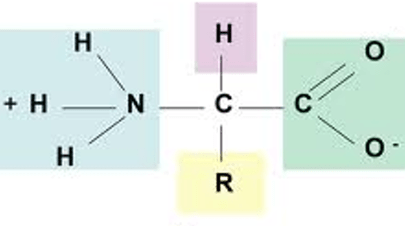
What is an amino acid? (amino group, carboxyl group, H, and R-group)
200
Glucose and fructose share the identical chemical formula, C6H12O6, but their atoms are arranged differently, giving them different shapes and different sweetness. Name the general term for molecules like this.
What are isomers?
300
Gram for gram, this biomolecule class stores more than double the energy of carbohydrates, making it the body's most efficient long-term energy reserve.
What are lipids (fats)?
300
A large lake takes far longer to warm up in spring, and far longer to cool down in fall, than the dry land surrounding it. Name the property of water most responsible for this thermal lag.
What is (high) specific heat?
300
A drug trial gives half of its participants the real medication and the other half an inactive pill that looks identical, so the two groups can be fairly compared. Name the group receiving the inactive pill.
What is the control group?
300
Identify the molecule shown, and state which end is attracted to water and which end repels it.
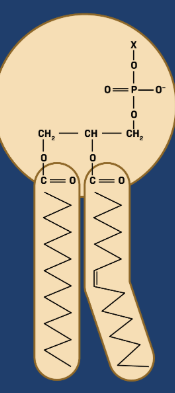
Phospholipid (Hydrophilic head and hydrophobic tail)
300
After a fever climbs above 105°F, some of the body's enzymes stop working properly because the heat permanently disrupted their folded shape. Name this process.
What is denaturation?
400
DAILY DOUBLE
This specific covalent bond forms between the carboxyl end of one monomer and the amino end of the next, and is later broken apart by hydrolysis during digestion.
What is a peptide bond?
400
A pond that's frozen solid on the surface in January still has liquid water underneath, letting fish survive the winter. Name the unusual, hydrogen-bonding-related property of water that makes this possible.
What is ice being less dense than liquid water (so it floats)?
400
This foundational idea in biology — that all living things are made of cells, that cells are life's basic unit, and that cells arise from existing cells — has been backed by decades of evidence across thousands of studies. Yet in everyday language, its name might sound less certain than the word 'hypothesis.' Name that scientific term.
What is a theory?
400
What is the monomer shown below and what polymer does it make?
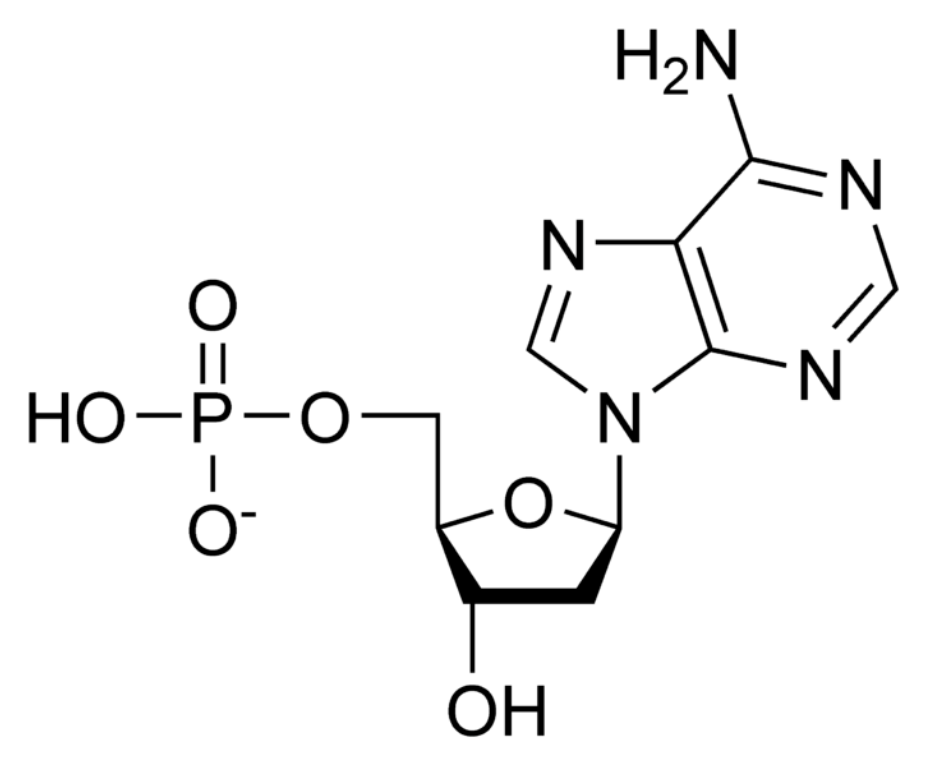
What is a nucleotide? What are Nucleic Acids?
400
Oxygen pulls the electrons it shares with hydrogen much more strongly than hydrogen pulls back, which is exactly why water ends up with partial charges on each end. Name the atomic property that describes the unequal pulling power of shared electrons?
What is electronegativity?
500
Hemoglobin only works once four separate, individually folded polypeptide chains assemble into a single functional unit. Name the level of protein structure this describes.
What is quaternary structure?
500
Water can climb several centimeters up the inside of a narrow glass tube against the pull of gravity. This relies on cohesion between water molecules plus one additional property — water's attraction to the glass itself. Name that second property.
What is adhesion?
500
DAILY DOUBLE
A researcher compares plant growth between two groups that differ in soil type, watering schedule, AND sunlight exposure all at once. Name the type of variable this design has accidentally introduced, which makes it impossible to know which factor actually caused any growth difference.
What is a confounding variable (the experiment isn't controlled)?
500
Identify the type of molecule shown, and explain why one hydrocarbon chain is bent while the other is drawn straight.
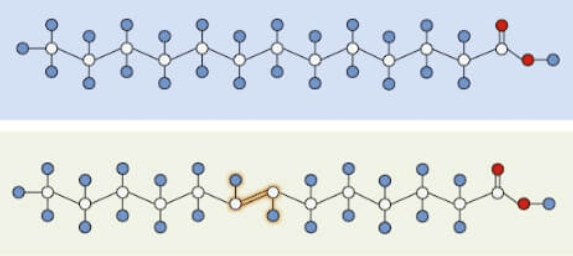
What is a fatty acid (lipid)? The bent chain contains a carbon-carbon double bond (unsaturated), which creates a kink, while the straight chain is saturated.
500
Anabolic versions of this lipid subclass are often banned because they mimic the effects of testosterone
What is a steroid?