Macromolecules
Enzymes
Organelles
Plant vs. Animal Cells
Eukaryotic vs Prokaryotic Cells
100
Which macromolecule is the fastest source of energy for cells?
Carbohydrates
100
What type of (macro)molecule are enzymes?
Proteins
100
Which organelle is known as the “powerhouse of the cell”?
Mitochondria
100
Which type of cell has chloroplasts?
Plant Cell
100
Which type of cell has a nucleus?
Eukaryotic cells
200
What are the building blocks (monomers) of proteins?
Amino acids
200
What is the name of the part of the enzyme where the substrate binds?
Active Site
200
Which organelle packages and ships proteins?
Golgi apparatus
200
Name ONE structure found in plant cells but NOT animal cells.
Cell wall, chloroplast, or large central vacuole
200
Which type of cell is smaller and simpler?
Prokaryotic Cells
300
Which macromolecule stores long-term energy and provides insulation?
Lipids
300
What happens to enzyme activity if the temperature gets too high?
2 Part Answer!!!!!
The enzyme denatures and the reaction rate decreases
300
What is the job of the plasma membrane and what school comparison is made? (Have to get both)
Controls what enters and leaves the cell, Old Man Rob
300
Why do plant cells need a large central vacuole?
To store water, nutrients, waste, and maintain turgor pressure
300
What type of DNA do prokaryotic cells have?
Single circular DNA
400
Name the macromolecule that stores and transmits genetic information AND list its two types.
Nucleic acids — DNA and RNA
400
Why is an enzyme described as “specific”?
Its shape only allows it to bind to a specific substrate (lock-and-key model)
400
Which organelles work together to make and transport proteins?
Ribosomes and Rough ER make proteins, Golgi Apparatus ships them where they need to go
400
Why do animal cells not need chloroplasts?
Animals do not perform photosynthesis; they obtain energy by consuming food
400
Name TWO structures found in BOTH prokaryotic and eukaryotic cells.
DNA, ribosomes, cell membrane, cytoplasm
500
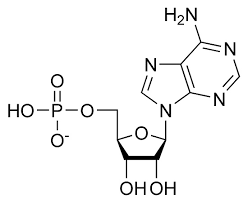
Identify this structure:
Nucleic Acid
500
Explain how pH and temperature BOTH affect enzyme activity.
Enzymes have both an optimal pH and temperature. When the optimal pH or temp isn't met or is exceeded, the rate of reaction becomes skewed
500
Muscle cells contain many more mitochondria than skin cells.
What does this tell you about the function of mitochondria and the energy needs of different cells?
Mitochondria produce ATP through cellular respiration, and cells with higher energy demands (like muscle cells) contain more mitochondria to meet those energy needs.
500
Why can plant cells survive without consuming food, but animal cells cannot?
Plant cells contain chloroplasts that perform photosynthesis to make glucose, while animal cells lack chloroplasts and must obtain energy by consuming food.
500
Explain why prokaryotic cells are generally smaller than eukaryotic cells.
Prokaryotic cells lack membrane-bound organelles and are less complex, allowing them to function efficiently at a smaller size.