Macromolecules
Macromolecule Pictures
Enzymes
Cell Organelles
Prokaryotes vs Eukaryotes
100
Which of the biological molecules is rich in carbon hydrogen bonds, gives short term energy and is responsible for structural components of cell walls?
Carbohydrates
100
Identify the macromolecule below: 
Carbohydrates
100
Proteins that speed up chemical reactions are called...
Enzymes
100
Which cell structure is correctly paired with its primary function?
A. ribosome - transport materials
B. mitochondria - energy production
C. vacuole - cell division
D. nucleus - storage of nutrients
B. Mitochondria- energy production
100
A newly discovered cell contains DNA, ribosomes & a cell membrane, but has no nucleus or membrane bound organelles. What type of cell is it and where would you find it's DNA?
Prokaryotic cell; DNA is free floating
200
This macromolecule makes up the cell membrane, hormones and provide long term energy
Lipids
200
The subunits of this macromolecules is shown below:Three fatty acid molecules connected to a glycerol form.

Lipids (Triglyceride)
200
Enzymes increase the rate of chemical reactions by lowering _____
Activation energy
200
This organelle acts as the cell's control center by storing DNA and regulating which genes are expressed.
Nucleus
200
A scientist observes a cell with DNA enclosed inside a nucleus, mitochondria and an endoplasmic reticulum. Based on these structures, what can the scientist conclude about the cell?
It is eukaryotic
300
If nucleotides were deprived out of a culture of tissue what macromolecule would this tissue not be able to construct properly?
Nucleic Acids
300
Identify the macromolecule below: 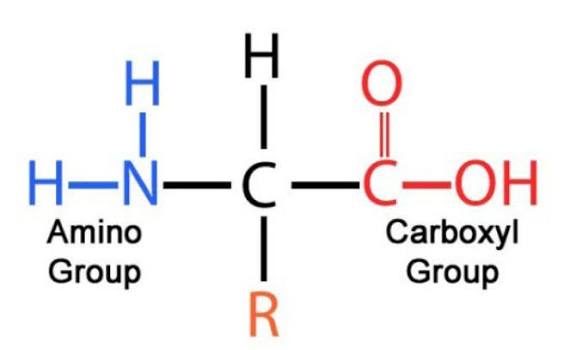
Proteins
300
One major function of the enzyme lactase is to break down the sugar lactose. This process is important in digestion because it speeds up the chemical reaction. What group of macromolecules does the enzyme lactase belong to?
Proteins
300
A cell's mitochondria suddenly stops functioning. What major effect would happen to the cell?
ATP production would decrease, leaving the cell with less usable energy for basic processes.
300
List two things that prokaryotic and eukaryotic cells have in common.
Cell membrane, ribosomes, DNA, can be unicellular etc...
400
Chitin is a major structural component in the exoskeleton of some insects. What major class of biomolecules does chitin belong to?
Carbohydrates
400
What is the function of a macromolecule that is composed of several of these subunits? 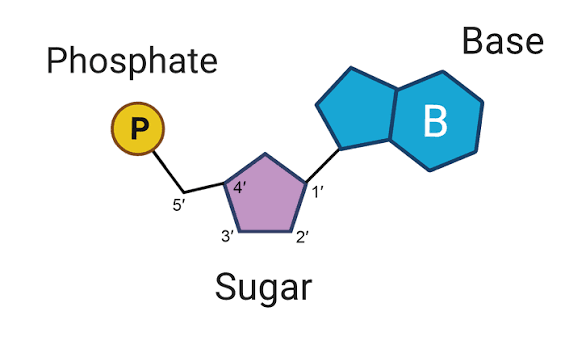
Storing genetic information
400
An enzyme's shape can be changed or altered. When this happens we say the enzyme has been __________ (one word answer)
Denatured
400
A cell needs to break down a worn-out organelle and recycle its components. Which organelle is primarily responsible for this process?
Lysosomes
400
A student claims "All cells with a cell wall are prokaryotic." Why is this statement incorrect?
Some eukaryotic cells like plant and fungi cells have cell walls.
500
List all elements in all four macromolecules.
Carbohydrates: C, H, O
Lipids: C, H, O
Proteins: C, H, O, N
Nucleic Acids: C, H, O, N, P
500
Identify all four macromolecules and list their monomers. (look at picture on google docs)
Nucleic acids- nucleotide
Carbohydrates- monosaccharide
Lipids- glycerol & fatty acid tails
Proteins- amino acids
500
List the three factors that can affect enzymes and explain how each of them has an effect.
Temperature: enzymes perform better in higher temps until it gets too hot
pH: enzymes have an optimum pH that is specific
Concentration: the more enzymes added will increase rate of reaction & will level out
500
A cell is producing large amounts of proteins that will be secreted outside of the cell. Which organelles would be most directly involved in producing, processing and transporting these proteins? (There are 3)
Ribosomes, Endoplasmic Reticulum, Golgi Apparatus
500
List two examples of prokaryotic cells and four examples of eukaryotic cells.
Prokaryotic: bacteria & archaea
Eukaryotic: animals, plants, fungi, protists