Intro to Ecology
Adaptation and Evolution pt. 1
Adaptation and Evolution pt. 2
Adaptation and Evolution pt. 3
Adaptations to the Physical Environment
100
A researcher is studying grass grown with fertilizer and grass grown without fertilizer. He measures both plots of grass and runs statistical analysis on his data. He finds that the p-value for his data is p = 0.03. The researcher concludes that there is not a statistically significant difference between the two plots of grass. Is he correct, or incorrect?
Incorrect
100
True or False: Rr is an example of an individual's phenotype, while red hair is an example of an individual's genotype
False
100
The only mechanism for evolution that causes adaptive change is ________________ ________________
Natural selection
100
____________________ refers to how likely an organism is to pass its genetic material on to future generations.
Fitness
100
The Principle of __________________ states that adaptations to one challenge may reduce adaptations to others
Ex: An organism with thick fur is adapted well to cold temperatures, but would be maladapted to warm temperatures
Allocation
200
You are trying to test whether plants grow faster under different colors of lights. What would a null hypothesis for this experiment be?
The color of the light has no effect on the plant's growth
200
The genotype frequencies in a population are:
RR = 10
Rr = 10
rr = 20
What is q?
0.625
200
A population has three possible genotypes, with three selection coefficients. The corresponding Darwinian fitness is also given. Which of the alleles (p or q) is likely to decrease in subsequent generations?
BB: s = 0, w = 1
Bb: s = 0, w = 1
bb: s = 0.2, w = 0.8
q
200
The several varieties of beach mouse are an example of ___________________. They belong to the same species, but have different phenotypes based on their environments.

Ecotypes
200
One way an organism can avoid harsh conditions is by engaging in __________________, a temporary state of slowed body functions, as shown below
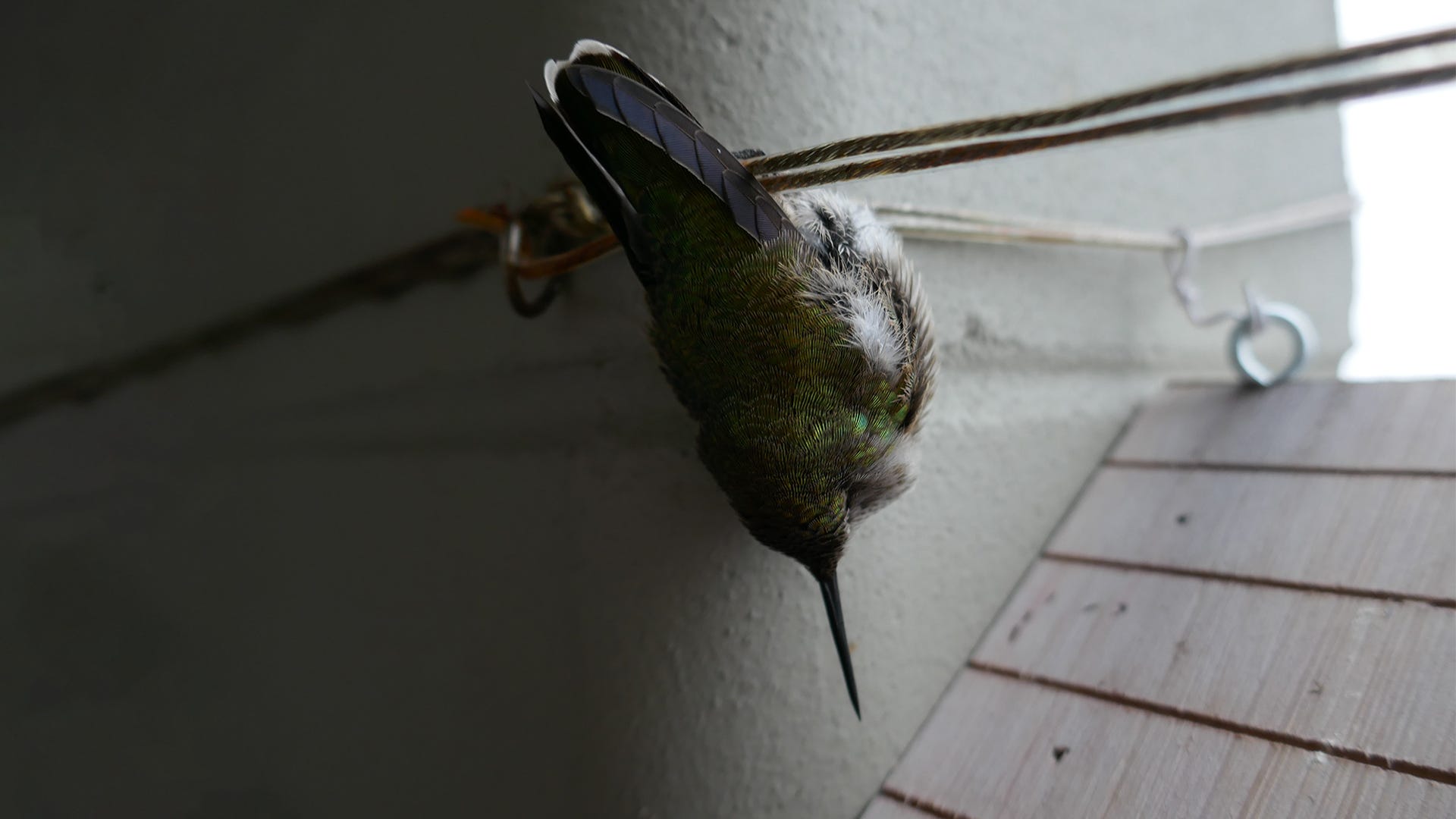
Torpor
300
When a result is produced in a lab that couldn't be produced in nature, it is known as a ________ _________________
Ex: Lizards produce a clutch of 100% male or female offspring
Lab artifact
300
Organisms within a population vary in appearance and behavior. Those with traits better adapted to the environment are more likely to survive and reproduce. This is known as ____________ _____________.
Natural selection
300
The picture below shows which mechanism of evolution?
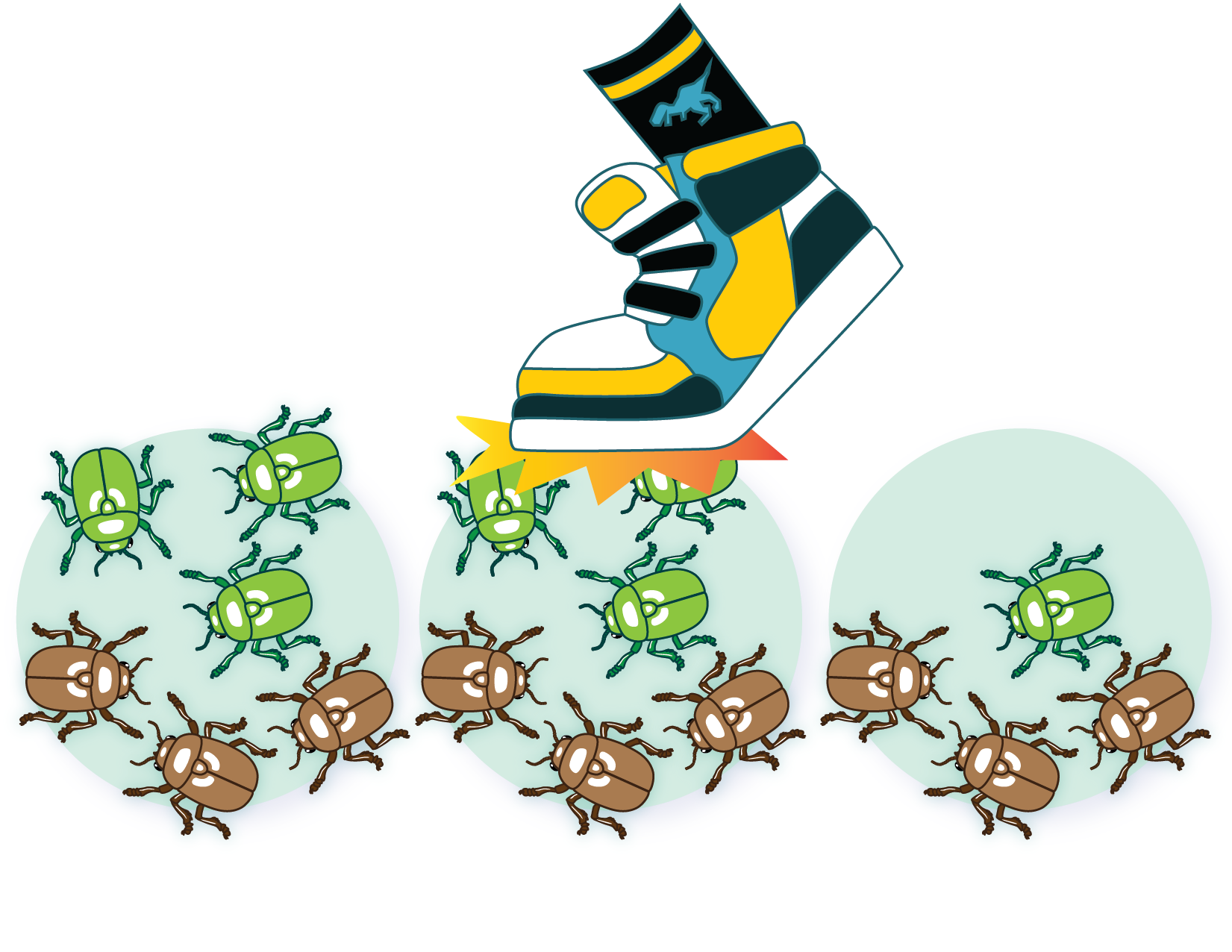
Genetic drift
300
When daphnia are born into dangerous waters, they develop a permanent "helmet". This type of phenotypic plasticity is known as ______________ _______________

Developmental response
300
A lizard basking on a rock to warm up, or finding shade to cool down, is known as _______________ _________________

Behavioral thermoregulation
400
What type of data is shown below:
Categorical
Discrete numerical
Continuous numerical

Discrete numerical
400
The allele frequencies for a population are q = 0.45, p = 0.55. What percentage of the population is predicted to be heterozygous?
49.5%
400
For the scenarios below, identify each as the Bottleneck Effect or the Founder Effect:
A) Recurrent flash floods have caused mass mortalities in the marble trout population. Scientists have analyzed the genetic makeup of the remaining marble trout population and have found that genetic diversity has decreased significantly.
B) In the 1720’s an Amish population settled into Pennsylvania. A small number of the early settlers were from Germany and carried an unusual number of mutations, one of which included polydactyly. The trait for polydactyly is now much more common in the Amish population than it is in the general population.
C) Due to the loss of their habitat and the introduction of non-native predators (like cats), the black robin population of New Zealand has declined to its lowest point, only 5 individuals. Since then, conservation efforts have brought the population number back up to an estimated 230 individuals.
A) Bottleneck
B) Founder
C) Bottleneck
400
Humans living in high altitudes may develop higher blood cell counts and greater lung capacity. When they return to sea level, this effect diminishes. This type of phenotypic plasticity is known as ________________
Acclimation
400
Organisms whose internal temperature varies with their environment are known as __________________; Organisms who expend energy to regulate their body temperature are known as ______________________
Poikilotherms; homeotherms
500
Place the following terms in the proper order, from simplest to most complex:
Ecosystem, organism, biosphere, population, community
Organism, population, community, ecosystem, biosphere
500
There are 100 goats in a population. Ninety of them are black, meaning they have at least one dominant (B) allele. The remaining goats are white.
A) Calculate p and q
B) Calculate the predicted numbers of individuals in the next population with the genotypes BB, Bb, and bb
A) q = 0.32, p = 0.68
B) BB = 46, Bb = 43, bb = 10
500
Label the graphs below with the proper type of natural selection:

1 = Directional selection
2 = Stabilizing selection
3 = Disruptive selection
500
The experiment shown below is known as a ________________ _______________ experiment. Based on the results, which of the traits is genetic? Which of the traits is environmental?

Common garden
Color is genetic, height is environmental
500
Organisms which must enter hibernation each year are known as _________________ hibernators, while organisms that enter a torpid state and can be quickly aroused are known as _____________ hibernators
Obligate; facultative