Cell Theory
Organelles
Types of cells
Unit 1
100
What is the smallest unit of life?
The cell
100
What is the job of the cell membrane?
To regulate or control what comes in and out of the cell.
100
What is an example of a prokaryotic cell?
A bacteria or an Archaea (extremophile)
100
What are the 5 elements of life?
CHONP
200
What does the cell theory state?
1. All living things are made of cells
2. All cells come from pre-existing cells
3. All living things started as a single cell
200
What are three organelles that all three types of cells have?
1. Ribosomes
2. Cell membranes
3. Cytoplasm
200
Are all bacteria harmful? Explain why yes or not and give an example
Not all bacteria are harmful, less than 10% of bacteria are pathogenic to humans. Most bacteria live in a symbiosis with humans for example the bacteria found in our stomachs that help us better digest our food and be healthy.
200
List three properties of water
Cohesion
Adhesion
Universal Solvent
High Specific Heat
Low density when solid
300
List the 7 characteristics of living things
1. Reproduce
2. Respond to stimuli
3. Mantain homeostasis
4. Are made of cells
5. Grow and develop / Evolve
6. Contain genetic information
7. Obtain and use energy
300
Explain the concept of division of labor:
Division of labor: the specialization of different cells, tissues, or organisms to perform specific tasks, enhancing efficiency and survival
300
Identify this cell and explain how you know that type of cell it is:
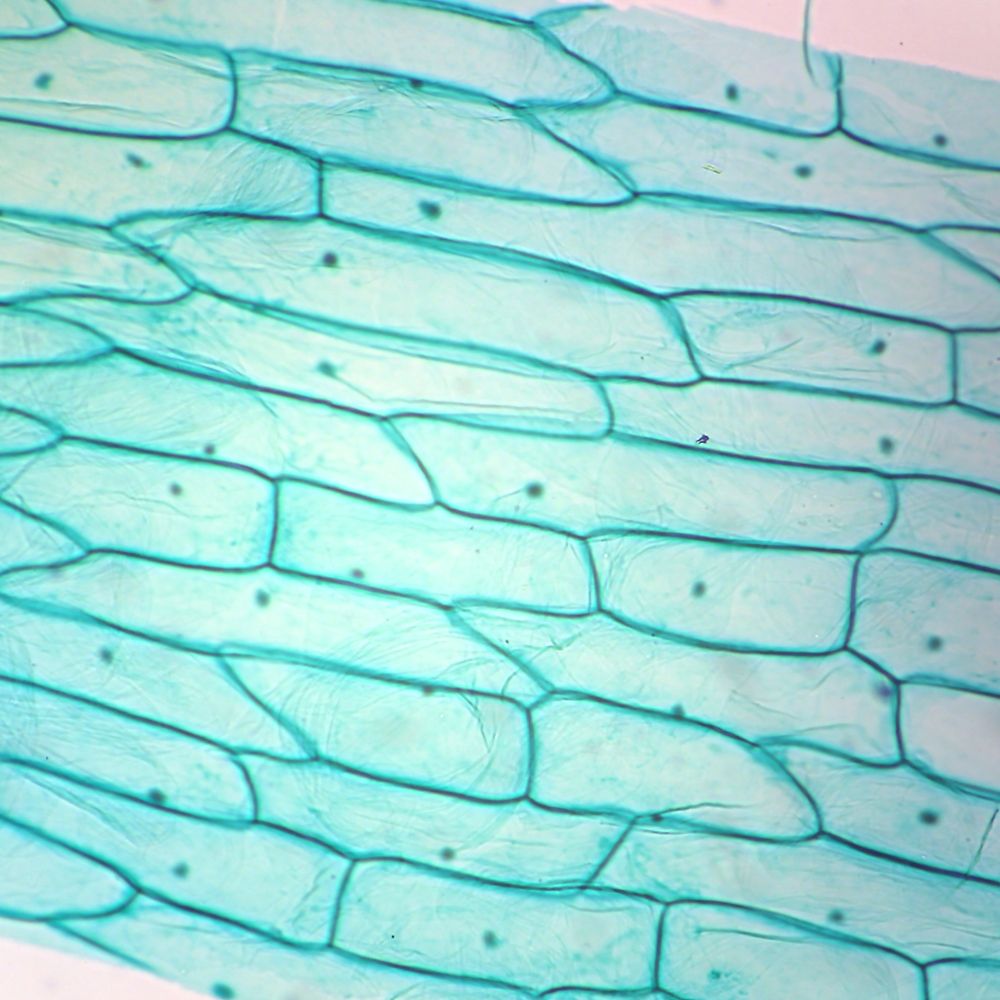
Plant cell: I know it is a plant cell because of the squarish/rectangular shape of each cell and the cell walls
300
What is the monomer of proteins?
Amino Acids
400
What is the oldest type of cell?
Prokaryotic Archaea cells
400
Compare and contrast Eukaryotic and prokaryotic cells, list two similarities and two differences.
Similarities:
Both Euk and Prok cells have ribosomes, contain genetic information in the form of DNA and have cell membranes
Differences:
Prok cells do not have a nucleus, prok cells do not have an Endoplasmic Reticulum (other organelles also accepted), prok cells only make up unicellular organisms
400
What are the differences between a heterotroph and an autotroph?
Heterotroph: (animals and fungi) cannot make their own energy, need to obtain energy from other organic sources
Autotrophs: (plants and certain bacteria) are able to make their own energy from inorganic sources (example: the sun through photosynthesis)
400
What are the 4 types of macromolecules and their functions?
Carbohydrates: Quick energy
Lipids: Long term energy storage and insulation
Proteins: Builders and enzymes
Nucleic acids: store genetic information
500
Why is it important that all cells contain DNA?
So that they are able to pass the genetic information to their descendants during reproduction.
OR
To ensure that the specie survives
500
List the functions and locations (which type of cell they belong to) of the following organelles:
Ribosome
Mitochondria
Chloroplast
Ribosome: protein synthesis (ALL cells)
Mitochondria: energy (ATP) production (Euk plant and animal cells)
Chloroplast: photosynthesis (making glucose) (Euk plant cells)
500
Draw a Eukaryotic plant cell and label three organelles

500
Define and give an example of an intermolecular force
An attraction between different molecules (Hydrogen bonds, what creates cohension between water molecules)