Patterns
Input-Output
Factors
Multiples
Prime/Composite
100
What are the next 3 numbers in the pattern?
(Rule: Add 12)
2, 14, 26, __, __, ___
38, 50, 62
100
Write the two missing outputs and identify the rule. 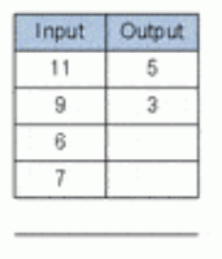
6
1
Rule = Subtract 6
100
What are factors?
Numbers that multiply together to create a product.
100
List the first six multiples of 6.
6, 12, 18, 24, 30, 36
100
Is 2 prime, composite, or neither? Explain.
2 is the ONLY even prime number because its only factors are 1 and 2.
200
Which of these could NOT be the possible rule for the pattern below? 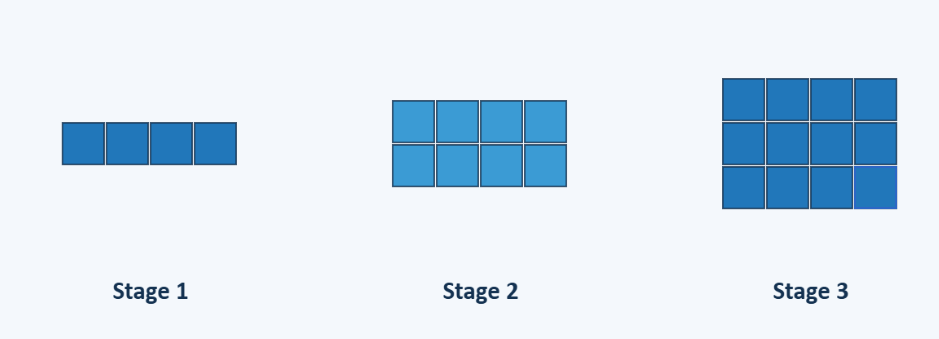 A. Add 4
B. Multiply by 2
C. Multiply the stage number by 2
B. Multiply by 2
200
Write the two missing outputs and identify the rule.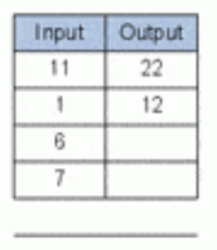
17
18
Rule = Add 11
200
How many FACTOR PAIRS does this number have? What about factors?

Factor pairs: 3
Factors: 6
200
List the first 4 multiples of 11.
11, 22, 33, 44
200
Is 54 prime of composite? Prove your answer.
54 is composite because it has more than 2 factors. (1 x 54) (2 x 27) (3 x 18) (6 x 9)
300
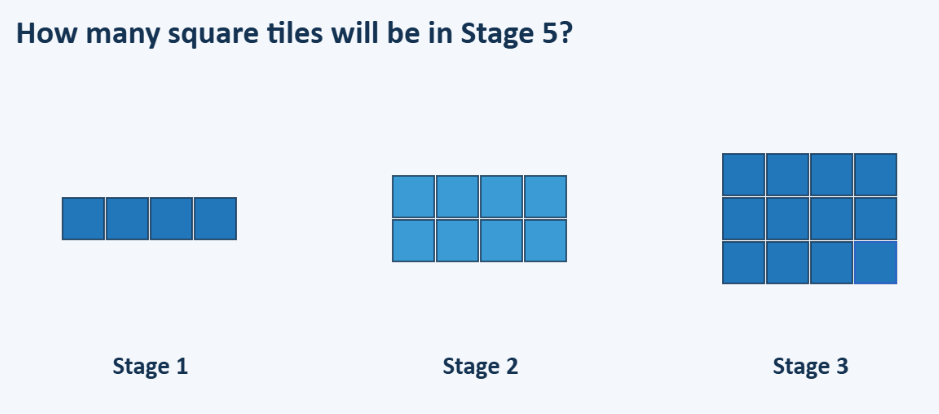
20 tiles
300
The table shown provides a list of terms that begins with 1 and uses the following rule: multiply by 2, add 1
Complete the pattern using the given rule by filling in the correct numbers to the term position.
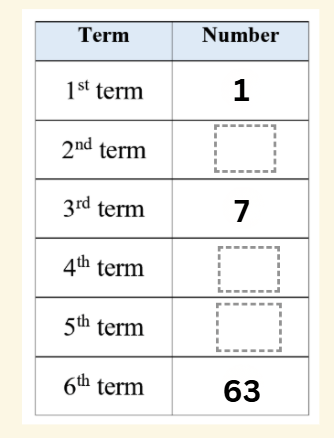
2nd Term: 3
4th Term: 15
5th Term: 31
300
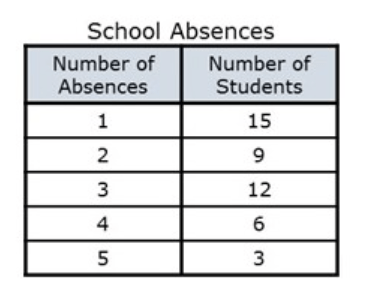
How many total students have been absent more than two days from school?
12 + 6 + 3 = 21 students
300
Which number is not a multiple of 3?
A. 12
B. 16
C. 24
D. 36
B. 16
300
Which color of balloons is a composite number?
Blue: 17
Pink: 19
Yellow: 18
Green: 23
Yellow
400
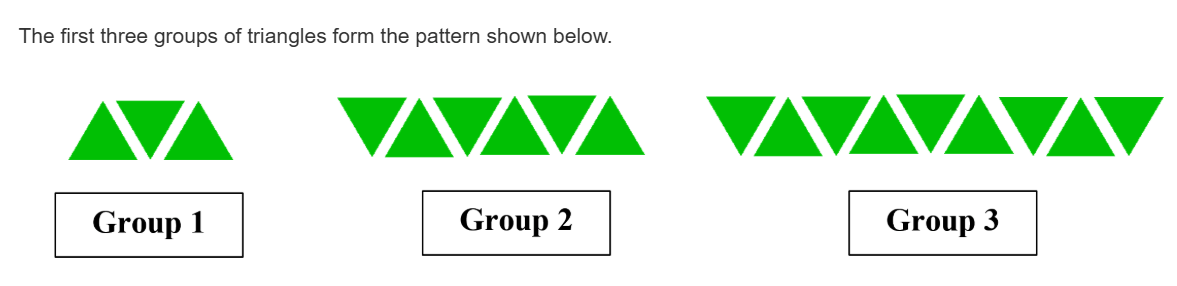 How many triangle will be shown in Group 10?
30 triangles
400
The chart shows the following pattern.
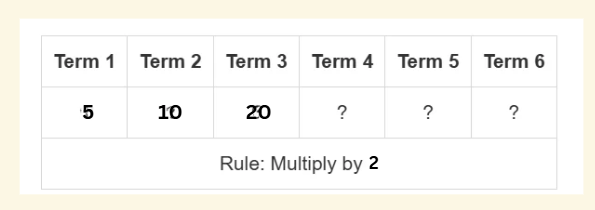
Which statement about the chart is correct?
A. Term 4 = 30
B. Term 5 = 80
C. Term 6 = 120
D. Term 4 is an odd number
B. Term 5 = 80
400
Select the choices that show factor pairs for the number 40.
1 and 45
2 and 38
2 and 20
4 and 36
5 and 8
4 and 10
1 and 40, 2 and 20, 5 and 8, 4 and 10
400
Which of these is not a multiple of 9.
A. 27
B. 63
C. 81
D. 106
D. 106
400
True or False: All odd numbers are prime.
False. Odd numbers can have more than 2 factors. For example, 15 has 4: 1, 3, 5, and 15.
500
Use the rule: Multiply the term number by 4, add 1 to determine how many tiles would be in Term 6. How many are blue and how many are purple?
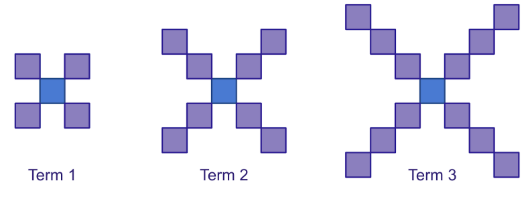
24 purple tiles, 1 blue tile
25 total tiles
500
True or False: In an input-output table, the inputs must be listed from least to greatest.
False. The inputs can be organized randomly or from greatest to least. You must follow a rule to generate the output.
500
Identify whether each answer choice displays a correct factor pair for the number 60.
Choose THREE answers.
- 2, 7
- 6, 10
- 4, 15
- 8, 9
- 7, 10
- 2, 30
- 6, 10
- 4, 15
- 2, 30
500

Which fraction represents the number of students absent 2 days compared to the total number of students who were absent?
9/45
500
Composite numbers have:
MORE than 2 factors