Changes Detectives
The Mass Mastermind
Atomic Avengers
Periodic Table Superstars
Mix It or Fix It?
100
An old penny develops a green coating after years outside. What type of change occurred?
Chemical change
100
According to this law, matter cannot be created or destroyed.
Law of Conservation of Mass
100
Which subatomic particle has a positive charge?
Protons
100
An element is made of only one type of _______.
Atom
100
Florida beach sand contains shell fragments, quartz, and organic material. Is it a mixture or compound?
Mixture
200
Water droplets form on the outside of a cold glass. What type of change is this?
Physical change
200
Carbon combines with oxygen to form carbon dioxide. How does the mass of the reactants compare to the mass of the product?
They are equal
200
Which subatomic particle is not located in the nucleus?
Electrons
200
The vertical columns on the periodic table are called what? Give BOTH names!
Groups or Family
200
Salt water has substances evenly distributed throughout. What type of mixture is it?
Homogenous mixture
300
A student notices gas bubbles forming and the container becoming warm. What type of change is occurring?
Chemical change
300
A sugar solution is made by mixing sugar and water. What happens to the total mass?
It stays the same.
300
An atom contains protons and neutrons in the center. What is this center called?
Nucleus
300
Chlorine and iodine are in the same group. What can be predicted about their properties?
They will have similar properties.
300
Sugar is made of carbon, hydrogen, and oxygen bonded in a fixed ratio (C6H12O6). What type of substance is sugar?
Compound
400
Which is evidence that a new substance formed: melting ice, boiling water, tearing paper, or producing gas?
Producing gas
400
A reaction begins with 25 grams of reactants. What should the mass of the products be in a closed system?
25 grams
400
Scientists cannot directly see atoms, so they often create these to visualize their structure.
Models
400
Scientists can predict how an element will behave by using this organizational tool.
The periodic table
400
A liquid has a pH of 6. How would it be classified?
Slightly basic
Slightly acidic
Highly basic
Highly acidic
Slightly acidic
500
A scientist observes a substance changing color and producing a gas. Explain why these observations suggest a chemical change.
Indicators of a chemical reaction show a new substance formed.
500
A student records less mass after a reaction than before. What is the most likely explanation?
Matter escaped the system or measurements were inaccurate.
500
An early model of the atom incorrectly described the structure of the atom as an area of positive
charge with small, negatively charged particles inside.
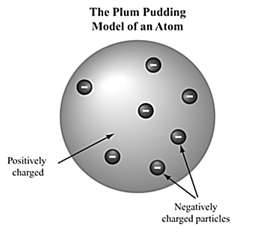
Which of the following correctly describes why the plum pudding model is no longer accepted as an
accurate model of the atom?
A. There aren’t actually negatively charged particles in atoms.
B. Scientists found new evidence and revised the theory to fit the data better.
C. Scientists discovered that atoms actually have positively charged particles dispersed throughout a
negative mass.
D. Scientists revised the evidence to fit this model of the atom better.
B. Scientists found new evidence and revised the theory to fit the data better.
500
Copper (Cu) reacts with oxygen (O) to form copper oxide (CuO). The chemical properties of copper oxide (CuO) are most likely:
A. Different from copper or oxygen
B. Similar to both copper and oxygen
C. Similar to only copper
D. Similar to only oxygen
A. Different from copper or oxygen
500
Gastric juice has a very low pH. Is it acidic, basic, or neutral?
Acidic