Types of Cells
Cell Functions
The Cell Theory
Hyper,Hypo, Iso,... Oh my!
Miscellaneous
100
Cells without membrane-bound organelles
Prokaryotes
100
Stores DNA
nucleus
100
This the basic, fundamental concept of biology
The cell theory
100
Term for membrane that chooses what substances can and cannot cross it
Selectively permeable
100
Which of the following TWO organelles are in both prokaryotic and eukaryotic cells?
cell membrane, mitochondria, nucleus, cytoplasm
cell membrane and cytoplasm
200
Cells with a nucleus
Eukaryotes
200
Traps sunlight for photosynthesis
Choloroplast
200
Instrument that aided in the development of the cell theory
The microscope
200
Type of transport that requires ATP (energy)
Active transport
200
Scanning Electron Microscope (SEM)
300
Bacteria lack a nucleus, so they fall in this category
Prokaryotes
300
Makes ATP for use in cells
Mitochondria
300
The three statements
1. Cells come from existing cells
2. Cells are the basic unit of life
3. All organisms are made up of cells
300
Type of passive transport that uses protein channels
Facilitated diffusion
300
Phospholipids make up part of this cell structure
Cell membrane
400
Cells with central vacuole, cell wall, and chloroplast
Plant cells
400
Modifies proteins for export from the cell
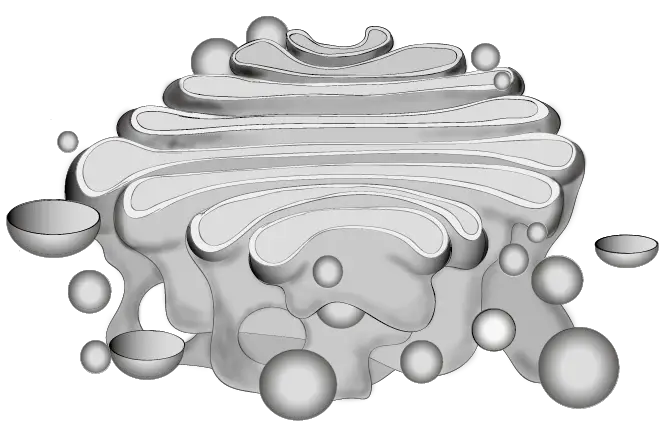
Golgi Apparatus
400
The two types of microscopes that use light.
Compound light and dissecting (stereo) microscopes
400
Transport that takes in large food particles and forms vesicles from the cell membrane
Endocytosis
400
Transmission Electron Microscope
500
Photosynthesis occurs in which organelle
Chloroplast
500
Protein synthesis occurs here

ribosomes
500
Modern microscope that provides 3D images and over 100,000x
SEM (scanning electron microscope)
500
Solute concentration outside the cell membrane that causes water to move into the cell
Hypotonic
500
Molecule we inhale that can diffuse easily through the membrane
Oxygen