Ionic and Molecular Compounds
Polar and Non-Polar Molecular Compounds
Solubility and TLC
Acid-Base Chemistry and Extraction
Volatility and Gas Chromatography
100
The metal/non-metal categorization of phosphorus (P).
What is a non-metal?
100
Molecules with a high proportion of oxygen, nitrogen, fluorine, chlorine, and other electronegative atoms.
What are polar molecules?
100
The type of molecule that is generally soluble in water.
What is a polar molecule?
100

The molecule on the left is acting as this during this reaction.
What is a base?
100
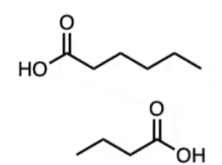
This molecule is the more volatile molecule.
What is the compound on the bottom?
200
The classification of AgCl as a compound.
What is an ionic compound?
200
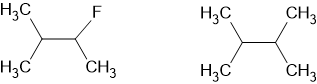
The molecule that is less polar.
What is the molecule on the right?
200
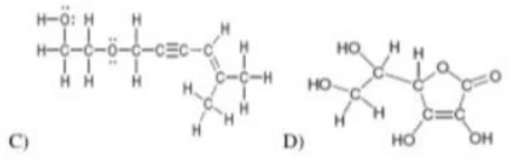
This molecule would be soluble in a non-polar solvent like hexane.
What is molecule C or the left-hand molecule?
200
At a low pH (pH < 7), this is the relative amount of hydronium ions (protons) in solution.
What is a high amount?
200
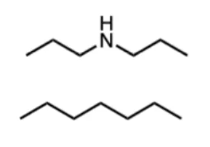
Of the pair of compounds above, this one is the least volatile.
What is the top compound?
300
The classification of C5H8O as a compound.
What is a molecular or covalent compound?
300
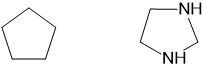
The more polar of these two molecules.
What is the right-hand molecule?
300
A TLC (thin-layer chromatography) plate is coated in silica that has this polarity property.
What is highly polar?
300
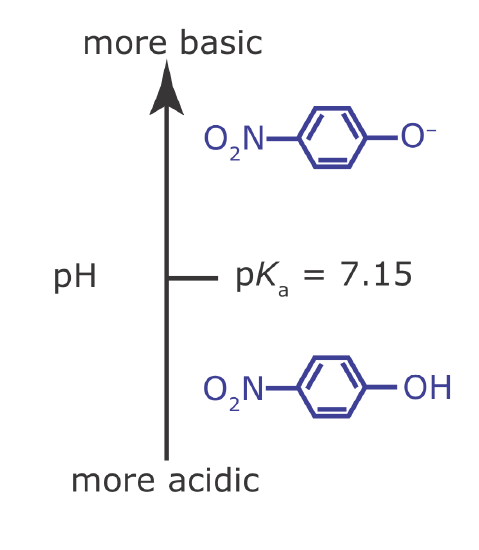
When the pH of the solution is basic (pH > 7.15), this molecule with have this charge.
What is a 1- charge?
300
The part of the gas chromatograph that actually separates the mixture of compounds.
What is the column?
400
The possible state(s) of matter of covalent compounds at room temperature.
What is a gas, liquid, or solid?
400
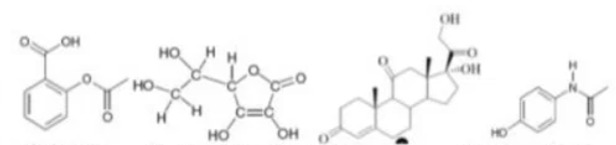
The most polar of these molecules.
What is the second molecule from the left?
400
Typical Rf value of a very non-polar compound after being separated on a TLC plate? (0-0.33, 0.33-0.66, or 0.66-1)
What is 0.66 - 1?
400
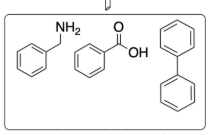
The three compounds above are present in a mixture dissolved in a non-polar solvent. We want to isolate the left-hand molecule by extracting it into a water layer. To do this, this is the relative acidity/basicity of the water layer that should be used.
What is highly acidic?
400
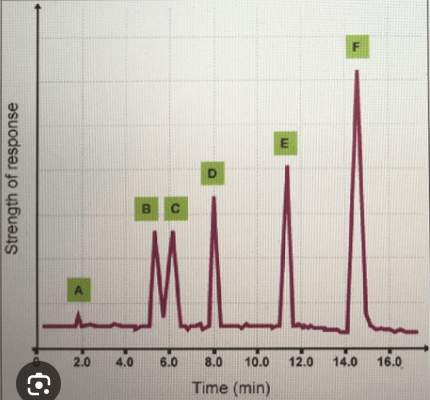
This peak represents the most volatile compound that was in the mixture separated to produce this chromatogram.
What is peak A?
500
The type of compound that conducts electricity when it is dissolved in water.
What is an ionic compound?
500
The elements associated with non-polar molecules.
What are carbon and hydrogen?
500
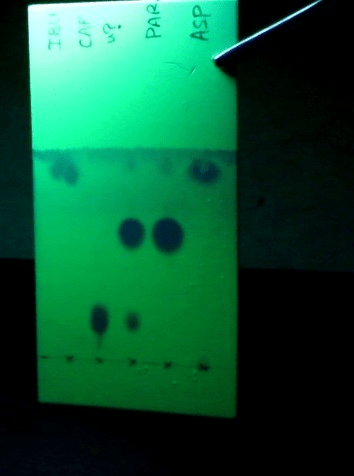
From left to right, the TLC plate above has been spotted with ibuprofen, caffeine, an unknown drug, acetaminophen, and aspirin. These are the two compounds present in the unknown drug.
What are acetaminophen and caffeine?
500
Water (density = 1.00 g/mL) and dichloromethane (d = 1.33 g/mL) are added to a separatory funnel. This is the layer that is the bottom layer in the funnel.
What is dichloromethane?
500
The order of elution for the following compounds: butane (bp = 117 oC), heptane (98 oC), pentane (36 oC), pentanol (138 oC), octane (126 oC), and propanol (97 oC).
What is pentane, propanol, heptane, butane, octane, and pentanol?