Category 1
Category 2
Category 3
Category 4
Category 5
100
Identify the broadest level in the Linnaean classification system.
Kingdom
100
Why is it useful to classify organisms?
Helps us understand the similarities and differences between any two species
100
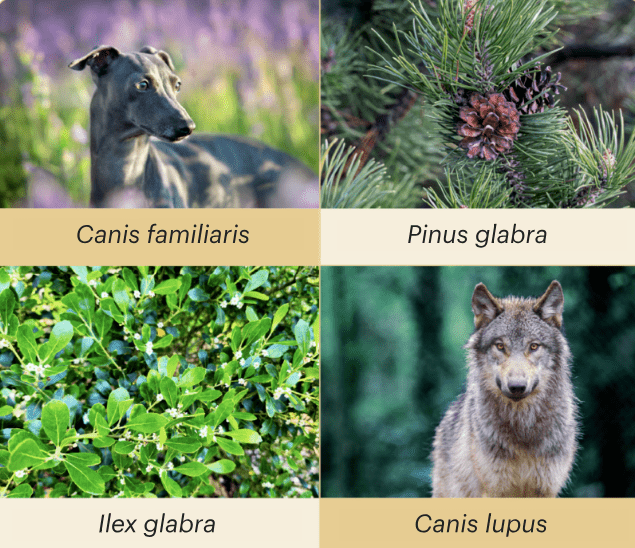
Four organisms are shown in the picture. Which two are most closely related based on their scientific names?
Canis familiaris and Canis lupus
100
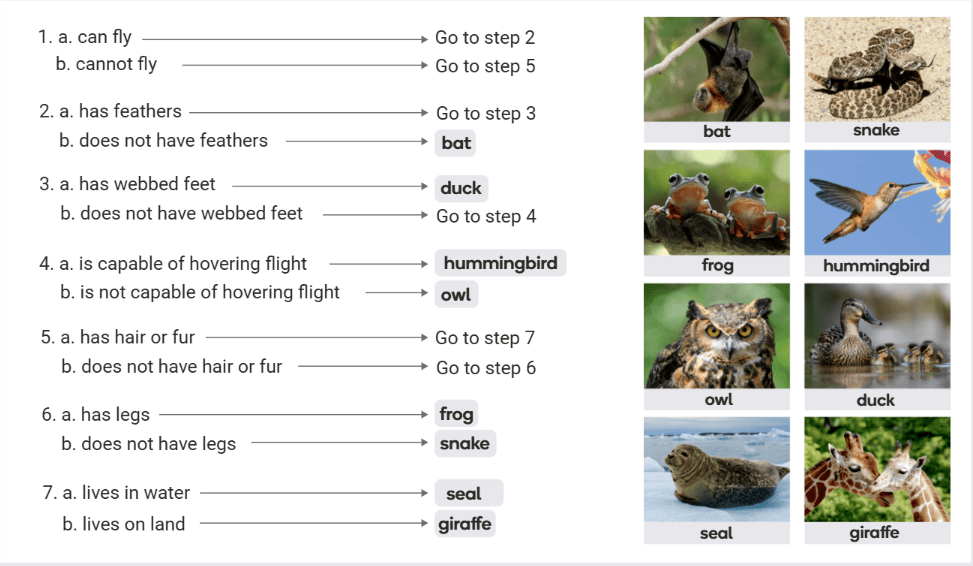
Use the dichotomous key to identify the species that has the following features:
Can fly
Has feathers
Has webbed feet
Duck
100
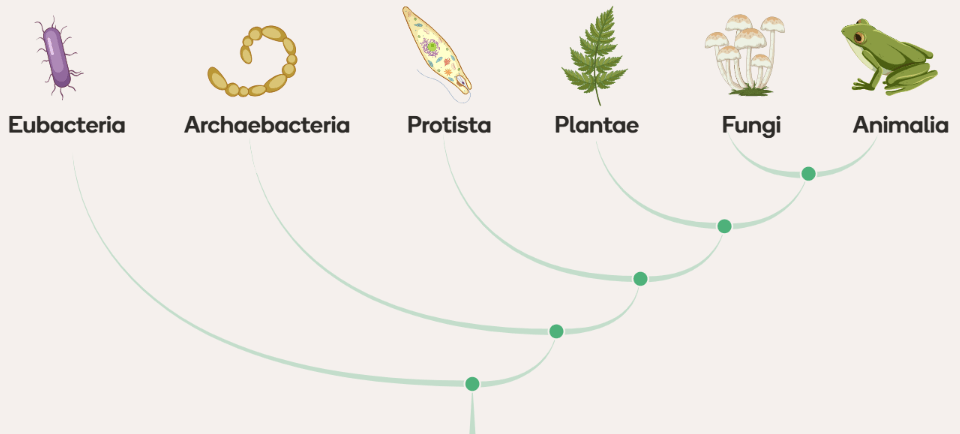
Determine which two kingdoms are the most closely related.
Animalia and Fungi
200
Determine the level at which members of the same group have the most similar features.
Species
200
What is the advantage of giving living things a two-part scientific name?
It allows scientists to communicate clearly about a particular species
200
The role of _______ is to give instructions for how living things look and function.
DNA
200
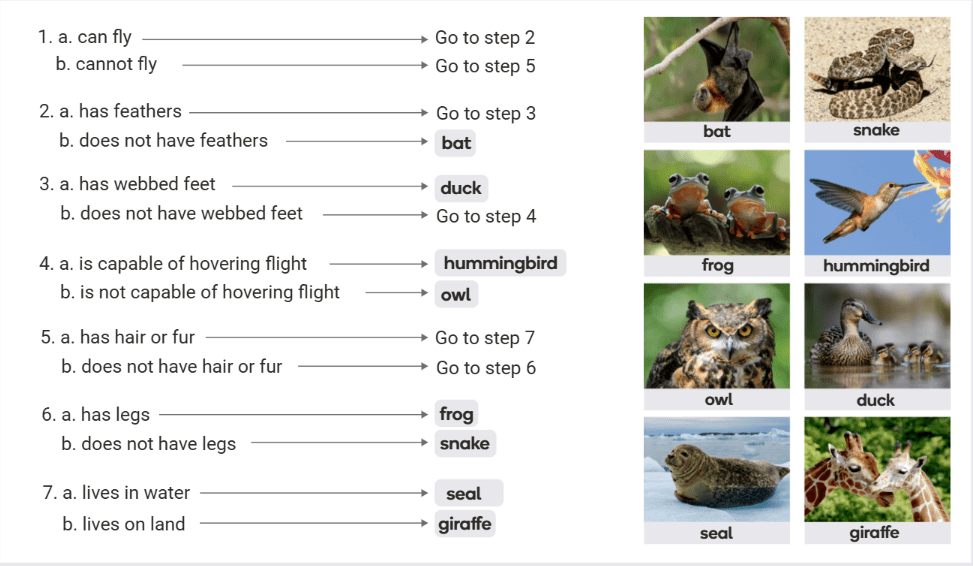
Which two species cannot fly but have hair or fur?
Seal and Giraffe
200
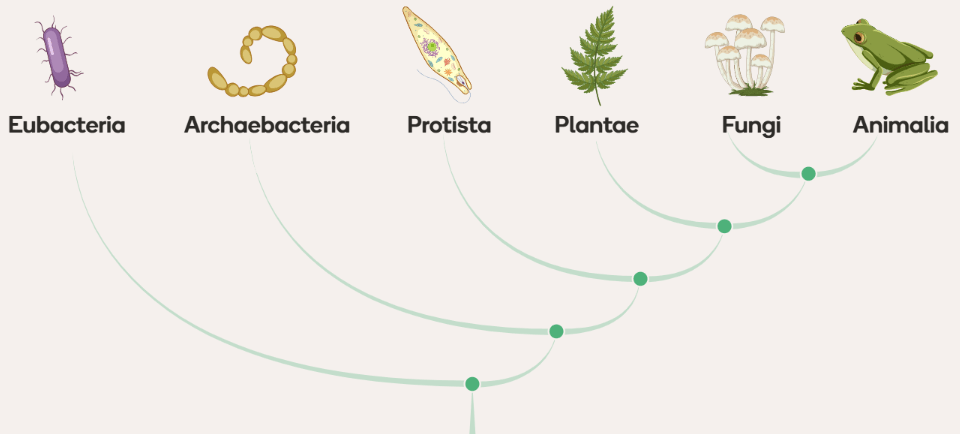
Based on the evolutionary tree, _______ is not closely related to the other kingdoms.
Eubacteria
300
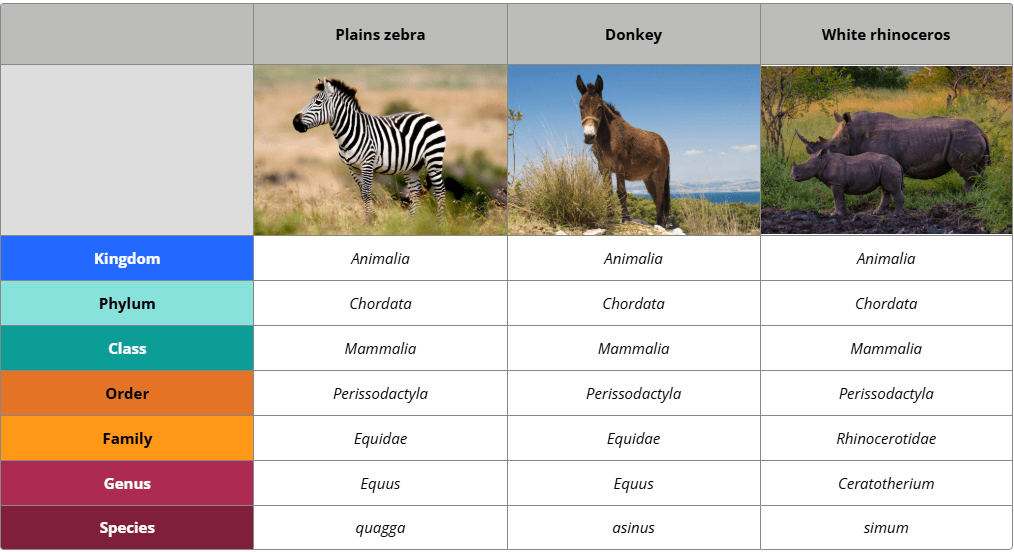
Determine which of the following levels of classification all three organisms above have in common.
Kingdom, Phylum, Class, Order
300
The conventions of writing the scientific name is to put the name in italics, write the genus with a _______ letter, and the species with a lower-case letter.
Capital
300
What is a limitation of Linnaean classification?
It groups organisms based only on how they look, which can be misleading.
300
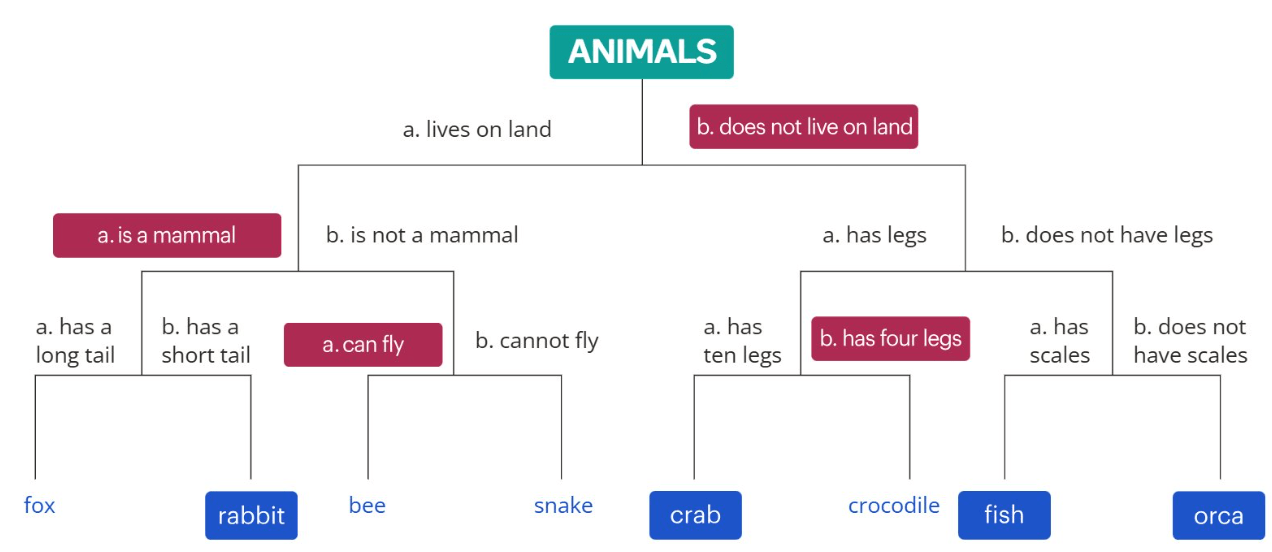
Use the dichotomous key to identify the animal that:
Lives on land
Is not a mammal
Cannot fly
Snake
300
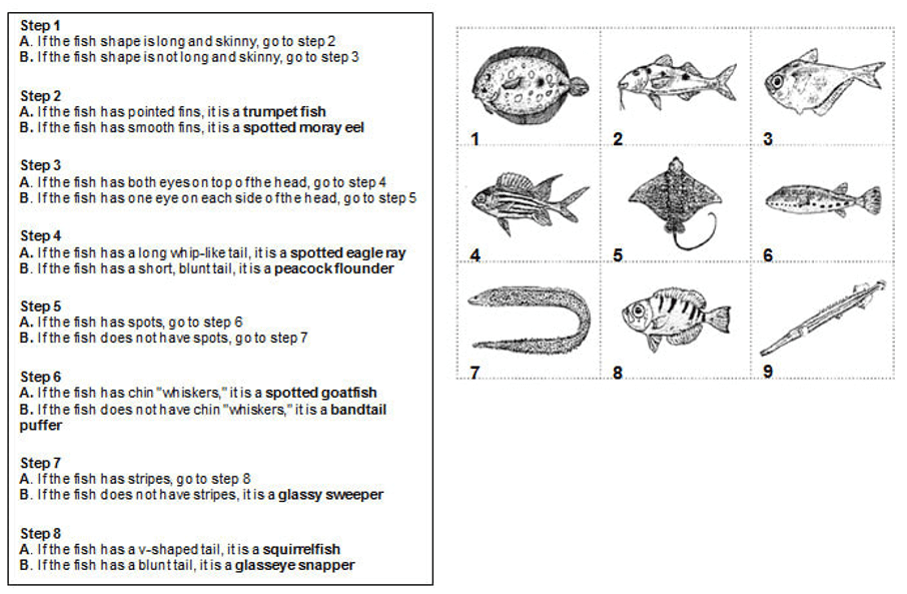
Use the dichotomous key to determine what type of fish is Number 4?
Trumpet Fish
400
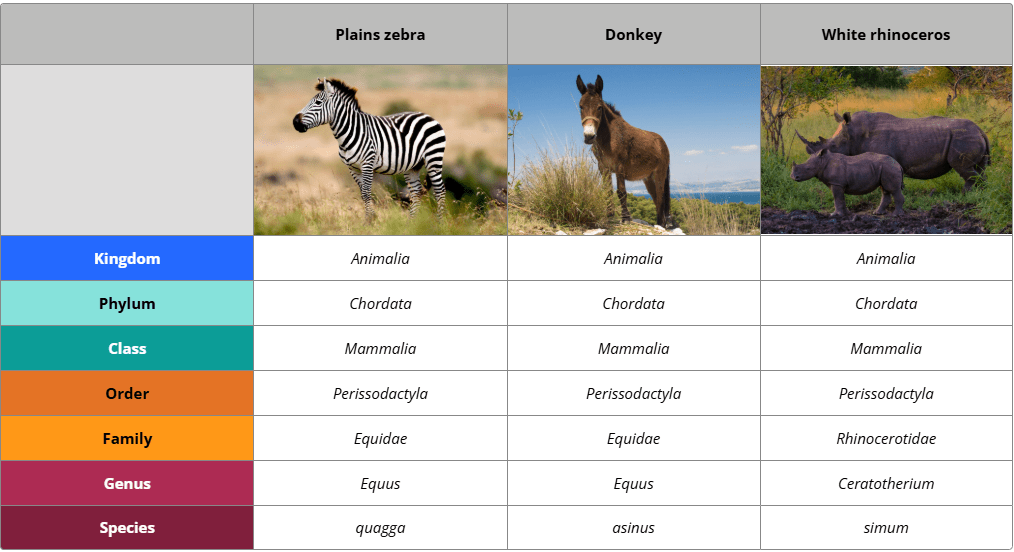
Identify which two organisms are most similar.
Plains Zebra and Donkey
400
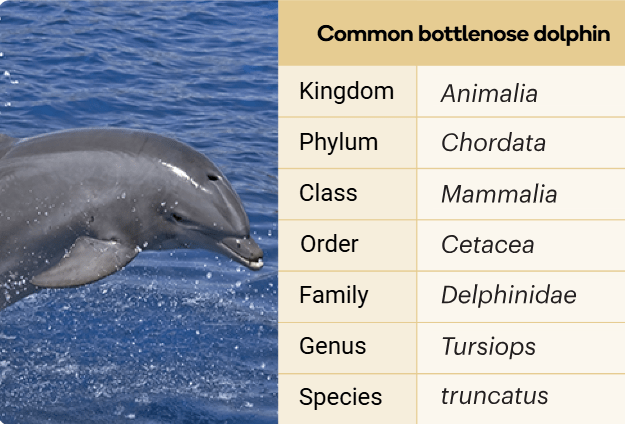
Determine the scientific name of the common bottlenose dolphin.
Tursiops truncatus
400
Why is phylogenetics more accurate than Linnaean classification?
It uses DNA to group organisms
400
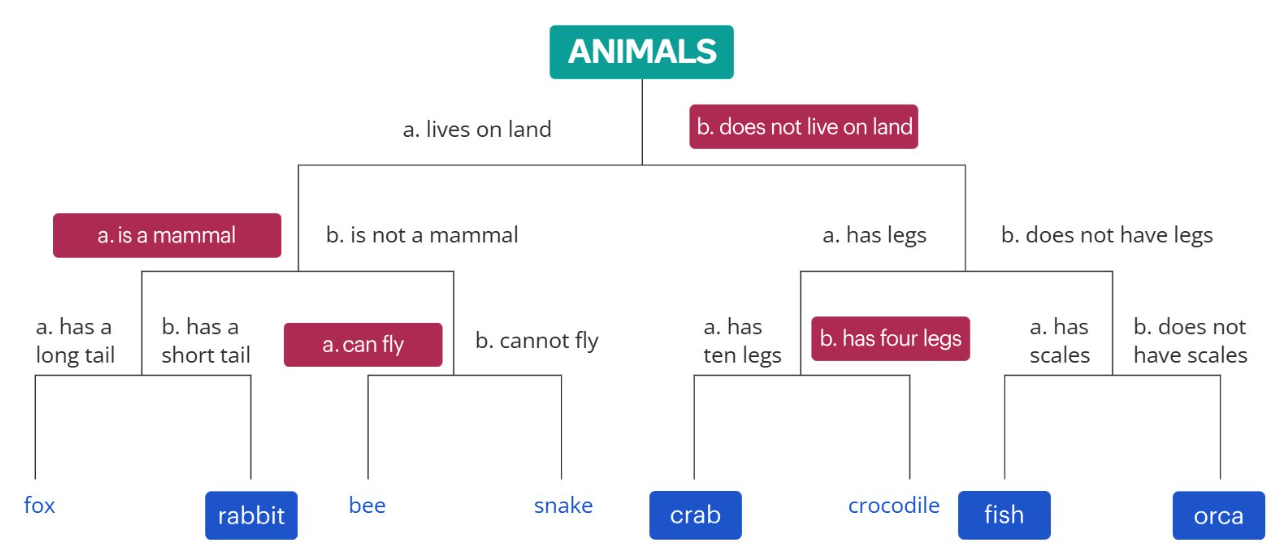 What lives on land, is a mammal, and has a long tail?
Fox