Protein Synthesis
Enzymes
Genetics
Common Ancestry
Random
100
Human genetic material is represented in the diagram below.

The region labeled A is made up of a section of
(1) a protein that becomes an enzyme
(2) DNA that may direct protein synthesis
(3) a carbohydrate made from amino acids
(4) glucose that may be copied to make DNA
(2) DNA that may direct protein synthesis
100
The basic building blocks of a protein/enzyme are
(1) glucose molecules
(2) amino acids
(3) hormones
(4) fats
(2) amino acids
100
Scientific studies show that identical twins who were separated at birth and raised in different homes may vary in height, weight, and intelligence.
The most probable explanation for these differences is that
A. original genes of each twin increased in number as they developed
B. one twin received genes only from the mother while the other twin received genes only from the father
C. environments in which they were raised were different enough to affect the expression of their genes
D. environments in which they were raised were different enough to change the genetic makeup of both individuals
C. environments in which they were raised were different enough to affect the expression of their genes
100
Which organic compounds would be the best to
analyze in order to determine if two species are
closely related?
(1) fats
(2) sugars
(3) starches
(4) proteins
(4) proteins
100
The structure labeled X most likely represents

(A) an antibody
(B) an enzyme
(C) a receptor molecule
(D) a hormone
(B) an enzyme
200
A cell begins to produce a new type of protein.
This is most likely due to an alteration of the
(1) structure of the cell membrane
(2) sequence of bases in a section of a chromosome
(3) chemical makeup of the cytoplasm
(4) shape of the antibodies produced by the nucleus
(2) sequence of bases in a section of a chromosome
200
The shape of a protein molecule directly determines its
(1) movements through the cytoplasm
(2) functions inside and outside of cells
(3) roles in building water molecules
(4) circulation throughout the body
(2) functions inside and outside of cells
200
A mutation in which type of cell would be passed to future generations?
A. Skin cells
B. Muscle cells
C. Gametes (egg or sperm cells)
D. Nerve cells
C. Gametes (egg or sperm cells)
200
The diagram below represents a variety of fossil
types, which can be found in many rocks.

These fossils can be best used to provide information that could be used in a study of
(1) evolutionary relationships
(2) dynamic equilibrium
(3) selective breeding
(4) cell specialization
(1) evolutionary relationships
200
Which process best explains how a population of bacteria develops resistance to an antibiotic?
A. Individual bacteria learn to resist the antibiotic and teach others
B. Bacteria with natural genetic resistance survive and reproduce while others die
C. The antibiotic causes beneficial mutations in the bacterial DNA
D. All bacteria gradually adapt to the antibiotic over their lifetime
B. Bacteria with natural genetic resistance survive and reproduce while others die
300
Transcribe the following DNA Code into its mRNA sequence:
GTC AGC CTA
CAG UCG GAU
300
Even though human proteins are synthesized from only 20 different amino acids, there are thousands of different proteins found in human cells. Many of these proteins function as enzymes in our bodies. This great variety of proteins and enzymes is possible because the
(1) size of a specific amino acid can vary within a protein
(2) chemical composition of a specific amino acid can vary
(3) sequence and number of amino acids can be different in each protein
(4) same amino acid can have many different properties
(3) sequence and number of amino acids can be different in each protein
300
Which statement correctly explains DNA methylation and its effects?
A. Methylated DNA increases transcription of genes
B. Demethylation of DNA slows down cell division
C. Unmethylated DNA allows for gene transcription
D. Methylation permanently alters the DNA sequence
C. Unmethylated DNA allows for gene transcription
300
A shark and a dolphin have similarly shaped bodies and fins. However, these two organisms are not closely related: The shark is a fish, and the dolphin is a mammal. Some species may have similar body structures even if they are not related because they evolved in
(1) similar environments and specific traits increased their chances of survival
(2) similar environments and were exposed to factors that caused exactly the same mutations
(3) different environments, but tried to adapt in the same ways so they could survive
(4) different environments, but ate similar foods that affected their growth and development
(1) similar environments and specific traits increased their chances of survival
300
Which statement best describes the relationship between cells, DNA, and proteins?
(A) Cells contain DNA that controls the production of proteins.
(B) DNA is composed of proteins that carry coded information for how cells function.
(C) Proteins are used to produce cells that link amino acids together into DNA.
(D) Cells are linked together by proteins to make different kinds of DNA molecules.
(A) Cells contain DNA that controls the production of proteins.
400
Translate the following mRNA sequence into its amino acids
CUA GUU AAU 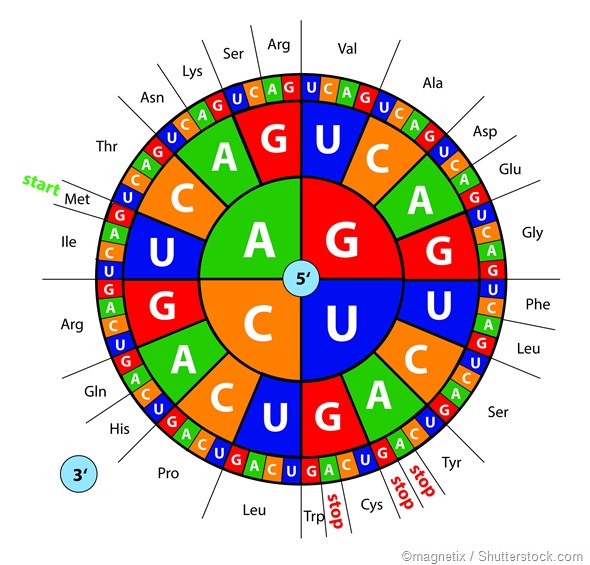
LEU VAL ASN
400
The diagrams below represent two molecules that are involved in metabolic activities in some living cells.

The shape of each of the molecules is important because
(A) molecules having different shapes are always found in different organisms
(B) the shape of a molecule determines how it functions in chemical reactions
(C) the shape of a molecule determines the age of an organism
(D) if the shape of any molecule in an organism changes, the DNA in that organism will also change
(B) the shape of a molecule determines how it functions in chemical reactions
400
What is the relationship between variation in a population and natural selection?
A. Natural selection creates genetic variation within populations
B. Natural selection can only occur if genetic variation already exists
C. Genetic variation decreases as natural selection increases
D. Natural selection and genetic variation are unrelated processes
B. Natural selection can only occur if genetic variation already exists
400
The diagram shows the evolutionary history of several plant species.

Identify one type of molecular evidence that could have been used to determine the evolutionary relationships illustrated in the diagram.
- amino acid sequences
- DNA/gene sequence
- the results of a gel electrophoresis test
- gene sequences
- the results of a paper chromatography test
400
In mammals, which interaction between organ systems is primarily responsible for delivering oxygen to body cells during exercise?
A. The muscular system stimulates the immune system to increase white blood cell production
B. The digestive system provides glucose while the excretory system removes carbon dioxide
C. The respiratory system takes in oxygen while the circulatory system transports it to muscles
D. The nervous system increases heart rate while the skeletal system provides support for movement
C. The respiratory system takes in oxygen while the circulatory system transports it to muscles
500
Nature or Nurture?
During one winter in the 20th century, the Netherlands experienced a severe famine (a shortage of food). Some of the women that were in the early stages of pregnancy during the famine gave birth to children that surprisingly had average or even above-average birth weights, considering the poor nutrition of the mothers
Refer to Figure 12 and answer the following Question:
Which question would help determine the role of DNA in passing genetic information that influenced birth weight from the mothers during the famine to their children?
Did the genes that play a role in determining birth weight come from both parents?
Did genes made of amino acids come from the DNA of only one parent?
Did genes composed of protein come from the DNA of both parents?
Did the stomach cells of the mother have genes that play a role in birth weight?
1. Did the genes that play a role in determining birth weight come from both parents?
500
The diagram provides information about some of the digestive enzymes produced by the human pancreas.

The activity of nuclease enzymes would most likely result in the release of
(A) four different kinds of molecular bases
(B) glucose
(C) hormones
(D) a variety of different amino acids
(A) four different kinds of molecular bases
500
In the 1800s, unregulated hunting reduced bison herds from tens of millions of individuals to fewer than 1,000. How might the DNA of the modern bison populations compare with the DNA of ancestral populations prior to the 1800s?
Modern bison have more genetic diversity than their ancestors as a result of an increase in available mates.
Modern bison have less genetic diversity than the population before the 1800s did as a result of increased random mutations.
The DNA of the modern bison is identical to that of bison living before the 1800s because they all evolved from the same common ancestor
The DNA of modern bison shows less genetic diversity compared to their ancestors due to the limited genetic variation remaining in their population.
The DNA of modern bison shows less genetic diversity compared to their ancestors due to the limited genetic variation remaining in their population.
500
The elephant shrew spends its days searching the leaf litter on the forest floor for insect prey. When first discovered, due to structural similarities, the elephant shrew was classified with other shrews and their relatives. However, scientists recently reclassified the elephant shrew, as shown in the evolutionary tree below:

The new, more accepted classification of the elephant shrew is most probably based on an analysis of
(A) the coloration of the elephant shrew’s fur
(B) the feeding habits of the elephant shrew compared to other shrews
(C) a number of newly found shrew fossils
(D) the DNA present in the cells of the elephant shrews
(D) the DNA present in the cells of the elephant shrews
500
The diagram shows a frog with abnormal limb development caused by a parasite. How do the parasite's effects on the frog demonstrate an interaction between different body systems?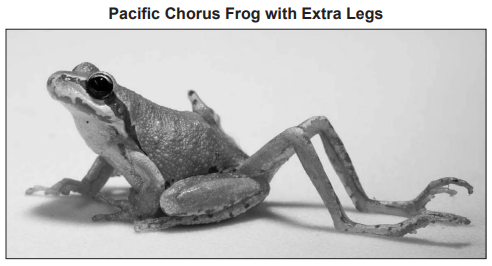
A. The parasite affects the frog's digestive system, which causes changes in the skeletal system
B. The parasite triggers the immune system, which causes the reproductive system to malfunction
C. The parasite alters Hox gene expression, affecting the developmental system and skeletal formation
D. The parasite damages the nervous system, which prevents proper muscular system development
C. The parasite alters HOX gene expression, affecting the developmental system and skeletal formation