Rattlesnake
Buffalo
Turkey
Moose
Bald Eagle:
Constitution Connections
Constitution Connections
100
What is a plantation? Double points if you can say which region(s) had the most plantations.
plantation agriculture = raising a large amount of a "cash crop" for local sale or export on a large farm with many workers; the primary use for slave labor in the Americas
100
What religious group founded Massachusetts? Double points if you can describe aspects of their society and values.
Puritans
100
Which famous Powhatan person married one of the Jamestown settlers and became a celebrity who traveled to England before dying young of pneumonia?
Pocahontas
100
What was the name of Britain's legislative government? Double points if you name the equivalent part of the U.S. government today.
Parliament
100
What is the "federal" government? (Double points if you can also define "federalism")
The national or country level, not city or state (federalism = "the idea that the national government shares power with the state governments.")
200
What are the "three sisters"?
staple crops indigenous to the Americas that grow well together: corn, squash, and beans
200
Which indigenous nation first welcomed English "pilgrims" in Massachusetts then went to war with them over a series of conflicts?
Wampanoag
200
What religious group founded Pennsylvania? Double points if you can describe aspects of their society and values.
Quakers
200
Name the 13 colonies in order from North to South (+100 points if you can do it without looking) (-100 if alllllmooost correct!)
Massachusetts (including Maine), New Hampshire, Connecticut, New York, New Jersey, Pennsylvania, Delaware, Maryland, Virginia, North Carolina, South Carolina, Georgia
200
What are the three branches of the U.S. government today?
Executive carries out the laws; legislative makes the laws; judicial interprets the laws
300
What is "race-based slavery," and how did it replace indentured servitude in the American colonies? (Explain both in your answer)
indentured servants = bound by contracts, only
earned their freedom after several years of labor, any race; enslaved people imported from Africa where there was an active slave trade of prisoners of war, more and more captured as economic products... overtime slavery became associated with and justified by racial differences (not all historical slavery is race-related)
300
New York was an English colony. Which European nation colonized it previously, and what was its name?
New Netherlands and city new Amsterdam; the Netherlands or the Dutch colonized it
300
What, where, and when was Cahokia?
ancient city in the Mississippi River Valley (near modern-day St. Louis, MO) before European contact (approx 600-1400 CE) (corn-based agrarian society and major trading center) (archaeologists have uncovered clusters of mounds and plazas with evidence of religious practices, burials, trade, living spaces, etc.)
300
What was the Boston Massacre?
(1770) Incident in which British troops fired on and killed American colonists; the first bloodshed of the American Revolution (more: led to a major court case (2/8 soldiers found guilty), greater anger from Bostonians, and larger British military presence to "calm" the people)
300
The Declaration of Independence states that "all men are ... endowed by their Creator with unalienable rights [including] Life, Liberty and the pursuit of Happiness." Which Constitutional amendment(s) also protects life, liberty, and ______ (not happiness)? What goes in that blank?
5th (and 14th); property (this is about due process of law!)
400
Describe the places, materials, and impacts of Triangular Trade on the Atlantic world.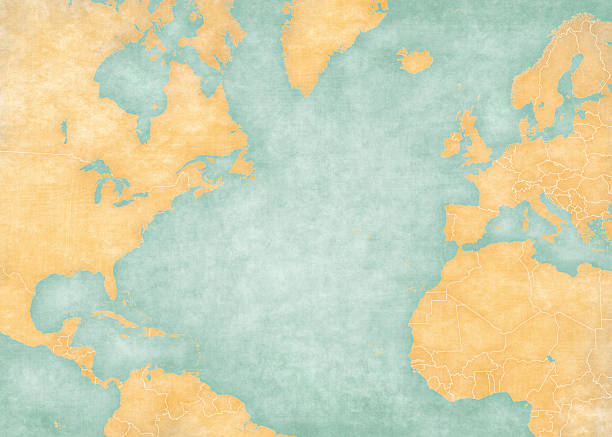
400
Describe how Britain changed their policies about colonial trade over time. Explain salutary neglect, the Navigation Acts, an the Restraining Acts.
Salutary neglect = colonies were left to govern themselves, and Britain didn't enforce their taxes and laws; Navigation Acts = colonists had to sell cash crops to Britain and pay British taxes on all imported goods; Restraining Acts = prevented colonists from selling any manufactured products and required them to buy from England
400
Why did Nathaniel Bacon lead a rebellion against Virginia's government? Summarize the story of Bacon's Rebellion.
(1676) a rebellion led by western Virginia settlers when the governor stopped them from attacking Native Americans and taking their land; the rebels marched on Jamestown and burned the city (more to say about how it ended)
400
Why did each of these British laws anger colonists: The Stamp Act, The Quartering Acts, and the Townsend Acts. (Define all three!)
Stamp Act = taxes on paper goods; Quartering Act = requires colonists to house British Soldiers; Townsend Acts = taxes on various imported goods (tea, glass, lead, paper, and paint)
400
Name and describe your favorite landmark case from Unit 2.
(Answers will vary)
500
How did specific colonial laws about slavery transform society? Cite 1+ example law (in your binder!) to support your answer/claim.
(answers will vary)
500
Briefly describe and compare the economies of the colonial regions (New England, Middle, and Southern).
New England: Family farms (cold climate with short growing season); coastal towns with major industries include shipbuilding, fishing (cod), whaling
Middle: "bread basket" region with good farming climate for grains; also produced meat and dairy; NYC and Philly = major trading centers; slavery mostly on docks
Southern: large plantations with enslaved labor growing cash crops like cotton, tobacco, race; fewer cities and moral rural communities
500
What caused the early Jamestown settlers to die? Summarize the four theories. (Optional, add your opinion about those theories.)
Four theories = starvation, water supply, poison, and laziness (more information needed for a correct answer)
500
How did colonists organize to resist the British government? Describe 3+ methods of protest and/or specific activist groups.
Answers might include effigy burnings, spinning bees, pamphlets like Common Sense, the Loyal Nine, The Committee of Correspondence and the Boston Tea Party, The Regulator Movement, etc.
500
In the 1780s, how did the Bill of Rights address problems under British colonial rule? Connect 1+ specific amendment to this history.
Examples include #1 freedoms, #2 bearing arms, #3 quartering, etc.