U3T1 (Biodiversity & Classification)
U3T1 (Sampling & Fieldwork)
U3T2 (Populations)
U3T2 (Ecosystem functioning)
Random Biology Facts
100
This type of diversity refers to the variety of different species in an area
Species diversity
100
This sampling technique uses a square frame to estimate abundance or percentage cover.
A quadrat
100
This population growth curve is S-shaped and levels off at carrying capacity.
Logistic Growth
100
This is the process where plants convert light energy into chemical energy stored in glucose.
Photosynthesis
100
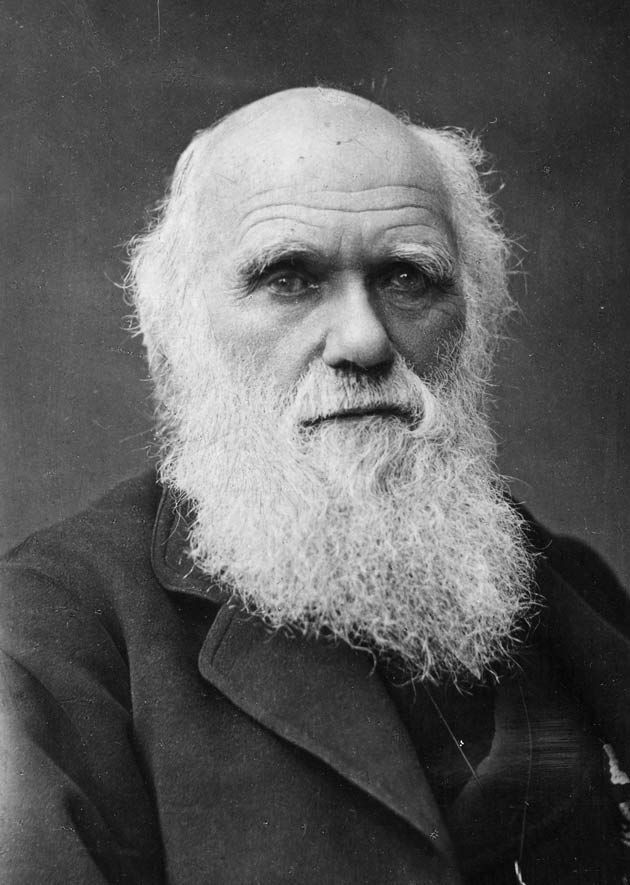
Who developed the theory of evolution by natural selection?
Charles Darwin
200
The Linnaean classification system ranks organisms in levels; this level comes above genus and below family.
Species
200
This sampling method reduced bias by ensuring all parts of a habitat have an equal chance of being selected.
Random Sampling
200
This term describes the maximum population size an environment can sustainably support.
Carrying Capacity
200
This species interaction benefits one organism while harming the other (without immediately killing it).
Parasitism
200
This structure increases surface area in the small intestine, maximizing nutrient absorption.
Villi (or microvilli)

300
Identify one limitation of the biological species concept
Asexual reproduction
Fossils/Extinct organisms
Hybrids
300
This type of sampling is best when an area has clearly different habitat zones e.g. Forest edge, mid-canopy, creekline
Stratified Sampling
300
These organisms tend to produce many offspring, mature quickly, and show boom–bust population patterns.
r-strategists
300
This principle states that two species competing for the exact same niche cannot coexist indefinitely.
Bonus 100 points: what book/movie did Mrs McParland compare this to
Competitive exclusion
Bonus: Hunger Games
300
This scientist co-discovered the structure of DNA, though her contribution was historically under-credited.
Rosalind Franklin

400
Identify the problem with this key and explain how it could affect classification accuracy.
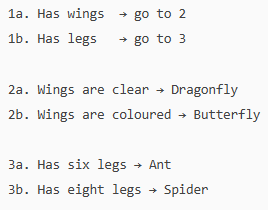
Characteristics are not mutually exclusive (so could fit both) meaning people may classify it differently leading to misidentification.
400
In capture–recapture, you first mark 40 organisms. Later you capture 50, and 10 are marked. Use the Lincoln Index to estimate population size.
N=mM×n=1040×50
=200
400
A population begins with 500 individuals. Over a year: births = 80, deaths = 50, immigration = 30, emigration = 70. What is the net change?
(80+30)−(50+70)=−10, so the population decreases by 10
400
After a bushfire, grasses and shrubs return first, followed by young trees, then mature forest species. What type of succession is this?
Secondary Succession
400
This bone is the longest and strongest in the human body.
Femur
:watermark(/images/watermark_only_413.png,0,0,0):watermark(/logos/logo_url_sm.png,-10,-10,0):format(jpeg)/images/learnable/os-femoris/gnqw4TBOkEnE5g7xqh7EA_Femur_01.png)
500
Which distribution pattern would make random quadrat sampling the least reliable and why?
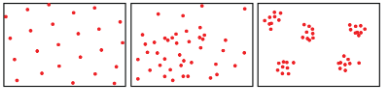
Bonus (200 points): What are the names of the three types of distribution?
Clumped distribution because individuals are unevenly distributed increasing sampling error and bias.
Bonus:
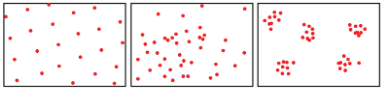
Uniform Random Clumped
500
Two sites each have 10 total individuals and 5 species. Both have the same species richness. Which has higher biodiversity and why?
- Site A counts: 2,2,2,2,2
- Site B counts: 6,1,1,1,1
Site A, because it has greater evenness (more equal relative abundance) therefore SDI would be higher
500
A population shows a rapid increase then a sudden crash after exceeding resources. Identify the growth pattern and give one ecological reason for the crash.
Exponential (J-curve) growth, followed by overshoot; the crash may be due to resource depletion, disease, predation, or increased competition
500
Explain why the bottom of the pyramid is larger than the top level.
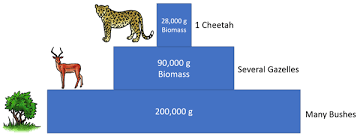
Bonus 200 points: Name each trophic level
Energy is lost at each trophic level (10% is passed onto next level) the rest is lost as heat. This means that each level has less and less energy meaning it can support fewer organisms.
Bonus: Bushes = Producers, Gazelles = Primary Consumers, Cheetahs = Secondary Consumers
500
This flower smells like rotting meat to attract flies for pollination.
Corpse Flower