System Formation
Terrestrial & Jovian Planets
Historic Astronomy
Kepler and Newtons Laws
Random
100
Place the solar system in sequential order starting with the Sun. Include the asteroid belt.
Sun, Mercury, Venus, Earth, Mars, Asteroid Belt, Jupiter, Saturn, Uranus, Neptune.
100
Name the what plants are considered terrestrial planets and which planets are considered Jovian.
Terrestrial: Mercury, Venus, Earth, Mars
Jovian: Jupiter, Saturn, Uranus, Neptune
100
Tell me the difference between a Geocentric Model and Heliocentric Model.
Geocentric has earth at the center of the solar system and all object orbit in perfect circles with epicycles.
Heliocentric model has sun at the center and all objects orbit around the sun other than moons around individual planets.
100
What is Kepler's 1st Law
Planets orbit the Sun in an ellipse shape.
100
What famous person was Mr. Hackett once mistaken for?

200
Explain why all the planets in our solar system orbital path is all on the same plane.
The early stages of the formation of the solar system involved a disk like structure that all the planets formed out of.
200
Which planet is famous for is giant red spot and what is that red spot?
Jupiter, the red spot is a giant perpetual storm in the southern hemisphere.
200
What did Tycho Brahe use stellar parallax for?
To prove that stars are much further away than we originally thought.
200
Planet X has an eccentricity of 0.75, is the orbital path of this planet closer to a straight line or perfect circle?
Straight line
200
What is Mr. Hackett's favorite movie?

300
Name the 3 criteria for classifying a celestial object as a planet.
1) Orbit the Sun
2) Must be large enough that their own gravity pulls them into the shape of spheres.
3) Be big enough to clear smaller objects out of their orbits by attracting the small bodies into themselves or flinging them out of orbit.
300
Which planet has a "runaway" greenhouse effect? What unique feature does this effect cause on the planet?
Venus, The runaway greenhouse effect is when solar energy gets trapped by the thick layer of greenhouse gasses in the atmosphere. This is created by the abundant amount of "outgassing" from volcanoes. The effect of this is 864 degrees F surface temperature and a pressure 92 times greater.
300
What was considered the "nail in the coffin" evidence proving the Heliocentric model?
Galileo observed a gibbous phase of Venus, which would not be possible in a Geocentric model.
He also observed that Jupiter had moons.
300
Planet X has a semimajor axis of 0.75 AU, calculate the orbital period of this planet.
0.65 years
300
Name the species of fish Mr. Hackett caught over spring break.
Stealhead 
400
Name the 5 dwarf planets
Pluto, Makemake, Haumea, Ceres, Eris
400
What is the "Roche Limit"?
Distance from moon where tidal forces are equal to internal forces
400
Why is the word "Planet" derived from the greek word for "Wanderers"? What phenomenon explains this?
The planets exhibit something called retrograde motion where they appear to temporarily move backwards in the sky, before continuing on their orbital path.
400
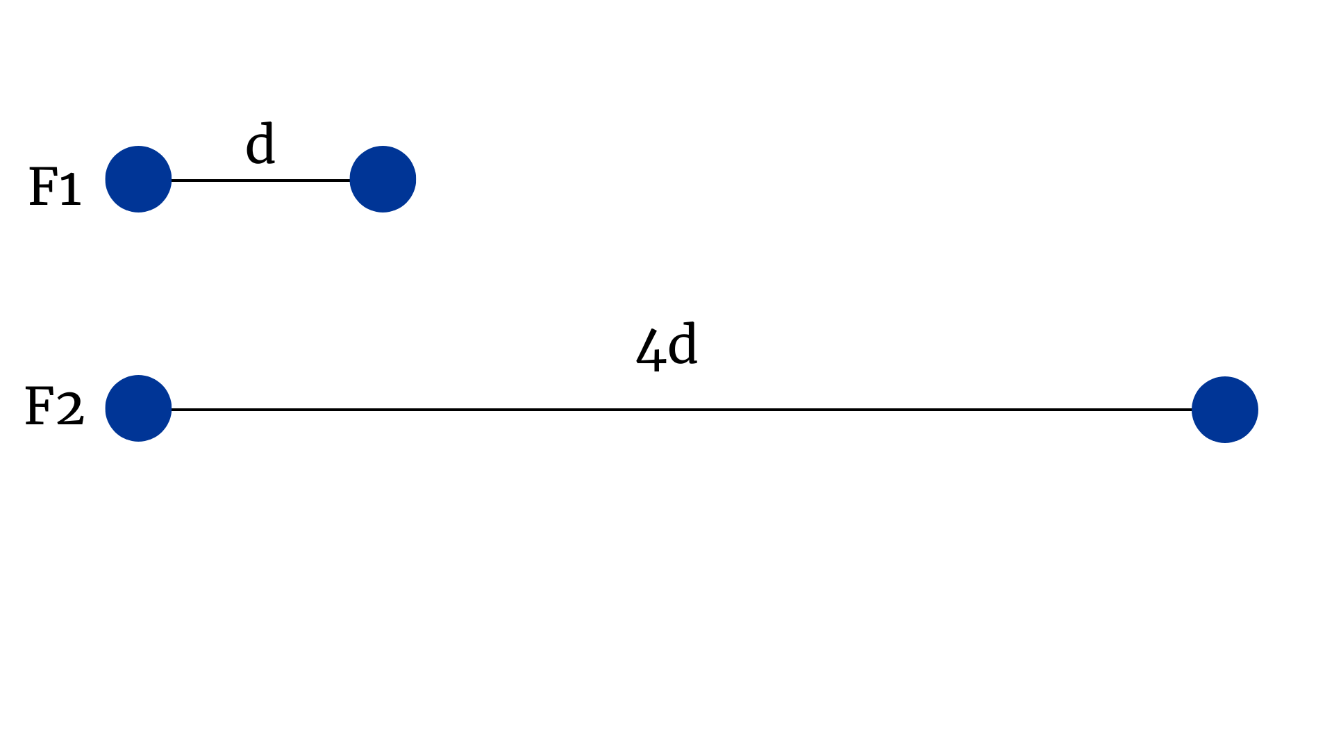
How much different is F2 from F1?
F2 is 1/16th the force of F1
400
What is Mr. Hackett's least favorite food?
Black licorice
500
Give a complete summary of the formation of the solar system otherwise know as the "Nebular Theory"
The solar system started from a massive cloud of interstellar gas and dust called a Nebula. This nebula condensed over time starting to spin due to the law of angular momentum.
As this mass condensed more and spun more, it formed an "accretion disk". This disk like structure is what started to form "Planetesimals". These planetary seeds accumulated more and more mass until they cleared the space around them.
At the center of the solar system our sun accumulated the most mass gravitationally binding our solar system and started the process of fusion.
500
What is reason we have such a difference between our Terrestrial and Jovian planets?
Their distance from the Sun. The frost line that separates the Terrestrial and Jovian planets is a key difference that separates a major temperature change. After the frost line, gasses and other elements behave differently being so far from the Sun.
500
Who first proposed the Geocentric Model?
Aristotle
500
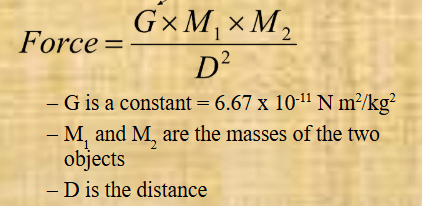
Calculate the Force between the Sun and Mars given this information:
Sun: 1.99 x 10^30 kg
Mars: 6.42 x 10^23 kg
Distance between Sun & Mars: 2.28 x 10^8 m
1.64 x 10^27 N
500
What is the month and day of Mr. Hackett's birthday?
June 8th