Cells/Organelles
Transport
Cell Membrane
Macromolecules
Water
100
What three things do all cells have?
Any combination of 3 of these is acceptable:
Cell membrane, cytoplasm, ribosomes, DNA
100
A type of passive transport in which any molecule goes from high concentration to low concentration. (Think spraying perfume)
Diffusion/Simple diffusion
100
The cell membrane only lets certain substances pass through while keeping other substances out of (or inside) the cell; this is known as:
Semi-permeable.
100
Name two elements are in almost all organic compounds
C, H, and/or O
100
What is the difference between cohesion and adhesion regarding water?
Cohesion: water molecules sticking to water molecules
Adhesion: Water molecules sticking to other things
200
Name the 3 components of cell theory.
1. All living things are composed of one or more cells
2. Cells are the basic structure/unit of life
3. All cells come from pre-existing cells
200
Does this picture show active transport, or passive transport? Give one reason how you know. 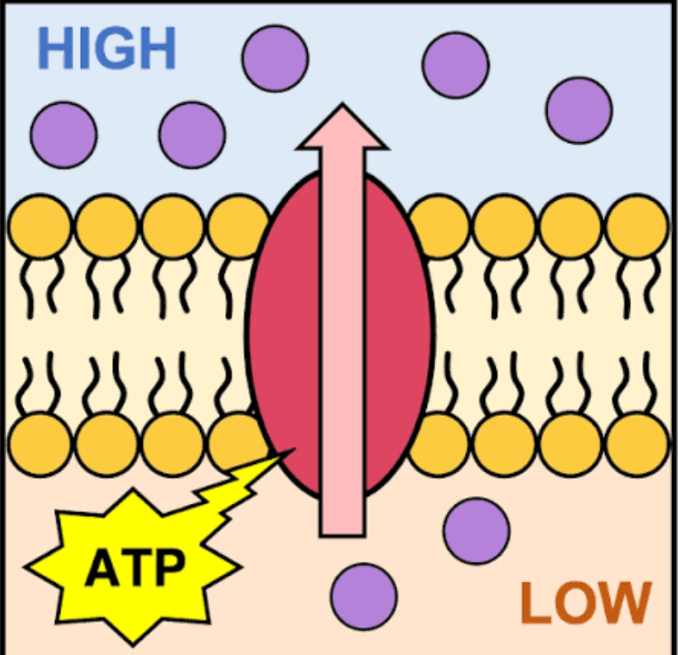
Active transport.
Reasons: It needs energy (ATP), or it is going from low to high concentration.
200
The cell membrane is composed of what? (Hint: Picture)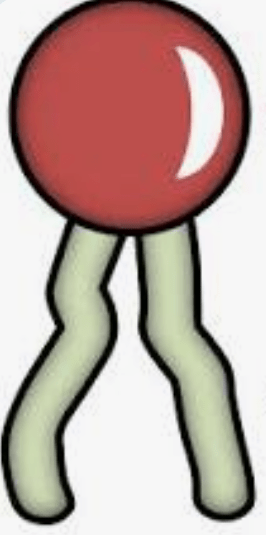
Phospholipids
200
Which macromolecule is responsible for quick energy? Which macromolecule is responsible for long term energy and insulation?
Quick energy: Carbohydrates
Long term energy & Insulation: Lipids
200
The sand at the beach is hot, and the water at the beach is much cooler. This is because of water's -
High specific heat (high heat capacity)
300
What kind of cell is this? Does it have a nucleus?
Acceptable answers: Bacteria or Prokaryote
No nucleus
300
The cell membrane contains channels and pumps. What are these structures made out of?
Proteins
300
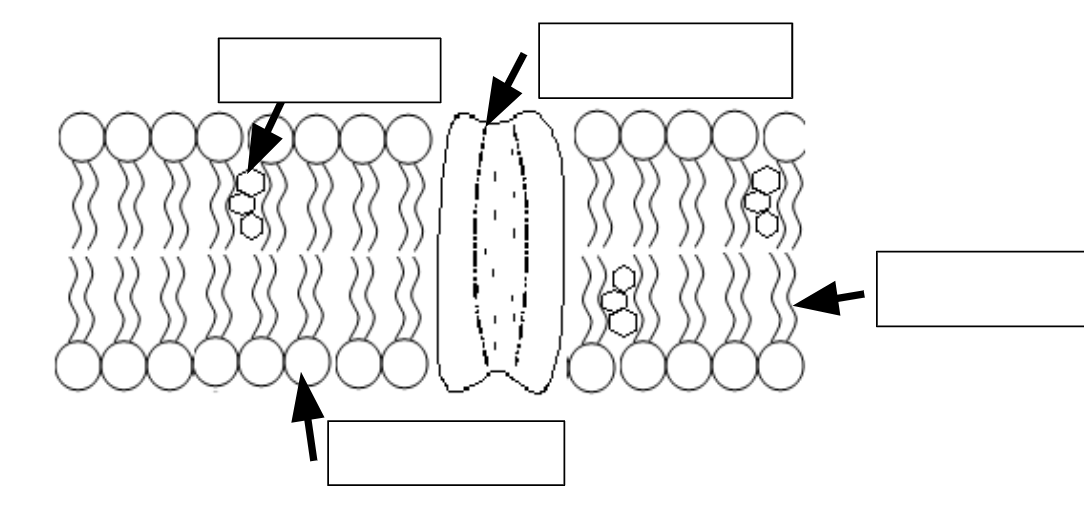
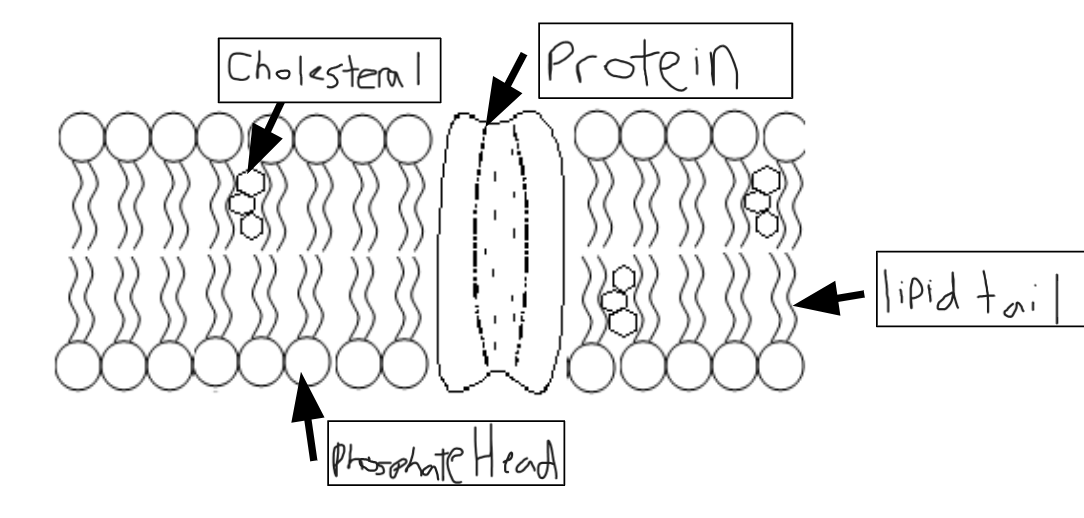
Describe the phosphate heads. the lipid tails, and the proteins. (cell membrane)
Phosphate heads: “Loves” water and faces outward in the membrane
Lipid Tails: “Scared” of water and keeps water inside or outside the cell
Proteins: Moves materials into and out of the cell
300
What elements are in Carbohydrates? Lipids? Proteins? Nucleic Acids?
Carbohydrates: C, H, O
Lipids: C, H, O
Proteins: C, H, O, N
Nucleic Acids: C, H, O, N, P
300
Describe capillary action, surface tension, and density OR give an example of it.
Capillary action: Water using adhesion and cohesion to climb up (against gravity) (ex. Water is moving from the soil into the roots of a plant, up the stem, and to the leaves.)
Surface tension: Water uses cohesion, water bonds are tight on the surface, (ex: bugs can float on water!)
Density: Less dense floats on more dense (ex. Ice floats in water because ice is less dense)
400
Define the function of each organelle listed:
-Lysosome
-Vacuole
-Mitochondria
Lysosome: Breaks down waste
Vacuole: Stores (food, water, waste, etc.)
Mitochondria: Converts nutrients into cellular energy
400
Name the three types of active transport, and name the 3 types of passive transport.
Passive: (simple) Diffusion, Facilitated diffusion, and Osmosis
Active: Endocytosis, Exocytosis, and Protein Pumps.
400
An animal cell that is surrounded by fresh pure water will burst because -
water moves into the cell (hypotonic)
(pure water has zero solutes, the cytoplasm in a cell is mineral-rich. The water goes toward where there is less water!)
400
Name the monomers for all four of the macromolecules (carbohydrates, lipids, proteins, nucleic acids)
Carbohydrates: Monosaccharides
Lipids: Fatty Acids
Proteins: Amino Acids
Nucleic Acids: Nucleotides
400
Why is a water molecule considered polar? (Answer relating to the charges of the molecules)
One side is partially positive, one side is partially negative
500
Is this a plant cell or an animal cell? Name 3 differences between plant and animal cells.
1. It is a plant cell
2. Any combination of three facts are acceptable: Plant cells have a cell wall, chloroplasts, and a large central vacuole. Animal cells have lysosomes. Animal cells are smaller and round. Animal cells have multiple vacuoles
500
Is this: hypotonic, hypertonic, or isotonic? Will the cell swell, shrink, or stay the same? (Hint: does the cell have more or less salt than outside of the cell?)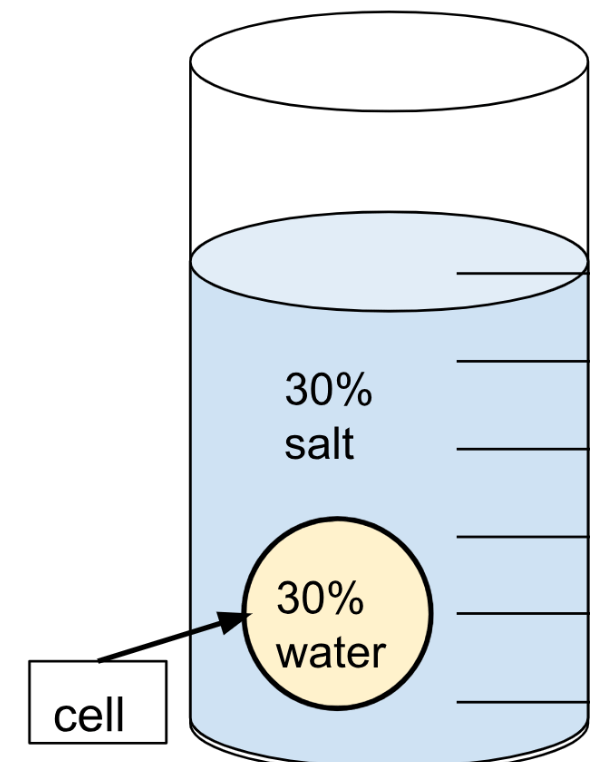
HYPOTONIC. The cell is 70% salt. Water goes where there is MORE solute.
500
Label this cell membrane
500
What macromolecule are enzymes made of? What does an enzyme do?
Protein; it is a catalyst (speeds up chemical reactions)
500
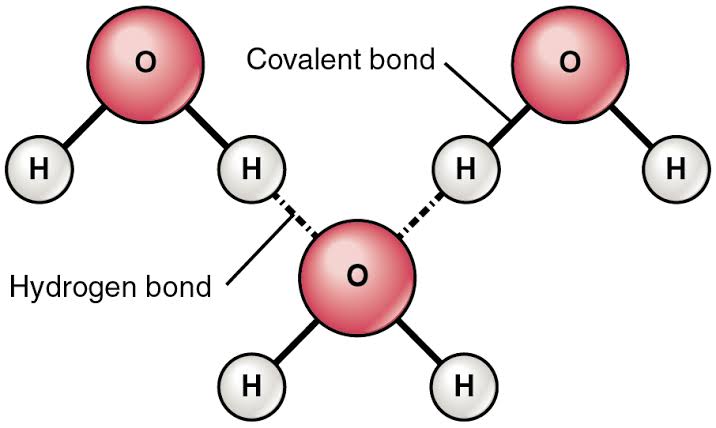
Draw and label two water molecules including: Hydrogen Bond, Covalent Bond, Oxygen (O), Hydrogen (H), + charges, - charges.
Oxygen molecules are -, Hydrogen molecules are +