Immune System
Excretory System
Digestive System
Endocrine System
Nervous System
100
These specialized cells attack and destroy pathogens that enter the body.
What are white blood cells?
100
These organs filters and regulates waste products and water from the blood.
What are kidneys?
100
This substance in the mouth begins breaking down food and helps soften it for swallowing.
What is saliva?
100
These chemical messengers travel through the bloodstream to control body processes.
What are hormones?
100
The pupils in your eyes contract in light due to this body system.
What is the nervous system?
200
These proteins are produced by the immune system to recognize and fight specific pathogens.
What are antibodies?
200
This organ stores urine until it leaves the body.
What is the bladder?
200
Most nutrients are absorbed into the bloodstream in this organ.
What is the small intestines?
200
Hormones move through the body using this body system.
What is the circulatory system?
200
Pulling your hand away quickly from a hot stove is an example of this automatic response.
What is a reflex?
300
The immune system is made of these three levels of organization working together to protect the body.
What are cells, tissues, and organs?
300
This liquid waste product leaves the body through this excretory organ.
What is the urethra?
300
This organ produces digestive enzymes and acid that break down food.
What is the stomach?
300
Endocrine glands release hormones directly into this fluid that travels through the body.
What is the blood?
300
Nerve cells that send electrical signals throughout the body are called these.
What are neurons?
400
When immune cells move through the body to find pathogens, they are being transported by this body system.
What is the circulatory system?
400
These tubes carry urine from the kidneys to the bladder.
What are ureters?
400
Water is absorbed and solid waste is formed in this part of the digestive system.
What is the large intestines?
400
Hormones help regulate body processes in order to maintain this stable internal condition.
What is homeostasis?
500
The immune system helps maintain this condition by protecting the body from infections.
What is homeostasis?
500
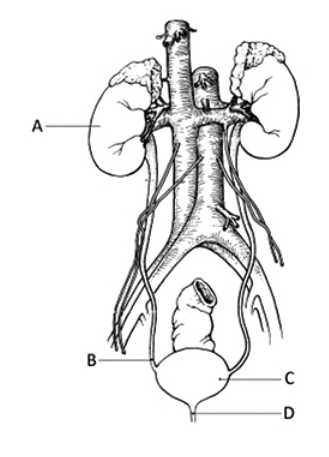 What is labeled in structure A?
What is the kidneys?
500
After nutrients are absorbed from the digestive system, they need to be carried to cells all over the body. What body system is responsible for transporting these nutrients, oxygen, and other substances to every cell?
What is the circulatory system? (bloodstream)
500
This hormone prepares the body for stress or “fight or flight.”
What is adrenaline?
500
This organ controls thoughts, memory, and many body functions.
What is the brain?