Carbon Dioxide (CO2)
Diagrams
Ecosystem
Data
Scenarios
100
How does carbon dioxide drive global warming?
Carbon dioxide traps atmospheric heat, causing global temperatures to rise.
100

Identify 1 Abiotic Factor and 1 Biotic Factor in this image.
Abiotic Factors: Anything other than the plants or animals.
Biotic Factors: Any of the plants or animals.
Remember: Abiotic factors are non-living components of an ecosystem, while biotic factors are living organisms.
100
How do ice cores help scientists identify climate trends?
The air bubbles in the ice cores act as ancient records of Earth's atmosphere, which can be used to determine the composition of the air from that time period.
100
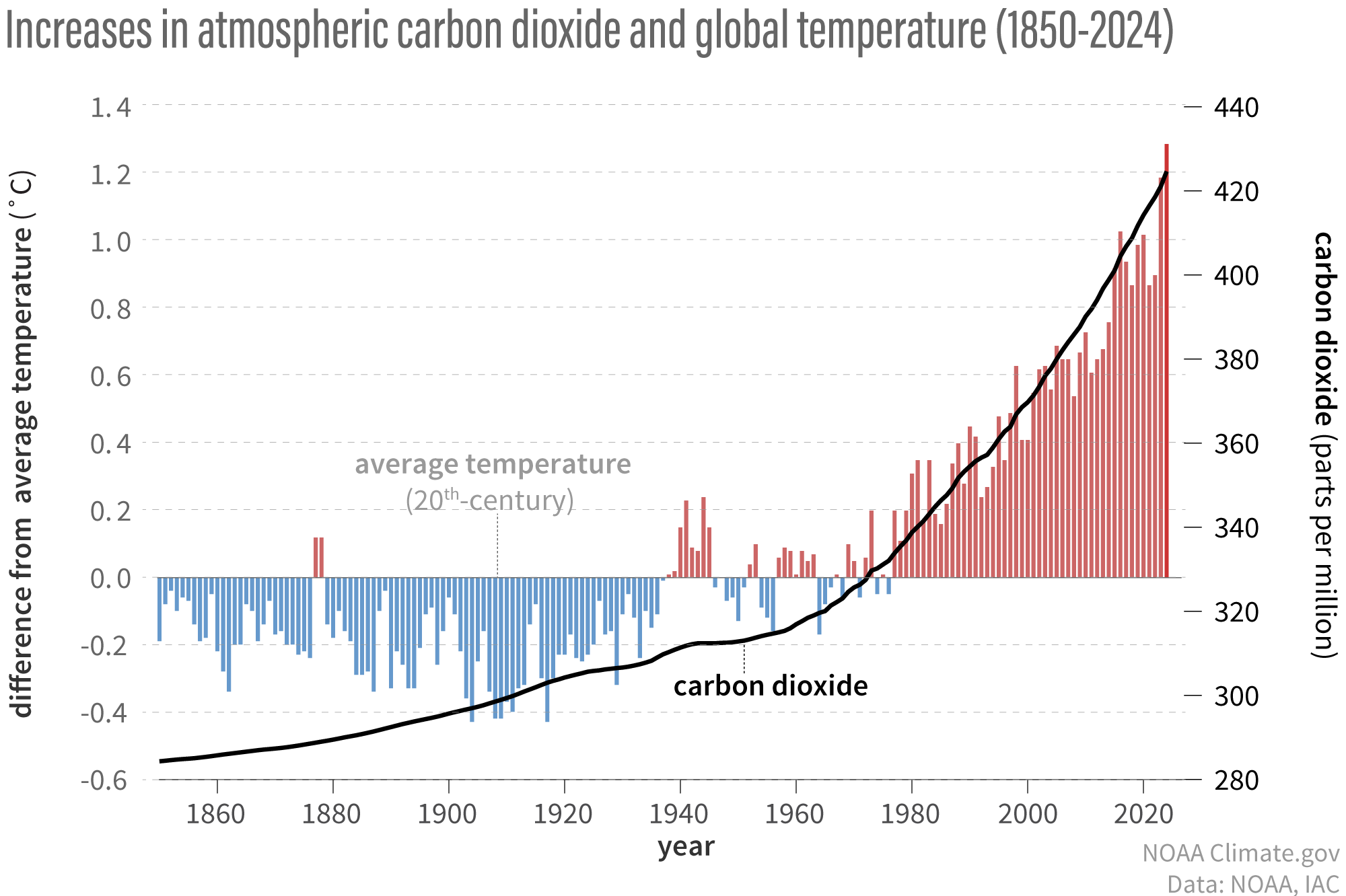
What does the graph say about the relationship between Carbon Dioxide and the difference from the average temperature?
According to the Graph, as Carbon Dioxide increases, so does the difference from the average temperature.
100
A tanker ship transporting large amounts of oil was caught in a strong storm and spilled a few canisters, releasing toxins into the ocean. Zooplankton absorbed a small amount of these toxins, but their predators, herrings, absorbed a much larger amount. What is this an example of?
Biomagnification.
Biomagnification occurs when a toxin increases at higher trophic levels of the food chain.
Not to be confused with bioaccumulation, which occurs when a toxin builds up in one organism. This happens because the organism's body is absorbing the toxin faster than it can get rid of it.
200
How does permafrost melting turn from a carbon sink to a carbon source?
Permafrost locks away ancient organic matter and large amounts of carbon. When it melts, it releases this carbon back into the atmosphere.
Permafrost is frozen soil that functions as a carbon reservoir.
Remember: Carbon sinks store carbon, while carbon sources release it.
200
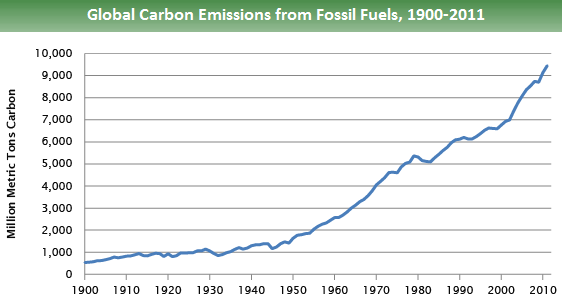
Using the graph, identify the trend of carbon emissions between 1900 and 2011.
Between 1900 and 2011, the trend of carbon emissions increased.
200
Name an example of a cause of algae blooms.
- High nutrient levels
- Warm waters
- Slow moving or stagnant water
- Adequate sunlight
All of these factors are the right conditions for the rapid spread of algae to occur. The nutrients are needed for growth, the sunlight is needed for energy, and algae thrives in warmer water.
200
A wolf eats a beaver that contains 2,000 kcal of energy. Using the Rule of 10, calculate how much of this energy was transferred to the wolf.
200 kcal.
The Rule of 10 dictates that only 10% of the energy from one trophic level is transferred to the next, as the rest is used for metabolic processes.
300
What is the main source of Carbon Dioxide?
The main source is Fossil Fuels.
300

5 years ago, a new nuclear power plant began operating in a coastal city. Coral reefs in the nearby ocean have been experiencing bleaching, most of it occurring within the last 5 years. What is likely the main cause of the bleaching?
The heat from the power plant likely caused local sea temperatures to rise, leading to coral bleaching.
Coral bleaching occurs when coral is under heat stress and expels the microscopic algae that lives in its tissue, leaving it devoid of color.
If left too long in this vulnerable state, the coral will starve and die. However, if the ocean temperatures cool down, the coral can recover.
300
Coyotes are one of the main predators of rabbits. These rabbits, along with other small mammals, make up a large portion of their everyday diet. If the rabbit population begins to decline due to increased poaching, what happens to the coyote population? Additionally, how will the population of other small mammals in the area be affected?
The coyote population will decrease either from starvation or migrating in search of food. With less predators in the area, the population of other small mammals in the area will increase.
400
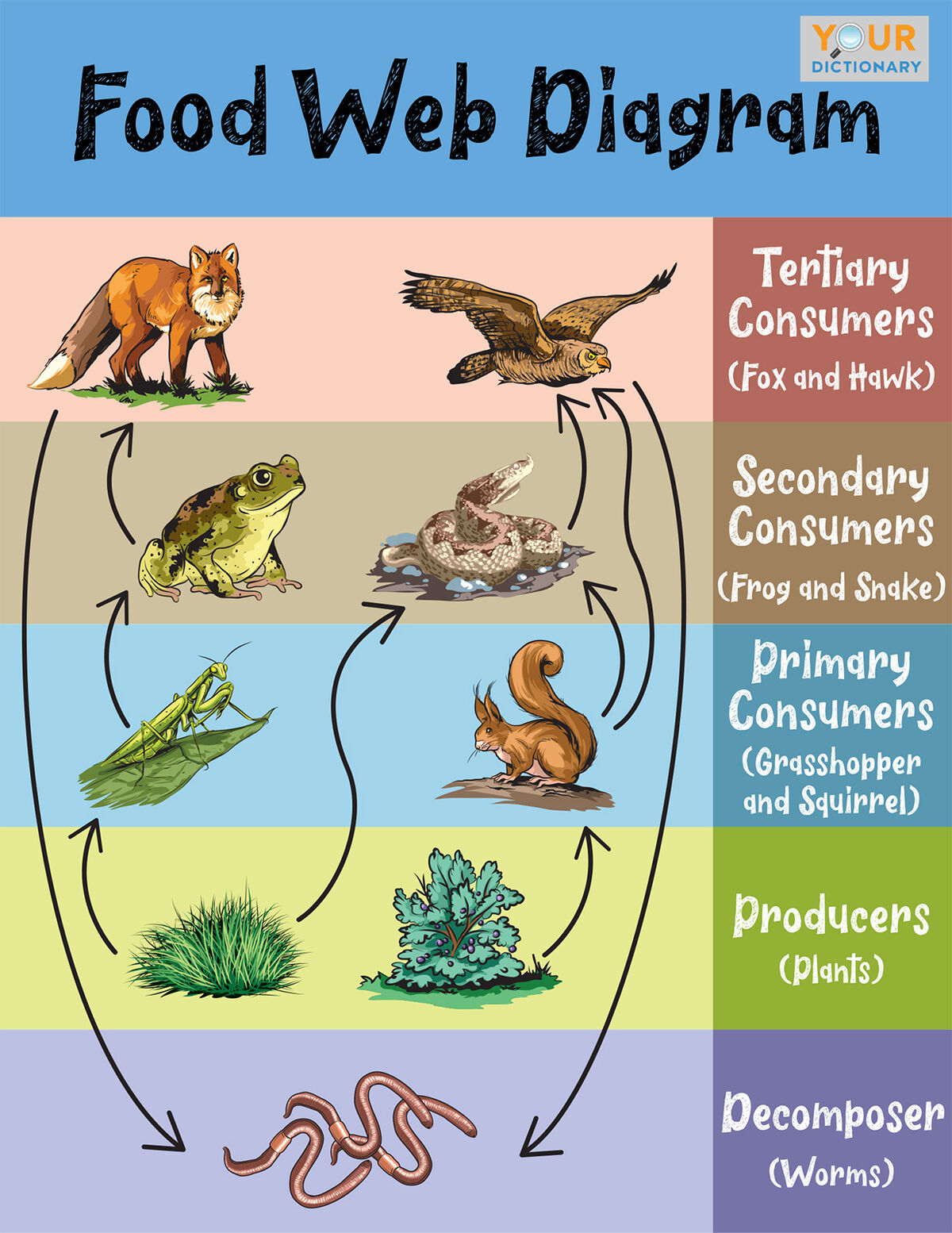 Which animal(s), would be most affected by bioaccumulation?
The Fox and the Bird.