Factors that impact climate
Hurricanes & Convection
Seasons
Currents & The Coriolis Effect
Miscellaneous
100
Ecuador is located close to 0o latitude. We would expect its climate to be...
Very warm!
100
What powers a hurricane?
Warm water
100
What causes Earth to have seasons?
The 23.5o tilt of the Earth (which causes different angles of sunlight to hit the planet)
100
What direction does the Coriolis Effect deflect items to in the northern hemisphere?
To the right
100
At what temperature does water freeze?
32 degrees Fahrenheit
0 degrees Celsius
200
Why does proximity to the equator typically make a region's climate warmer?
Sunlight hits the equator more directly compared to the angle of the light that hits the poles, causing more thermal energy to be transmitted to the equator.
200
Which way do hurricanes rotate in the southern hemisphere?
Clockwise (to the right)
200
What's the difference between a solstice and an equinox?
Solstice = first day of winter or summer (shortest or longest day of the year)
Equinox = first day of autumn or spring (equal amounts of day/night)
200
What causes the movement of surface currents and deep ocean currents?
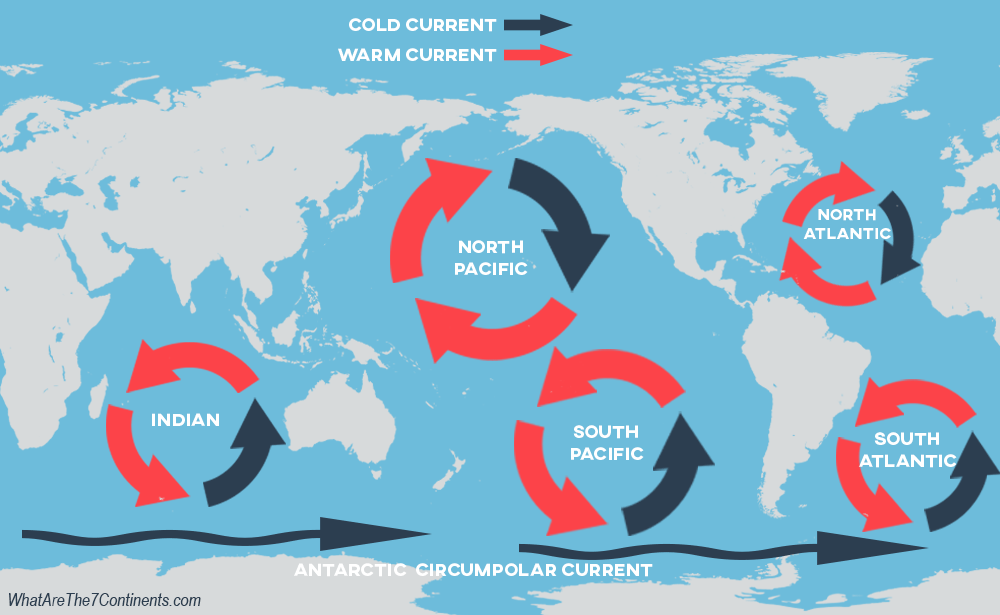
Surface currents: Coriolis winds
Deep ocean currents: convection (due to changes in density, salinity & temperature of water)
200
Is a terrapin a reptile or an amphibian?
Reptile
300
Name three things on Earth that have a HIGH albedo.
Clouds, ice, snow, sand
300
What does an increase in SST indicate?
A higher likelihood of a hurricane forming
300
What do you call the day that marks the first day of spring?
The vernal equinox
300
Draw the 5 gyres on your whiteboard (with a line dividing the NH and SH)
300
What is the difference between weather and climate?
Weather: short-term, day-to-day atmospheric conditions in a specific area (precipitation, humidity, wind, air pressure, etc.)
Climate: long-term weather patterns in a specific area
400
How do you calculate temperature range and what does it tell about a location's climate?
Range = largest temperature - smallest temperature
Tells you how variable or consistent a place's climate is
400
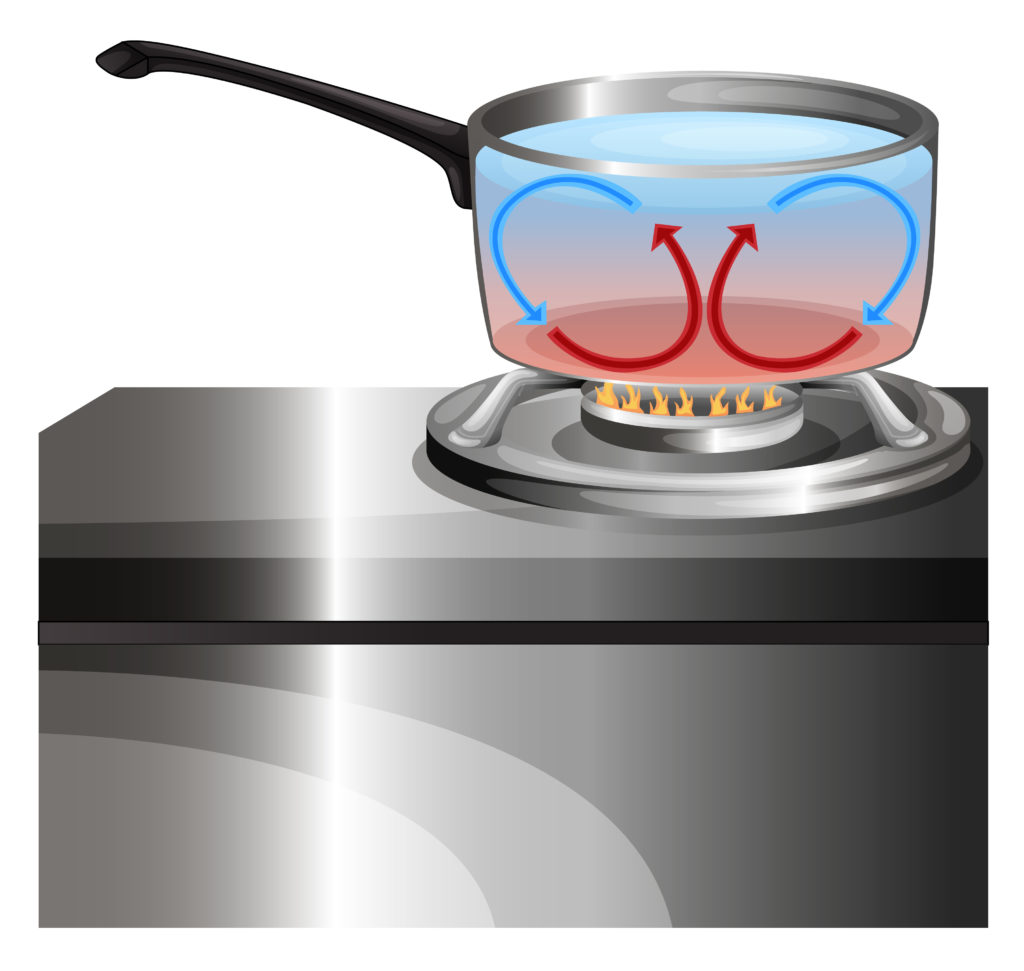 Describe (in detail) what's happening in this image, using temperature (hot, cold) and density in your answer.
Convection: the flame heats the water, causing its density to decrease and float to the top. As it moves away from the heat, the water cools, causing its density to decrease, and it sinks back to the bottom. As it gets closer to the heat source again, the process repeats.
400
July 22nd has 12 hours and 1 minute of daylight. Will the next day have MORE or LESS hours of daylight?
July 23rd will have FEWER hours of sunlight (days are getting shorter until December 21st)
400
Why does the Coriolis Effect occur?
The middle of the Earth spins faster than the poles, which causes objects like wind and water to deflect to the right or left, depending on the hemisphere.
400
What college did I attend?
University of Chicago
500
The tallest mountain in Colorado is Mt. Elbert (14,440 feet). What causes the summit of Mt. Elbert to be colder than the base?
Air particles expand at higher temperatures, meaning they move more slowly, run into each other less, therefore release less thermal energy.
500
What do you call a hurricane in the West Pacific ocean?
Typhoon
500
 Label the 4 seasons on the orbit diagram for the SOUTHERN HEMISPHERE
1. Fall (autumnal equinox)
2. Winter (solstice)
3. Spring (vernal equinox)
4. Summer (solstice)
500
What items were on the boat that washed overboard and helped oceanographers map ocean currents?
Rubber ducks!
500
Name 2 of the demonstrations we did in class and what concepts they represented.
Mixing hot and cold water: convection
Drawing lines on the balloon while it's spinning: Coriolis Effect
Measuring the temperature of different colored surfaces: Albedo Effect
Shining lights on model Earths: seasons