Maps
Australia
Islands 1
Islands 2
100
What is the name of the Mountain range found in New Zealand?
Bonus: What famous films were once made here?
The Southern Alps

100
What are the native people of Australia called?
Bonus: What are native people of New Zealand called?
Aboriginal Australians
Before the arrival of Europeans, the entire continent of Australia was inhabited by an estimated 1 million Aboriginal peoples, theorized to be one of the earliest places of human habitation, with evidence showing human arrival before Europe.
Even until the arrival of Europeans, however, Aboriginal Australians were one of the few peoples who had maintained a successful nomadic hunter-gatherer society, consisting of hundreds of small communities, each with their own language and unique set of cultural markers (rituals, clothes etc), yet a shared common worldview.
Bonus: The Maori people. They call their island Aotearoa in the te reo language, which had almost went extinct, but has been resurrected in recent decades and has been adopted as a second official language of the country.
100
What is the second largest island in the world?
Bonus: What is the largest?
New Guinea, shared between the nations of Indonesia and Papua New Guinea.
Bonus: Greenland
100
What is the world's smallest independent republic?
The island of Nauru.

200
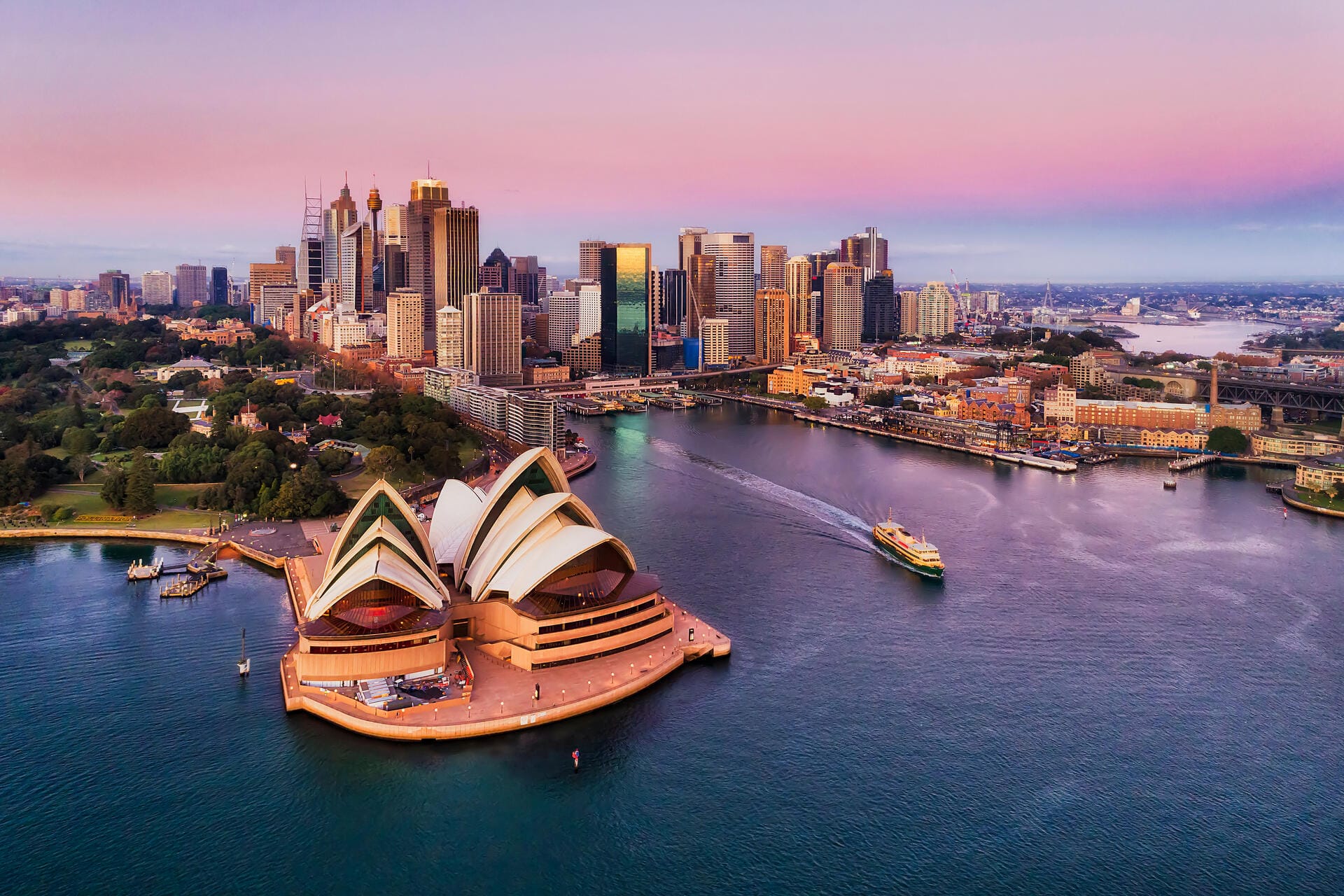
What is the largest city in Oceania?
Sydney, Australia with a population of five and a half million, making it almost 10% of the total population of Oceania.
200
Where did the name Australia come from?
Philosophers and scientists had since antiquity theorized that the world was held in balance by some large, unknown southern land, which in Latin is Terra Australis Incognita.
Aboriginals simply called it, "the land" in their various languages.
The Dutch named it New Holland in 1644.
James Cook claimed the eastern half the island for the British Empire in 1770, calling it New Wales.
After the British took full control of the entire island they renamed it Australia, in honor of the ancient idea of the unknown southern land.
200
Why did Australia claim independence in the year 1900?
In order to locally administer its own armed forces, which seemed increasingly necessary as the German Empire was pushing into the South Pacific.
Specifically Germany took control of the northern part of New Guinea, the Solomon Islands, Samoa, the Mariana Islands, and the Marshall Islands.
During WW1 Australian forces took back most of these territories. Many of these were given or taken by Japan after the war as they tried to increase their Empire, leading into WW2, culminating in the Bombing of Pearl Harbor, after which American forces pushed back Japanese troops in what came to be known as the Pacific theater of conflict.
200
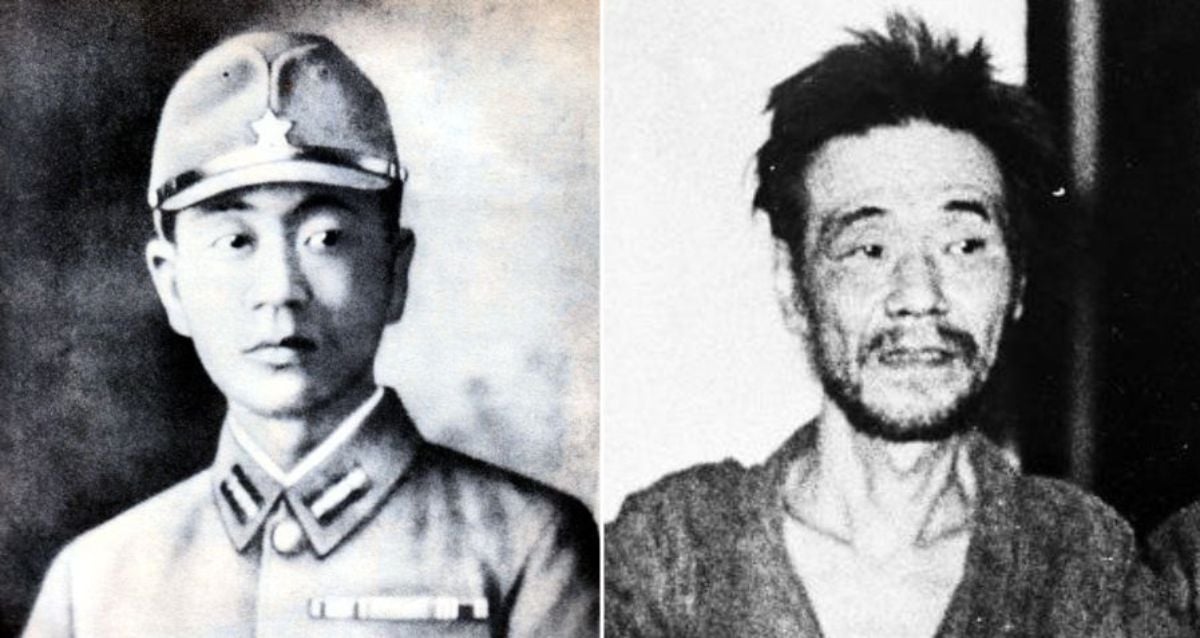
What happened to Sergeant Shoichi Yokoi?
He was a Japanese soldier stationed on the island of Guam during WW2. When the Americans took the island, Yokoi hid in the jungle to await rescue. He waited almost thirty years, living off the land in a makeshift dugout, unable to come to terms with the fact that the Japanese army would surrender, since that would be the ultimate shame in that culture. He was treated with great honor when he returned to Japan and a museum of his long exile is still functioning on the island of Guam.
300
What are the three points of the Polynesian triangle?
Hawaii, New Zealand, and Easter Island.

300
What is "The Dreaming" or "The Dreamtime"?
The mythic religious system that dictates the entire worldview of Aboriginal thinking and action, particularly in their connection to other people and their relationship to nature. The foundation of the Dreaming is a set of traditional stories about the creation of the world, featuring a series of totemic ancestor hero figures who set a sacred order and set of principles for how the world works from the beginning of time, that have never changed, making the perspective of Aboriginal peoples on time to be unique, with their concept of the "Everywhen".
300
What is the largest island in French Polynesia?
Tahiti

300
What group of islands is mostly made up of atolls, where the United States tested nuclear weapons, and continues to keep a presence with a prominent air base on Wake Island?
The Marshall Islands

400
What are the four regions of Oceania?
Australasia - Oceania's west. Primarily composed of Australia, New Zealand, and New Guinea.
Melanesia - Oceania's center. Greek for black islands, including Solomon Islands, Vanuatu, Fiji, and Caledonia.
Micronesia - Oceania's north. Greek for small islands, most are coral reefs or atolls, including Palau, Kiribati, Nauru, Marshall Islands, Micronesia, North Mariana Islands, and Guam.
Polynesia - Oceania's east. Greek for many islands, including Tonga, Samoa, American Samoa, Tokelau, Niue, Cook Islands, and French Polynesia.
400
What were the "Stolen Generations"
A period of time during the mid-nineteenth century when there were government funded programs to eliminate and suppress Aboriginal culture and language in Australia, among which was the practice of removing Aboriginal children from their homes and raising them as Europeans, replacing their culture and language.
400
What is the Bougainville issue?
The largest of the Solomon Islands, home to a quarter million people, had a shared history with nearby New Guinea and other island in the region. Colonized by the British Empire, then occupied by Germany, retaken by Australia during WW1, then occupied again by Japan during WW2, and retaken by American forces.
As with many Pacific islands they had been caught up in the conflicts of distant European colonizers, with little understanding or recognition of the people who were native to the island. The island had been governed as part of Papua New Guinea, but saw itself as distinct culturally, and was suffering financially as little of its valuable resources were actually benefiting the local populace.
A rebellion was fought in 1988, during which 15000 people died. A peace agreement was not signed until 2001 and as recently as 2019 a vote was taken on full independence for the nation. People of Bougainville voted overwhelmingly in the favor of independence, and while the decision would theoretically provide independence to the new nation in 2027, Papua New Guinea has not officially guaranteed this action on the Federal level.
400
How did Guam become an unincorporated self-governing territory of the United States?
The island had been colonized by Spain, but was given into American hands after the Spanish American War. The war was mostly fought for the control of Cuba (this is the one where Teddy Roosevelt and his rough riders famously took San Juan Hill), but resulted in Spain giving control of Guam, Puerto Rico, and the Philippines to the United States, as well as resulted in providing the imperial atmosphere that prompted the United States to annex Hawaii.
500
What was the most challenging problem of marine navigation prior to the late 18th century and how was this problem solved?
While one's latitude (where one sits north or south on the globe) had long been easy to assess based on the position of the sun, moon, and stars, it had long been impossible to determine longitude (where one sits east or west). This is why early sailors mostly held to shorelines and well-known routes. But after the discovery of the new world it became imperative to know how to sail the open ocean effectively.
A governmental board, called the Longitude Board, was set up in London to fund a solution. One of the best solutions was to simply know how long one had been sailing, since if one knew time and speed, you could easily calculate distance. The problem was that clock technology relied on pendulums, which don't work on the open ocean.
John Harrison, a carpenter who became known for making wooden clocks, set out to solve the problem by inventing a clock that depended on a series of intricate springs and balances that had to be wound each day. This clock, which came to be known as a chronometer, solved the longitude issue in the late 18th century and resulted in the British Empire becoming one of the most powerful naval forces on the planet.
500
Why did the British Empire begin building penal colonies on Australia, in the 1780s?
The concept of sending criminals (don't think murderers, but people with necessary skills who had been caught out on petty misdemeanors) to work in overseas territories and colonies had been a long-standing convention that provided an easy solution for the lack of menial labor and skilled labor in the colonies. In other words, the British governmental system only went to the trouble and expense of shipping hundreds of prisoners to other places so that they could work to build these colonies into lucrative places that ultimately would benefit said British government.
The thirteen colonies in North America had long been the site of this practice, but after the American Revolution the British Empire realized it needed to take a tighter hold of its power base and increase its holdings in order to make up for this loss, and also needed a place to send prisoners deemed fit for colonial service. Since the Empire had just claimed this land at this time, Australia was the place most in need of colonizing efforts, and became famous as the site of many penal colonies.
Once these colonies had been established and were thriving, and particularly due the gold rush of the 1850s, thousands of immigrants came of their own accord.
500
What group of islands have commonwealth status in the United States?
The Northern Mariana Islands
Nations with commonwealth status are more or less fully autonomous, with their own governments and local systems, but with the qualifier that they acknowledge some kind of significant tie to a larger, more powerful nation. The term commonwealth is a catch-all that usually signifies that this tie is vague and may differ from territory to territory, but more or less boils down to a kind of political alliance with extra perks/incentives.
The United State's other commonwealth territory is Puerto Rico.
Similarly larger countries, like Australia, New Zealand, Papua New Guinea, India, and Canada, have commonwealth status with the United Kingdom, among many others, including islands in Oceania such as Fiji, Kiribati, Nauru, Samoa, Solomon Islands, Tonga, Tuvalu, and Vanuatu.
500
What was the Mau Movement?
The Mau Movement was an indigenous resistance group against foreign colonizing powers on the islands of Samoa. After New Zealand forces freed Samoa from German rule during WW1, Samoans were frustrated that they had yet again been passed into the hands of European colonizers. The movement grew over the course of the 1920s as the New Zealand government lacked understanding and actively suppressed and avoided acknowledging Samoan culture and customs, preventing Samoans from having any real power on their own island. When influenza was brought to the island on New Zealand ships, Samoans blamed governmental incompetence, souring relations. Tensions reached their breaking in 1929 when during a parade when police opened fire on protesters in the street, a day still remembered as Black Saturday. Discussions were put on hold until after WW2, when Samoa was given more autonomy. In 1962 Samoa voted to become entirely independent.