Comparative Anatomy
Classification of Organisms
Endosymbiosis
Transitional Species
Cladograms and Phylogenetic Trees
Molecular evidence
100
 Compare the forelimb bone structures of a dolphin, bat, and horse. What does this suggests about the relationship between these organisms?
Homologous structures; and share a common ancestor
100
These two kingdoms are the only ones that can be BOTH unicellular and multicellular.
Protist and Fungi
100
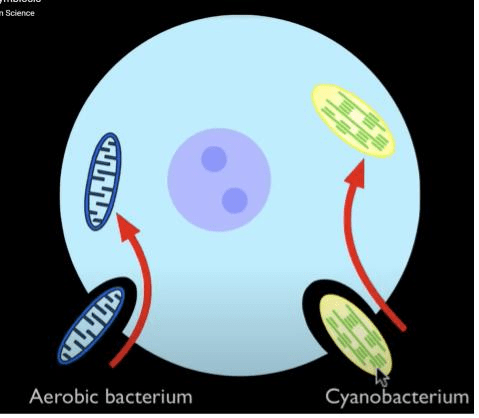
What process is being shown?
A. Diffusion
B. Endosymbiosis
C. Photosynthesis
D. Respiration
Endosymbiosis
100
An organism that shows traits of two different groups is called a ________ species.
transitional
100
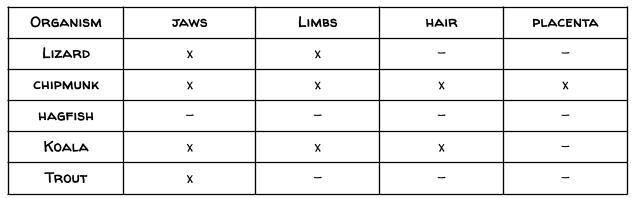 According to the data in the chart above, which organism is the most complex?
chipmunk
100
DNA is made up of smaller units called ________.
nucleotides
200
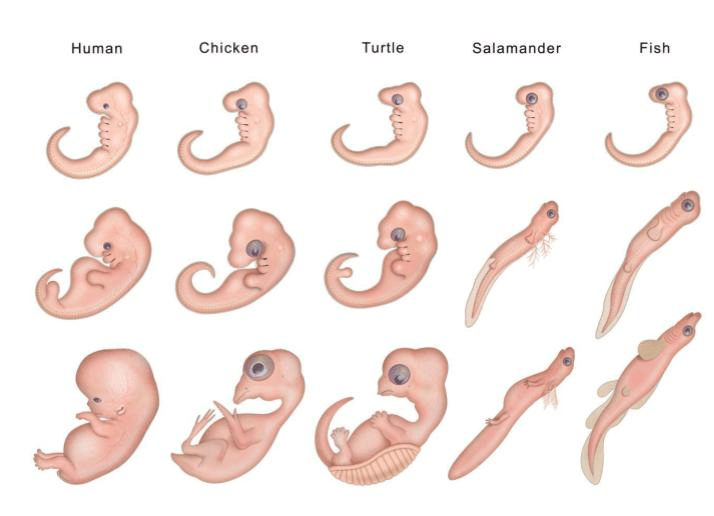
Which two organisms are the least related to the fish?
human and chicken
200
According to the table in your notebook, four of the six kingdoms share this cell type, which contains a nucleus and membrane-bound organelles.
Eukaryotic
200

After the smaller cell is engulfed, it continues to live inside the larger cell and provides energy.
What structure might this smaller cell eventually become?
A. Nucleus
B. Ribosome
C. Mitochondrion
D. Cell membrane
mitochondria
200
Which of these species' fossil would be found the deepest underground?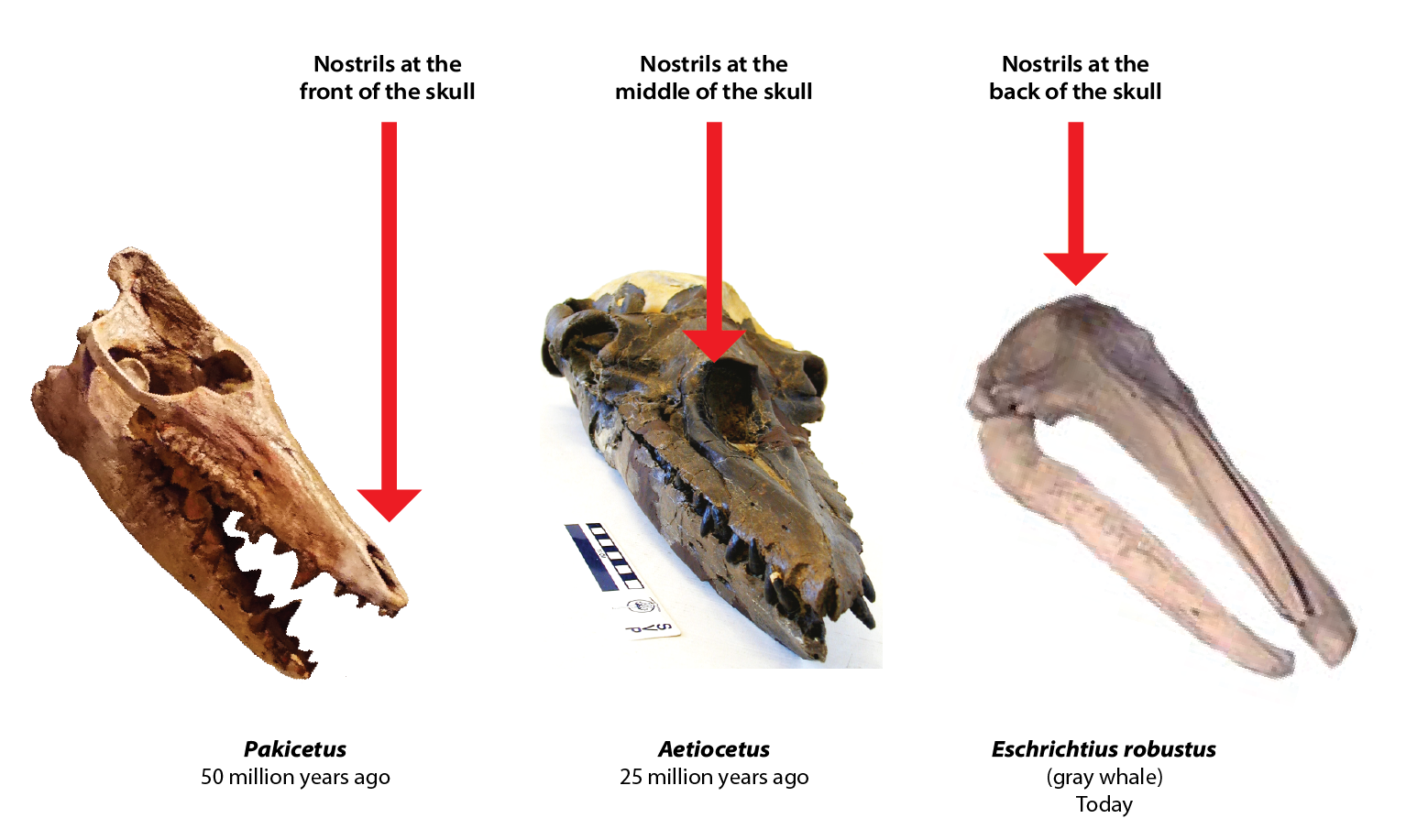
Pokicetus
200
According to the data in the chart above, which organism is the simplest?
hagfish
200
DNA provides the instructions for building ________ in cells.
proteins
300
This is the primary characteristic used to separate the two bacterial kingdoms from the other four kingdoms on the tree of life.
prokaryotic vs eukaryotic
300
This ancient kingdom consist of prokaryotes that often live in extreme environments.
Archaebacteria
300
A long-term relationship forms where both the larger and smaller cells benefit from living together.
What type of relationship is this?
A. Competition
B. Predation
C. Symbiosis
D. Mutation
symbiosis
300
Which of these species is the least advanced/complex?
Pokicetus
300
 According to the data in the chart above, what can you you infer about all the organisms in the table?
have a common ancestor (LUCA)
300
If two species have very similar DNA or amino acid sequences, what does this suggest about their relationship?
share a recent common ancestor
400
Animals, plants, protists, and fungi are grouped together because their cells all contain this membrane-bound structure that holds DNA.
nucleus
400
Charlotte incorrectly labeled this ancient kingdom as "eukaryotic," but they are actually prokaryotes that often live in extreme environments.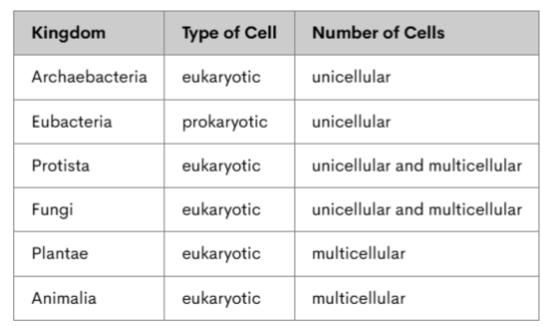
Eubacteria
400
A model shows a larger cell engulfing a smaller cell that continues living inside it and eventually becomes an organelle.
What process is described and what evolutionary event does it explain?
A. Mitosis, which explains how eukaryotic cells evolved from prokaryotic cells
B. Meiosis, which explains how eukaryotic cells evolved from prokaryotic cells
C. Endocytosis, which explains how eukaryotic cells evolved the ability to ingest food
D. Endosymbiosis, which explains how eukaryotes evolved to have membrane-bound organelles
D
400
Which of these species is the most advanced/complex?
gray whale
400
Which organism should be placed closest to the beginning (left side) of the cladogram?
A. Chimpanzee
B. Bird
C. Lizard
D. Shark
hagfish
400
Scientists compare the number of differences in DNA sequences between species. What does fewer differences indicate?
The species are more closely related
500
In a phylogenetic tree, the "Bacteria" branch is separated from the "Eukarya" branch because bacteria lack these specialized, membrane-bound "little organs."
organelles
500
A fossil organism has fins with bones similar to arms and legs. What does this suggest about how it may have lived?
It could support its body in shallow water or begin moving onto land
500
Which organism is most closely related to the chipmunk based on shared characteristics?
A. Shark
B. Lizard
C. Chimpanzee
D. None of these
koala
500
Why are DNA and amino acid sequences considered strong evidence for relationships between species?
Because all organisms use the same genetic code, scientists can compare differences in DNA and amino acid sequences to determine how closely related species are