Human Population
Energy Flow
Population Ecology
Community Ecology
Human Impact
100
How many children per family lead to zero population growth?
Two
100
How much energy is passed onto each trophic level?
10%
100
When an organism grows rapidly with unlimited resources, its growth pattern is called:
Exponential Growth
100
Name examples of density-dependent factors?
Predators, disease, parasites, etc. (biotic factors)
100
The world today derives the majority of its energy from which of the following sources?
Fossil fuels
200
How would you describe this population?
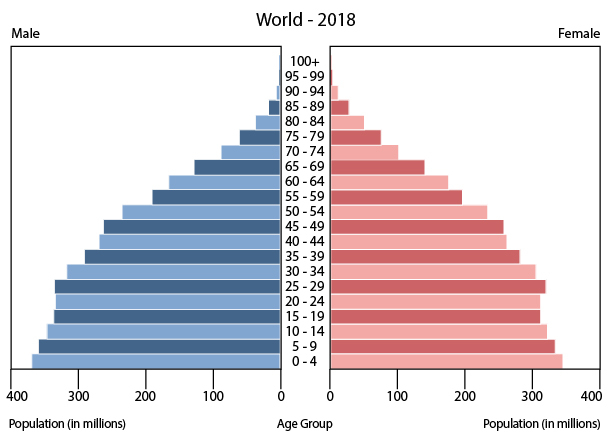
Rapidly growing
200
The bottom of food chains and webs is always?
Producers/Autotrophs
200
Term for when organisms reach a maximum number without degrading resources
Carrying Capacity
200
Name a density-independent factor
Flood, fire, hurricane, etc. (abiotic factors)
200
What is the #1 human cause for animal extinction
Habitat loss
300
The amount of resources consumed is proportional to the amount of ______________ produced
Pollution
300
A bird eats a caterpillar. On the trophic level the bird is considered as?
secondary consumer / heterotroph
300
Equilibrium species show what kind of growth pattern?
Logistical
300
Pseudoscorpions are small, harmless arachnids. To move from one place to another, they will sometimes latch onto the legs of flies and thus be carried long distances that they would not readily be able to traverse.
What kind of relationship is this?
Commensalism
300
When too much land is removed to build residences, it can lead to:
Desertification (will accept deforestation)
400
After what period did the human population grow significantly?
Industrial revolution
400
A chemoautotroph obtains its energy from?
Breaking down sulfur, nitrogen, etc. (without sunlight)
400
Term for one species outcompeting another species in a particular niche
Competition exclusion principal
400
The first organisms to colonize new land are called
opportunistic pioneer species
400
Most of the world's water supply is used for
Farming/agriculture/irrigating crops
500
Humans and animals live in what kind of distribution pattern
Clumped
500
The organic material decomposers recycle is collectively known as?
Detritus
500
The maximum rate of population growth with unlimited resources is called
biotic potential
500
Term for when organisms can co-exist in the same habitat and decrease competition
Resource partitioning
500
When too many nutrients are added to of a body of water, this is known as
Eutrophication