South Asia
Central Asia
China
Misc
Maps
100
What famous Indian Nationalist led a peaceful, nonviolent protest and civil disobedience movement advocating for the separation of India from the British Empire and was later assassinated?
BONUS: What famous figure from United States history was inspired by him?
Mahatma Gandhi
BONUS: Martin Luther King Jr.
100
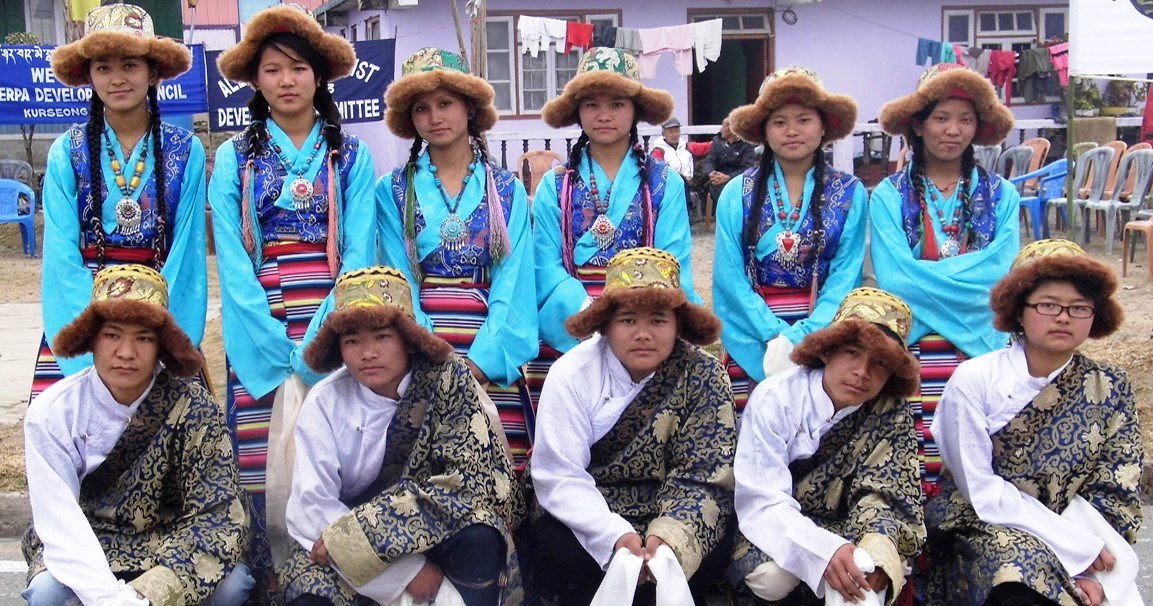
What Nepalese ethnic group are best known for their hearty mountaineering skills, mostly used to enable rich Westerners to climb mountains in the Himalayas?
The Sherpa People
100
What traditional Tajikistani dish represents both its poverty and its cultural pride?
Naan - a thick flatbread baked in a clay firepit.
Eaten with every meal, its simple nature reflects the nations reliance on basic necessities and lack of excess.
If seen on the ground it is picked up, kissed, respectfully touched to the forehead, then placed somewhere to be eaten by birds. Again reflecting a culture that does not have anything to waste.
100
What is the name of the communist party leader in China who was responsible for building a cult following through violent means, who took sole control over all of China during the earlier Republic of China's weakened state following the end of the Japanese invasion during WWII, ruling from 1949-1976?
BONUS: What was the name of his innovative program to bring China into the later 20th century as an industrial powerhouse?
Mao Zedong
Despite the many atrocities he is responsible for and the millions that died needlessly under his rule, he is still revered as the father of the People's Republic of China that still exists today.
BONUS: The Great Leap Forward. The program suffered what many communist programs do. Rampant corruption and propaganda took the place of rationality and truth, for fear of offending the credibility of the dangerous party leader or his system. The desire to quickly manufacture modern technology and systems often resulted in poor production, dangerous cut corners, and constant malfunctions. The ironic mistreatment of the labor class resulted in many injuries and deaths, including the connected famine which killed hundreds of thousands of people.
100
What ancient trade route connected China, India, the Middle East, the Roman Empire, and other Mediterranean cultures?
BONUS: What Italian explorer used the silk roads to be one of the first Europeans to visit China in the 13th century, serving in the court of the Mongol King of the Yuan Dynasty - Kublai Khan, and later writer a highly influential travelogue that helped to map and educate the West on the mysterious East.
The Silk Road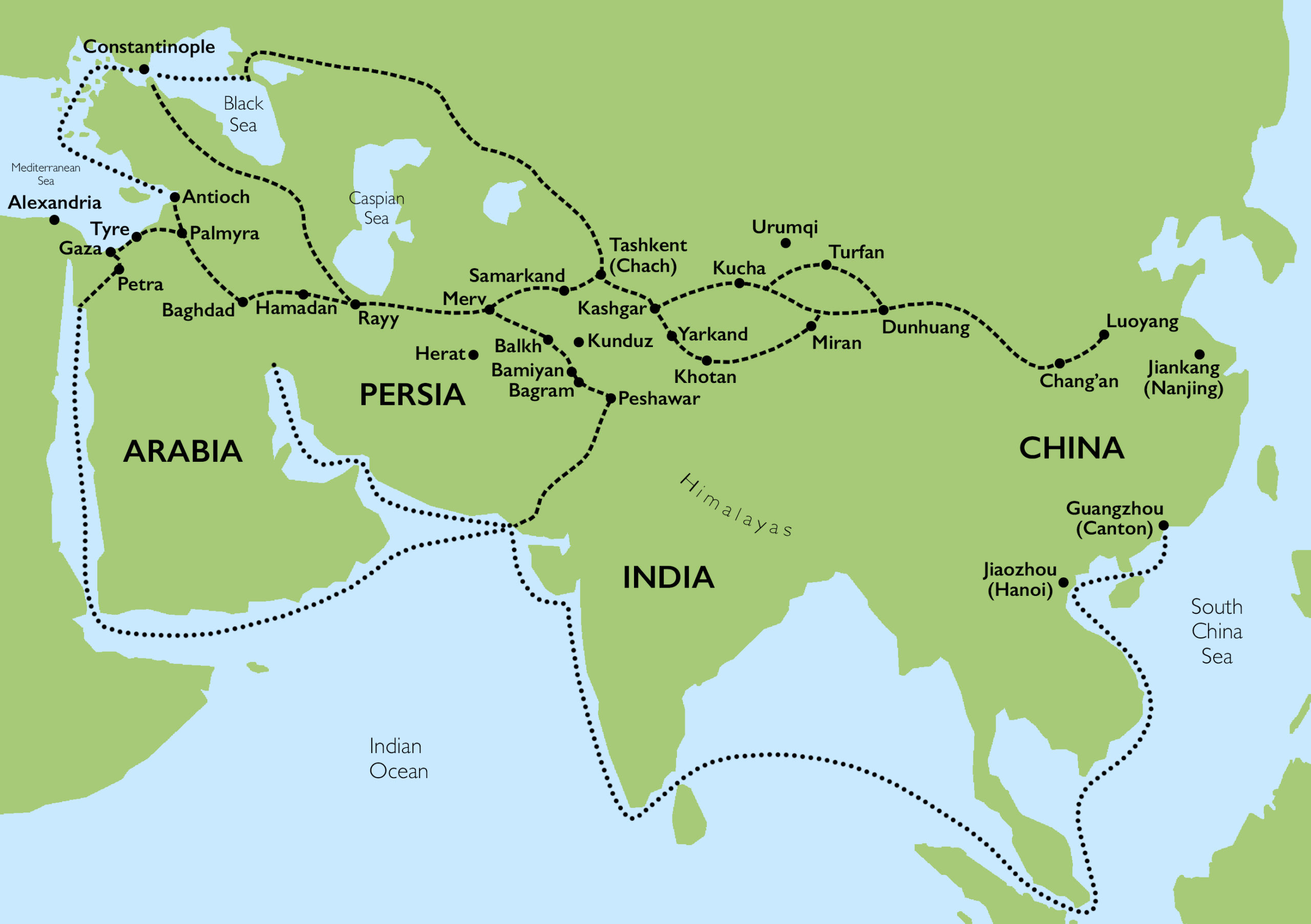
BONUS: Marco Polo
100
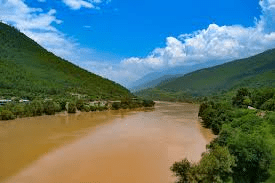
The ancient culture that would birth the Chinese people began on the banks of what river around 5000 BC-3000 BC?
The Yellow River
200
What do kamlari and Kumari Devi mean in Nepal?
These two positions represent contrasting ways in which women are mistreated in Hindu culture.
Kamlaris belong to the lowest caste and are sold as virtual slaves to their employers, usually for menial labor tasks. Because of their dishonored status in society they are often mistreated, have few to no rights, and are seen as property.
Kumari Devi are young girls who are selected in the Kathmandu Valley to be declared a child goddess. This status provides this child great honor in society and allows her to live a relatively privileged childhood. However, this child goddess is also entirely isolated from public life, living a rather confusing reality in which for the duration of their formative years they are treated as a deity, only to have that status revoked once they have passed into adolescence, not setting the child up for a very clear future.
200
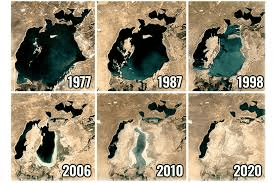
What body of water, once the fourth largest in the world, home to a thriving tourist and fishing industry, were all but destroyed by the Soviet Union in the 1950s when its in-flowing rivers were diverted to irrigate crops in an effort to make Central Asia more profitable to the starving USSR?
The Aral Sea
200
Who was China's greatest philosopher, living during the Zhou dynasty of the fifth century BC and what did his philosophy propose?
Confucius
In the collection of his sayings, called the Analects, he proposes that cultural/societal peace could be derived from a top-down approach, encouraging a kind of standardized governmental morality, the idea being that if the ruling class was moral, then so to would the nation. This morality was made up of virtues such as generosity, humaneness, kindness, sincerity, and a serious pursuit of knowledge, among others.
200
What pest did Mao instruct people to attempt to kill off the entire population of in China?
Sparrows.
Ironically, this mass hunting scheme was meant to protect crops and stem the large scale famine. Instead it further imbalanced the ecosystem and resulted in an increase of insects that continued to ruin the crops and increase the famine.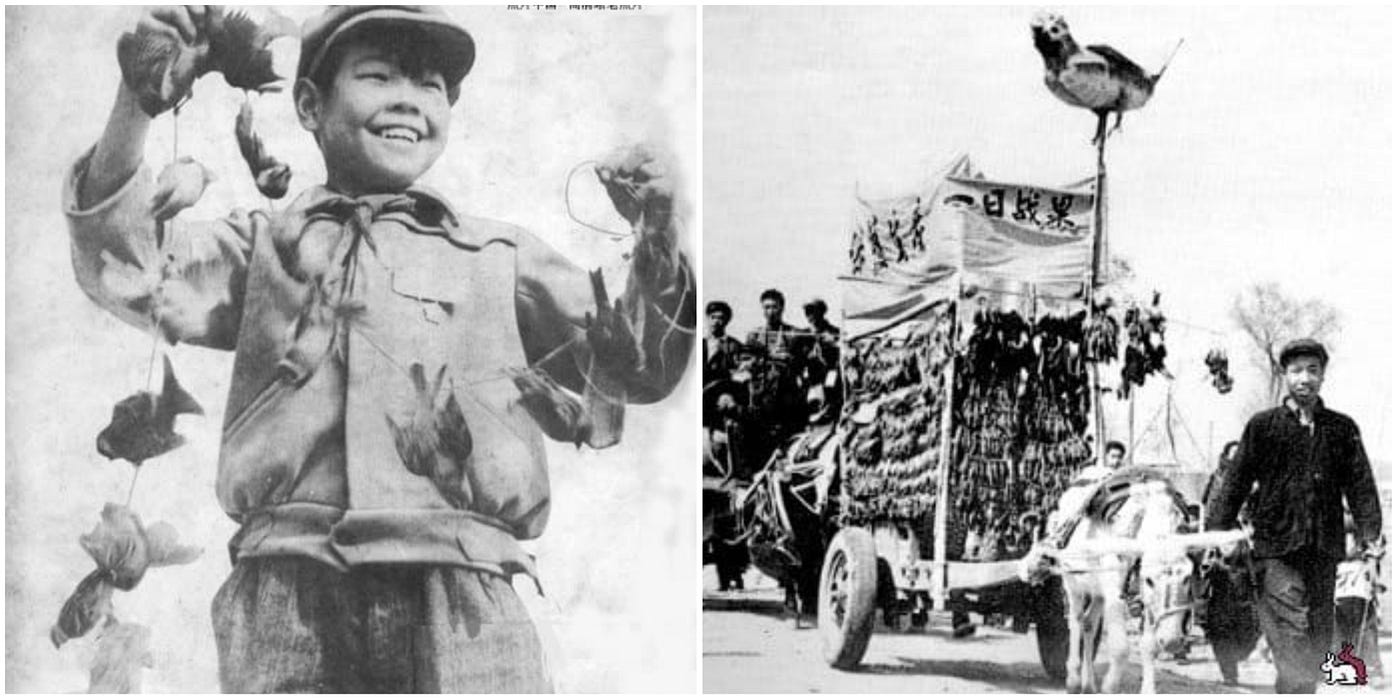
200
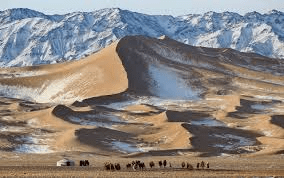
What desert lies on the border of China and Mongolia?
The Gobi Desert
300
What is Nepal's current governmental system, and how did it come to be?
Nepal is a federal democracy with a presidential system and a constitution that was just put into place in 2015.
Nepal began as a small collection of independent kingdoms that unified under the military efforts of its first Gurkha king who took the title of King of Nepal in 1768.
Nepal fought a war with Britain over disputed territory in India and later formed a peace treaty in 1816 that created close ties to the British Empire, even though they were never a colony as its neighbor India.
After a couple coups in the 1840s and 1850s, the King established a cabinet government with political parties, which was followed by a long series of conflicts resulting in Nepal becoming a constitutional monarchy with a multi-party democracy.
In the 1990s there was a communist uprising by a Maoist organization that eventually fully dissolved the monarchy and established the current federal democracy, where they are still the majority controlling political party.
300
What pollution has Kazakhstan suffered?
During the Soviet Union years, Kazakhstan was used as a testing ground for nuclear weapons, uncontrolled industry, and agricultural chemicals, resulting in an array of unregulated pollutants that affect the health of the people as well as the ability of the country to build its wealth, while also affecting surrounding geographical features, such as the Caspian Sea.
300
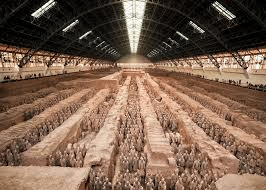
What is Qin Shi Huang, the first Emperor of China, famous for?
He reigned over the powerful, if short lived, Qin dynasty.
He began his rule by killing Confucian scholars and mass burning books of history.
He began a massive public works project in which various smaller sections of wall were linked together to begin forming what would be the Great Wall of China.
He had himself buried with a massive army of Terracotta warriors, which are still being studied today for the invaluable amount of information they supply about China's early Imperial history.
300
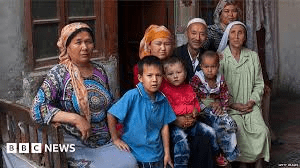
What Muslim ethnic group, living in northwestern China, have suffered terrible humans rights violations, including re-education facilities in which it is reported that extreme forms of brain-washing and torture are used to oppress this minority.
The Uyghur people.
300
What Chinese city was acquired by the British Empire as the spoils of war following the Opium War of the 1840s, became a haven for Chinese people fleeing Mao's communist regime, and was re-acquired by China in 1997 where it is still governed as an autonomous region, but with a definite tension between the Communist government and the city's western leaning culture?
Hong Kong

400
What Indian ethnic group are descendants of African slaves brought by Muslim, British, and Portuguese traders, and while a select few have risen to prominence, due to the strict hereditary caste system, and to religious persecution towards Muslim people, the majority have retained the lowest class and status for hundreds of years?
The Siddi People
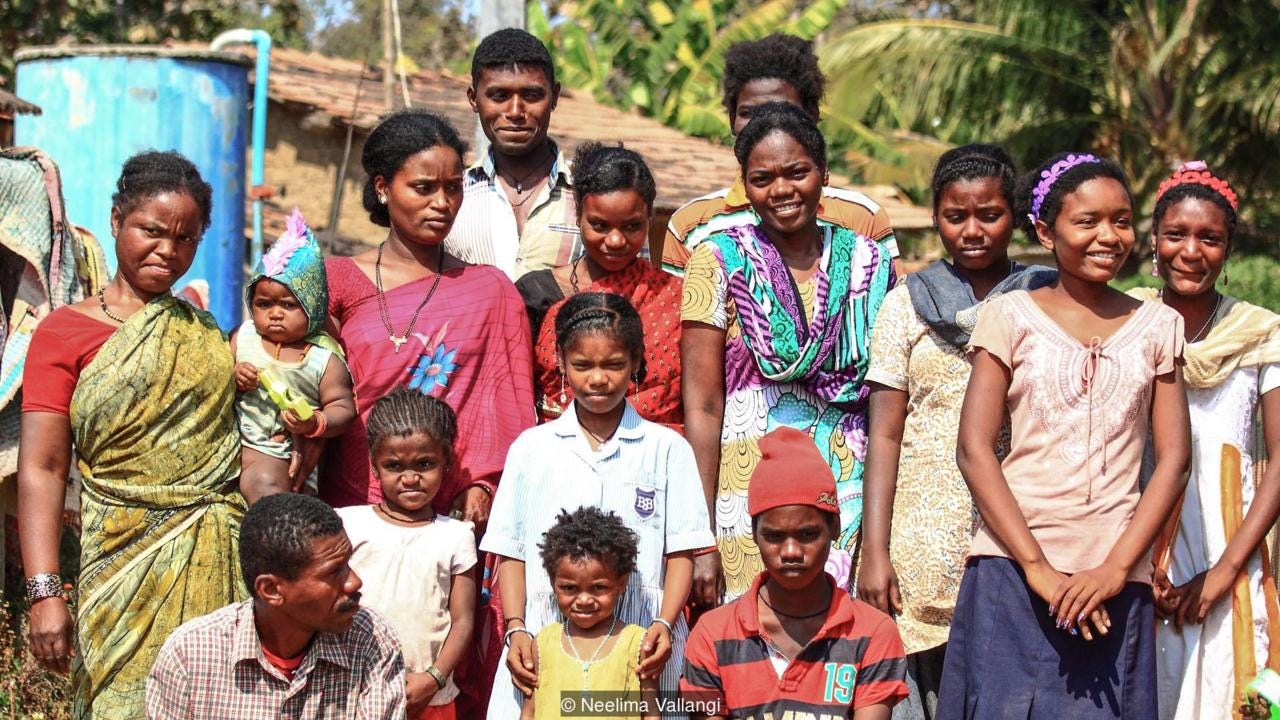 The majority of this people have been forced to take refuge in harsh jungle conditions that had previously been untamed. However, as time has passed, Indians have claimed more of their land for development, pushing the Siddi people further into the jungle.
400
Who was Nursultan Nazarbayev?
Nazarbayev was the head of the Communist Party in Kazakhstan before the fall of the USSR and became its first president when the USSR fell in 1991.
His rule was marked by authoritarianism. He changed laws in order to maintain his own power and despite the veneer of democracy, used corrupt means to always win every vote.
In 2019, after close thirty years of rule, he stepped down after losing to Kassym Tokayev, who was the head of a vocal party that called for greater rights and a real democracy free of voter fraud.
400
What is the relationship between China and Taiwan?
In 1912 a nationalist uprising overthrew the dynastic system that had lasted in China for over two-thousand years and instituted the Republic of China, a democratic system which five branches,a constitution, and a president. After the Sino-Japanese war this government was overthrown by Mao's communist regime and they fled to the island of Taiwan off the coast of China.
At first, many international governments still recognized Taiwan as the "true" government of China, but a serious ploy to retake the mainland never materialized. While their relationship with China has remained tense, China has become Taiwan's main trading partner.
China views Taiwan as an autonomous region technically under its governance, with a hope towards bringing the country closer into the fold via a method similar to that of Hong Kong.
Today only twelve sovereign nations recognize Taiwan, all others, including the US, abide by a "One China" policy.
In 1979 President Jimmy Carter signed the Taiwan Relations Act that enabled the US to continue economic relations with Taiwan, and laid out its stance that if violent action was taken in order to change Taiwan's status, the US would get involved.
400
Explain the Hindu concept of salvation.
Hindus believe in the atman or the soul or true self, that reincarnates endlessly in a cycle of life and death called samsara. During life one can affect the outcome of your next life in the cycle based on karma, the sum accumulation of good/bad/right/wrong actions. These actions include generally moral deeds, ritual pilgrimages, sacrifices, customs and meditations, and most importantly: maintaining your societally dictated caste function religiously.
According to Hinduism, every living creature on the earth contains a reborn atman, thus requiring some level of respect, and many taking on a vegetarian lifestyle. Rebirth is the only way to move from one caste to another. Eventually one may attain enlightenment and break away from the cycle of rebirth, becoming one with Brahman, the universal power.
400
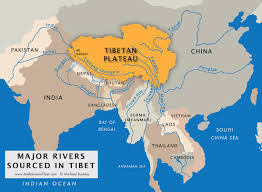
What plateau region, lying between the Kunlun and Himalyas Mountains, is governed as an autonomous region within China, though the residents have expressed their desired to be independent?
Tibet

500
What are the five castes in the Indian Hindu social system?
Brahmin Class - The highest social class reserved for priests and teachers of sacred knowledge. Represented by the head of Brahma, the Hindu God of creation.
Kshatriya Class - The ruling class and those in charge of the military. Represented by Brahma's arms.
Vaishya Class - The middle class of farmers, merchants, business owners etc. Represented by Brahma's thighs.
Shudra Class - The lowest class for servants, slaves, and other menial workers. Represented by Brahma's feet.
Dalit Class - Nonclass of untouchables, tasked with the most degrading positions and treated as subhuman. This is where we get the term "outcast".
500
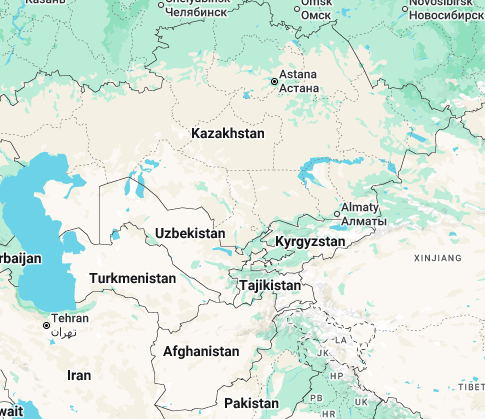
Name five of the central Asian countries.
Afghanistan, Kazakhstan, Kyrgyzstan, Tajikistan, Turkmenistan, Uzbekistan
500
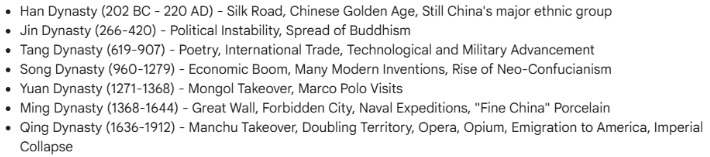
Name five dynasties of China and one thing that dynasty was famous for each.
500
Who was the historical Buddha and what were his Four Noble Truths?
Siddhartha Gautama was possibly a northern Indian prince who lived sometime between the 6th-4th centuries BC.
Though most stories come down centuries later and are highly mythologized, he seems to have been a prince who became distressed with the suffering of the lower castes, so he left his privileged surroundings and took up a hermits life, seeking enlightenment through meditation under a tree. During his meditations the Four Noble Truths were "revealed" to him by the universe.
The Four Noble Truths:
The truth that misery exists.
The truth that misery originates from the desire for pleasure and the reliance on this plane of existence.
The truth that this desire can be eliminated.
The truth that the way to eliminated desire is to follow a methodical way or path.
This path is of course the Buddha's Eightfold Path in which one lives by the code of living, thinking, speaking, social conduct, and meditation laid out in the Buddha's sayings.
If one lives out this way properly one can be rid entirely of the illusion of one's individualistic ego, be free of all existential concern, and reach nirvana.
500
Why is the boundary between North and South Korea on the 38th parallel?
The boundary was created, somewhat arbitarily between the larger powers of Soviet Russia and the United States.
During the 1940s the Empire of Japan had taken control of the entire peninsula. This resulted in two rival ideologies forming that offered to provide Korean freedom. The first was a Nationalist group, collecting in the south, the second a Communist group, forming to the north. After Japan was defeated, allied nations Russia and the US moved troops into the peninsula and split the land at the 38th parallel.
During the 1950s Korea fought a civil war between these two groups. The United States got involved in this conflict as a proxy war against Soviet Russia in what is often called the Korean War here in the United States. Both sides of the conflict had control of the entire peninsula at some point during the war, but eventually met a stalemate and solidified the boundary as a Demilitarized Zone, about a mile wide, that splits the two nations in two to this day.
500
Explain the separation of India and Pakistan.
During the 1800s India had come under the power of East India Company, a British Trading company which used and abused the native population with little respect for the local customs and traditions, all in the name of making a profit. A famous rebellion in the 1850s put an end to the company rule and the British Empire took control of the region.
During a peaceful protest in 1919 British troops opened fire on an unarmed crowd, killing hundreds. Around this time a Nationalist party forms advocating for Indian separation from Britain. A Muslim League also forms, representing the minority religious group in the nation.
In the late 1940s, as the British Empire, losing power the world over, begins relinquishing its hold on India, a series of violent mass killings take place between Muslims and Hindus, when Muslims begin taking political steps toward separation.
In 1947 Cyril Radcliffe, a British judge, draws the line between Pakistan and India, more or less arbitrarily, and institutes it before officially releasing British control, with little to no preparations made for the transfer of power, announcing the new national boundaries just days before the end of Imperial oversight, ten months earlier than originally planned.
Chaos ensued, 15 million people were displaced overnight, resulting in history's largest migration of peoples over so short a time. Millions on both sides died due to religious persecution and violence as they traveled. To this day there are still tensions and disputes over land claims between the two nations.