Vocabulary
States/Kingdoms in the East during Unit 5
Natural Resources and Commodities
More Vocabulary
People and terms of the Enlightenment
Locations/Countries/Kingdoms/Empires in the West
English History and the Making of the UK (England, Wales, Scotland, Ireland - only North presently)
English Civil War and Glorious Revolution
Slavery and Indenture - similarities and differences
Words never stop
100
The suppression or restriction of speech, writing, images, or ideas, typically enforced by governments, private groups, or institutions to control information deemed objectionable, sensitive, harmful, or "incorrect". It acts to limit freedom of expression and can range from book banning and media restrictions to internet filtering.
What is censorship?
100
This was (1603–1868) a centralized feudal military government that brought over 250 years of peace, stability, and isolation (Sakoku) to Japan after centuries of civil war.
What was the Tokugawa Shogunate?
100
Found in abundance on islands not inhabited by humans off of the coast of Peru and elsewhere in the Pacific Ocean and Namibia. Excellent for fertilizer and gunpowder.
What is guano?
100
Guaranteed personal freedoms that are written into the law of a government and can not be taken away.
What are civil liberties?
100
French term for the thinkers/philosophers of the 17th and 18th centuries that wrote, debated, influenced and advised about the nature of humans, education, rights of individuals and best responses of governments.
Who were philosophes?
100
If a person is Dutch they are from this country.
What is the Netherlands?
100
Her father was Henry VIII, who officially broke England away from the RCC. She ruled for over 40 years, but their dynasty would end with her because she had no direct heirs or surviving siblings or nieces/nephews.
Who was Queen Elizabeth I and the Tudor Dynasty?
100
Supporters of King Charles I were called Cavaliers, but also known as this. (This label will also be given to supporters of the King in France during its revolution 100 years later).
Who were Royalists?
100
Enslaved for life, counted (and treated) as property similar to cattle; these peoples' origins in the Americas were from west Africa. Their children inherited the status of their mothers, so if their mothers were enslaved, they too were born into that status.
What was chattel slavery?
100
The suppression or restriction of speech, writing, images, or ideas, typically enforced by governments, private groups, or institutions to control information deemed objectionable, sensitive, harmful, or "incorrect". It acts to limit freedom of expression and can range from book banning and media restrictions to internet filtering.
What is censorship?
200
a woman who breastfeeds and cares for a child that is not her own. Historically, this practice was vital for infant survival when the birth mother was unable to produce milk, fell ill, or died. Wet nurses were often hired by wealthy families or used in cases of maternal mortality, making it a well-established, though sometimes exploited, profession. Enslaved women frequently served as wet nurses for the enslavers children
What was a wet-nurse?
200
(1674–1818) The dominant 17th-18th century Indian power founded by Chhatrapati Shivaji, which effectively dismantled Mughal supremacy and resisted early British expansion. Known for guerrilla warfare and a decentralized confederacy, the Marathas dominated the Indian subcontinent before being defeated by the British East India Company.
What was the Maratha Empire?
200
Extremely valuable commodity from the West Indies that is a type of alcohol that is a byproduct of sugar. Captain Jack Sparrow drank lots of it.
What is rum?
200
The 17th and 18th century intellectual movement that challenged tradition with ideas of reason, science, individualism and self determination, which would later inspire revolutions that challenged traditional monarchies and hierarchies. Also called an “age of isms”.
What was The Enlightenment?
200
English philosopher, Tabula rasa (blank slate); believed people were innately good but also believed in the social contract; further he believed those who governed only did so with the consent of the people they governed, and for the greater good of those they governed, if the government did not do this, he said people had the right to revolt against an unjust government; he believed all men were born with the natural rights of life, liberty and property.
Who was John Locke?
200
This empire still controlled much of the Balkan Peninsula, the Levant and Anatolia, but the quality of their Sultans was not great due to the cage. Their trade dominance also waned with the establishment of the global empires of the Spanish, Portuguese, Dutch, British and French.
What was the Ottoman Empire?
200
King James I succeeded Elizabeth I, and was the beginning of this dynasty. He was Protestant, also king of Scotland, his mother had been Catholic, and tried and executed for trying to plot to kill Elizabeth I to put herself on the throne...family stuff.
What was the Stuart Dynasty
200
Supporters of Parliament in the English Civil War were called "Roundheads" (due to the type of simple hats many wore); and also abbreviated in this way..hint, think members of Parliament.
Who were MPs or Parliamentarians?
200
These people were bound to contracts to work 3-7 years in the Americas; were from England, Scotland, Wales, Ireland, the Netherlands and German speaking kingdoms; they made up about 80% of the European immigrants to the Americas circa the 17th and 18th centuries.
Who were indentured servants?
200
To prevent the development, action, or expression of (a feeling, impulse, idea, etc.); restrain.
What is suppression?
300
To prevent the development, action, or expression of (a feeling, impulse, idea, etc.); restrain.
What is to suppress; suppression?
300
Manchu led (and final) dynasty of China circa 1750-1900. (Officially, 1911)
What was the Qing Dynasty?
300
The belief that knowledge comes from experience and experiments, not just tradition and reason. Use of natural data to back this knowledge up.
What is empiricism?
300
A feeling of intense loyalty to others who share one’s language and culture, and the belief that those who share a culture should also live in independent nation-states instead of Europe’s multi-ethnic empires (for example, the Ottoman Empire).
What is nationalism?
300
Leviathan, believed in strong monarchies and strict laws; otherwise people would be out of control; hence why the social contract was necessary; English
Who was Thomas Hobbes?
300
Franco. Also included the Gauls. Protestants from this kingdom were called Huguenots.
What is France?
300
It is the same King James I of England (and VII of Scotland) that wrote in his charter for Plymouth Colony that the Great Dying of Indians was to be viewed in this way.
What was as a gift from god to clear out the land of its inhabitants and their resistance by killing them off with this disease (smallpox)?
300
The Magna Carta specifically said the king must seek Parliament's approval to do this (in 1215)...by the early/mid 17th century, King Charles I dissolved Parliament because they wouldn't agree to raise these to pay for wars against Spain, Ireland and Scotland.
What were taxes?
300
True or False - Indentured servants survival rate in the Americas was only 10%.
What is false. Indentured servants survival rate in the Americas was 40-50%.
300
a woman who breastfeeds and cares for a child that is not her own. Historically, this practice was vital for infant survival when the birth mother was unable to produce milk, fell ill, or died. Wet nurses were often hired by wealthy families or used in cases of maternal mortality, making it a well-established, though sometimes exploited, profession. Enslaved women frequently served as wet nurses for the enslavers children
What was a wet-nurse?
400
The movement to end both the slave trade, slavery and serfdom.
What was the abolitionist movement, abolitionism, and who were abolitionists?
400
This archipelago was controlled by the Spanish (and named after an earlier Spanish king) since the 16th century until 1898. It was a major stopover for Spanish galleons full of silver and gold from the Americas.
What are the Philippines?
400
Cash crop dye (it was blue) from the "old world" planted and extensively harvested in South Carolina especially utilized in denim, which would grow tremendously in popularity in the United States in the west.
What was indigo?
400
The 19th century movement that began in central Europe to reestablish an independent Jewish homeland in the Middle East (at that time controlled by the Ottoman Empire) because that was the original location of Judaism; this was due to the repeated Jewish persecutions throughout European history; and in the 19th century that meant pogroms in Russia specifically, however anti-Semitism was not hard to find elsewhere throughout Europe.
What is Zionism?
400
A sufficient ground of explanation or of logical defense.
What is reason?
400
Sugar. Brazil. Extensive trans-Atlantic slave-trade. The Amazon jungle and river basin. Rio de Janeiro, Sao Paolo. Jewel of their crown.
What was Portugal?
400
King Charles I (Stuart) was a HUGE believer in his absolute, divine right monarchy. When this governing body would not raise taxes or do what he wanted, he dissolved it.
What is Parliament?
400
Lord Protector (not king) Oliver Cromwell led the British after the civil war as this type of country, belonging to a political community founded for the common good, often implying a republic or state where power rests with the people. In reality, he too became a dictator and dissolved Parliament, so not that much had changed, besides the names and the closing of the theatre and other "sinful" activities.
What was a commonwealth?
400
Physical punishment was utilized frequently to increase productivity for these people.
Who were both enslaved people and indentured servants?
400
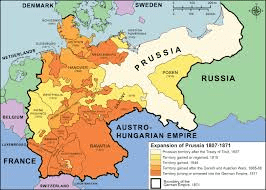 Powerful German kingdom led by Hohenzollern dynasty for generations; they would lead German unification in the 19th century.
What was Prussia?
500
Scottish author of “The Wealth of Nations”, considered the father of capitalism and a free-market economy that thrives on competition and the government keeping out of over-regulating business.
Who was Adam Smith?
500
This empire had conquered Siberia by the mid 16th century and extended all the way east to the Pacific ocean by the mid 17th century, Ivan the Terrible, Peter the Great, and Catherine the Great were all important leaders that accomplished expansion for this empire.
What is the Russian Empire?
500
Old world cash crop that was extensively farmed in the West Indies and later Hawaii. It is very stimulating. And a challenge to tea.
What was coffee?
500
The belief that people are willing to give up certain rights and limits to their freedoms for the greater good and to maintain law and order.
What is the social contract?
500
Related to, based on, or agreeable to reason (instead of superstition)
What is rational?
500
The Papal States sovereign.
Who was the Pope?
500
After King Henry VIII broke England away from the RCC, the population (from his own family, other nobility, merchants, and peasants) were still very much divided over the Protestant/Catholic split. People who still held loyalty to the RCC were referred to in these two terms.
Who were papists and popists?
500
The "restoration" after Cromwell's death brought this merry monarch back to the England from his very fun exile in France and the Netherlands (they were happy to see him go back, he was an expensive and messy guest).
Who was King Charles II?
500
Male indentured servants typically received this once they completed (and survived) their time and terms of indenture.
What was land?
500
The formal, often voluntary, resignation of a monarch from the throne or the abandonment of high office, power, or responsibility. To step down(voluntarily).
What is to abdicate?
600
Without restraint in the use of authority; autocratically.
What is arbitrarily? (abritrary)
600
The belief that women should have equal rights and opportunities as men; and be equal under the law to own property, be educated, to work and earn equal pay.
What is feminism?
600
The VOC exterminated and enslaved many of the native Banda people to control this spice.
What was nutmeg?
600
A belief in natural rights, constitutional government, reduced spending on armies and against established churches; in favor of expanding political representation (initially for only males, but later to females too) Locke's philosophy was in this category.
What is classic liberalism?
600
French, wrote satire (got in trouble for who he made fun of); advocated for civil liberties and religious tolerance.
Who was Voltaire?
600
Powerful German state that was led by the Hohenzollern Family and would lead German unification.
What was Prussia?
600
Favorite poet/playwright of Queen Elizabeth I; she was of course, a Renaissance queen.
Who was Shakespeare?
600
Queen Mary was English, her husband William of Orange was from this prosperous low country/kingdom where the VOC was $$$$. Kings there weren't absolute monarchs so agreeing to a Bill of Rights and a Constitutional Monarchy to take control of Great Britain, he was all in. Also, he had to co-rule with his wife!!!!
What was the Netherlands?
600
Tobacco, sugar, cotton, coffee, indigo.
What were cash crops produced by enslaved people from Africa in the Americas?
600
To give voluntary permission. To agree to without being coerced in any way.
What is to consent?
700
An economic system in which the means of production, such as factories and natural resources, are privately owned and operated for profit, without government interference.
What is capitalism?
700
This is a legal procedure that allows people who have been detained by the government to challenge their detention in court. It is sometimes called the Great Writ, dates back to 1215, when the Magna Carta was signed. It was conceived to guarantee protection from the king arbitrarily disappearing subjects to secret dungeons without just cause or due process.
What is habeas corpus?
700
Native people of the Andes mountains and other natives of the Americas understood how to treat malaria (fevers due to mosquitoes' bites" through the bark of this medicine that was derived from it.
What is quinine?
700
A belief in traditional institutions and practical experience; resistant to change; clinging to traditional practices.
What is conservatism?
700
A constitutional doctrine that divides government responsibilities into distinct legislative, executive, and judicial branches to limit any one branch from exercising the core functions of another. This structure prevents the concentration of power, reduces the risk of tyranny, and creates a system of checks and balances. French philosopher Montesquieu wrote extensively and this greatly influenced the US Constitution and the framework of the United States (and other future) federal governments.
What is the separation of powers?
700
This was called one of the "low countries" with France to its west and the Netherlands and German kingdoms to its east, and North Sea to its north and English Channel to its North/West.
What is Belgium?
700
This was a method the British used to defeat the Spanish in 1588, unmanned ships lit on fire directly to sail directly into the Spanish galleons.
What were fireships?
700
A key difference between the English Bill of Rights and the United States Bill of Rights is the specific mention of these people having more rights than these other people. Hint - it's totally about religion.
Who were protestants having more rights than Catholics in England?
700
Similar to gold, silver, copper, and coal, guano was obtained by enslaved labor in this way of work, which today is still one of the most dangerous occupations.
What is mining?
700
The belief that women should have equal rights and opportunities as men; and be equal under the law to own property, be educated, to work and earn equal pay.
What is feminism?
800
economic and political theory that there is public and/or direct worker ownership of the means of production (factories, mines, mills); it will have many branches; also refers to people who believed that tax dollars should fund things to support the population such as public schools, public hospitals, and police forces. Socialism will grow in places where industrialization and the ills of rapid growth of cities leads to terrible abuses of workers (especially children) and horrible living conditions for them with that modernization. They will politically fight for safer working conditions, environmental cleanup of pollution, and social services for families.
What is socialism?
800
Circa 1750-1900 (it was officially ended in 1857) This empire went into decline after the reign of Aurangzeb and due to the pressures from Europeans (especially the Portuguese and later the French and ENGLISH), could not conquer the southern region of India; and had many successful revolts from the Maratha Empire's princes to their west.
What was the Mughal Empire?
800
As a result of staple crops from the Columbian aka Great Exchange, this happened to the population of Europe circa 1750 and beyond. Also, they had finally rebounded from the plague.
What was population growth?
800
Empire building.
What is imperialism?
800
Freed from ignorance (lack of knowledge) and misinformation.
What is to be enlightened?
800
The northern portion of this island is part of the UK, but these people were treated as lesser humans by the English, especially since they clung to their Roman Catholic faith after the Protestant Reformation. The were (and some ways still are) resistant to English domination.
What is Ireland?
800
The English Armada that was attempted after Spanish Armada was "romanticized" and "erased" from the nationalistic narrative of British history for these reasons.
What was because the English Armada and attempt to invade Spain was a huge loss and therefore romanticized and erased to create a national myth and a unifying identity for pride in the earlier victory (1588) of the Armada.
800
Because King William and Queen Mary agreed to rule with limited power, not as absolute divine right monarchs, the of government could now be described as this.
What is a limited monarchy or a constitutional monarchy or parliamentary monarchy?
800
If an enslaved woman became pregnant by her enslaver, this would be the legal status of their child.
What was enslaved?
800
The belief that people are willing to give up certain rights and limits to their freedoms for the greater good and to maintain law and order. Hobbes and Locke believed in this; they differed on the true nature of men. Hobbes' was negative, he would say realistic about people's true natures. Locke's was positive, he would say optimistic about people's true natures.
What is the social contract?
900
Church of England. Very similar to the RCC (where its origins were), except the Archbishop of Canterbury was its spiritual leader and the king or queen were its spiritual and political authorities and religious sovereigns until 1688/89.
What is the Anglican Church?
900
This Shogunate experienced 250 years of relative peace and instituted the policy of Sakoku to limit the "dangerous" influence of foreigners.
What was the Tokugawa Shogunate in Japan?
900
From the bark of a tree in South America, this was used to treat fevers by indigenous people there; European physicians studied its pharmacology extensively to treat malaria, which was a problem in warm swampy places, including Rome and the surrounding region.
What was quinine?
900
The study of the rights, responsibilities, and duties of citizens, alongside the functioning of government at local, state, and national levels.
What are civics?
900
According to John Locke, all people were born with these, and it was a government's job to protect these for its citizens/subjects. Jefferson changed the last part of it to refer to happiness....I prefer Locke.
What are life, liberty and property?
900
This European "Big 5" explored and claimed much of present day eastern Canada, present day Haiti, and the Louisiana territory (which included the entrepôt of New Orleans) and the fur trade, for which they enlisted the expertise of Native peoples to trap. They were also getting in on the act in India and Southeast Asia (present day Vietnam).
What was France?
900
These people continually fought back against English control of their island, the land and people on it, and forced conversion to Protestantism. These people were subjugated under Charles I, Cromwell, and Charles II.
Who were the Irish?
900
These types of Christians and other "non-conformists" were excluded from full rights as Englishmen in the English Bill of Rights. That was amended and ended officially in 1829.
Who were Catholics?
900
The racial hierarchy among people of the Americas placed people with heritage from this continent (and therefore lighter skin that accompanied it) with the most rights and privileges.
What was European? (Italians and Irish were not considered equal to other groups)
900
Freedom from punishment or responsibility; often due to circumstances and laws that designate a specific social class, gender, wealth, physical strength, economic power, and ethnic designation that allowed for this.
What is impunity?